
Getting a good night’s sleep is essential for physical health, mental well-being, and daily productivity. Yet millions of people struggle with falling asleep, staying asleep throughout the night, or waking up feeling tired despite spending several hours in bed.
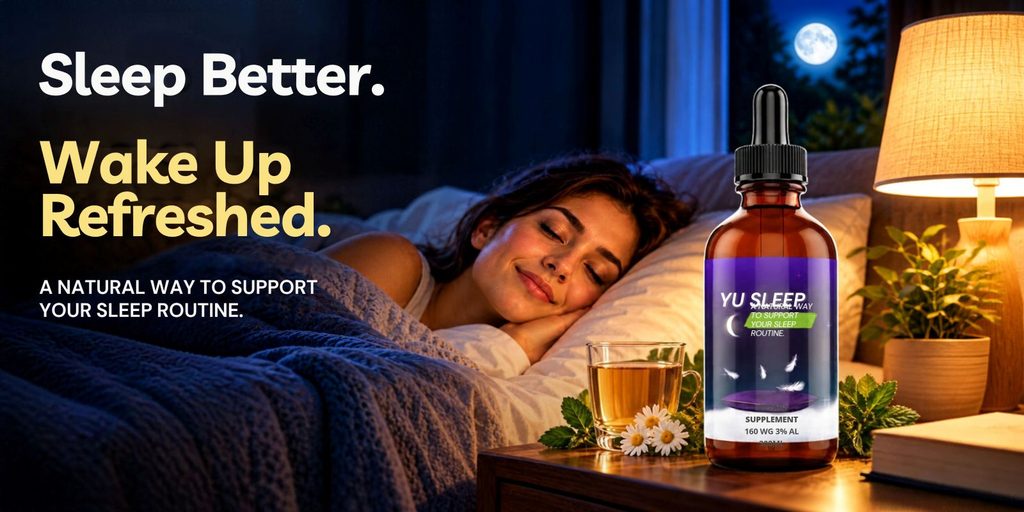
This has created growing interest in sleep supplements that promise to support relaxation and improve sleep quality. One product attracting attention is Yu Sleep, a liquid sleep supplement containing a combination of melatonin, amino acids, minerals, vitamins, and botanical ingredients.
But does Yu Sleep really work? Can its ingredients genuinely help people sleep better, or are its benefits mostly marketing claims?
To answer these questions, we need to look beyond the product’s advertising and examine what its ingredients actually do, what scientific research says about them, and whether there is enough evidence to support the effectiveness of the complete formula.

In this article, we take an honest look at Yu Sleep, including its potential benefits, scientific evidence, limitations, possible side effects, and whether it is worth considering.
Quick Answer: Does Yu Sleep Really Work?
Yu Sleep contains several ingredients that have been studied for their potential role in sleep and relaxation. Melatonin, in particular, has scientific evidence supporting its use for certain sleep-related problems, including jet lag and disruptions to the body’s internal sleep-wake cycle.
Other ingredients, such as L-theanine, magnesium, lemon balm, GABA, and tart cherry, have also attracted research interest.
However, there is an important distinction between having scientifically studied ingredients and having a scientifically proven finished product.
There is currently insufficient independent clinical evidence to establish that Yu Sleep, as a complete formula, consistently improves sleep.
It may be worth considering for some adults who want to explore a multi-ingredient sleep support supplement, but results can vary considerably. It should not be viewed as a proven treatment for chronic insomnia or other sleep disorders.
What Is Yu Sleep?
Yu Sleep is a liquid dietary supplement designed to support nighttime relaxation and sleep.
Unlike traditional sleep supplements that contain only one active ingredient, Yu Sleep combines several ingredients that are intended to work through different biological pathways.
Its published ingredient information includes:
- Melatonin
- Red tart cherry concentrate
- Magnesium glycinate
- L-theanine
- GABA
- Lemon balm extract
- Apigenin
- 5-HTP
- Vitamin B2
- Vitamin B6
The product is designed to be taken before bedtime. Its liquid format may appeal to people who prefer drops over conventional tablets or capsules.
The basic idea behind the formulation is to combine melatonin, which helps regulate the sleep-wake cycle, with other ingredients associated with relaxation and normal nervous system function.
This approach sounds interesting, but does combining these ingredients actually make a noticeable difference?
To understand that, we need to examine the individual components.
How Does Yu Sleep Work?
Sleep is a complex biological process involving the brain, nervous system, hormones, and internal body clock.
There is no single mechanism responsible for good sleep. Several processes work together to help the body become sleepy at night and remain asleep until morning.
Yu Sleep attempts to support some of these processes through its combination of ingredients.
The most important ingredient from a sleep-timing perspective is melatonin.
Other ingredients are included for their potential roles in relaxation, nervous system function, and sleep quality.
Let’s look at what scientific research tells us about each one.
1. Melatonin: The Ingredient With the Strongest Connection to Sleep
Melatonin is a hormone naturally produced by the pineal gland in the brain.
Its primary function is to regulate the body’s circadian rhythm, which is essentially the internal clock that determines when we feel awake and when we feel sleepy.
Melatonin levels normally increase in the evening as darkness approaches. This signals to the body that it is time to prepare for sleep.
Melatonin production generally decreases in the morning as daylight increases.
This is why melatonin supplements are commonly used by people who experience jet lag, irregular sleeping schedules, or difficulty adjusting their bedtime.
Yu Sleep’s published product information lists 0.9 mg of melatonin per serving.
Does melatonin actually work?
There is scientific evidence suggesting that melatonin can help certain people fall asleep faster, particularly when their internal body clock is disrupted.
For example, it may be useful for:
- People experiencing jet lag.
- Individuals working night shifts.
- People with delayed sleep timing.
- Those struggling to adjust to a new sleeping schedule.
However, melatonin is not equally effective for every type of sleep problem.
For people suffering from chronic insomnia, the evidence is considerably less convincing. Melatonin should not be treated as a universal solution for difficulty sleeping.
The National Center for Complementary and Integrative Health also notes that evidence supporting melatonin for chronic insomnia remains limited.
Our assessment: Melatonin is a scientifically relevant ingredient in Yu Sleep. However, its presence alone does not establish that the complete supplement will work for everyone.
2. L-Theanine: Can It Help You Relax Before Bedtime?
L-theanine is an amino acid naturally found in tea leaves.
It has attracted attention because of its potential calming properties.
Unlike caffeine, which stimulates the nervous system, L-theanine has been investigated for its possible role in promoting relaxation without producing strong sedation.
This makes it particularly interesting for people who struggle to switch off mentally at night.
For example, some people feel physically tired but continue thinking about work, finances, responsibilities, or personal problems when they lie down.
Mental restlessness can make it difficult to fall asleep, even when the body needs rest.
Some preliminary research suggests that L-theanine supplementation may help with stress and certain aspects of sleep quality.
However, the evidence is not strong enough to establish it as a standalone treatment for insomnia.
There is another limitation with Yu Sleep: its published label includes L-theanine within a proprietary blend, without clearly disclosing its individual quantity.
This makes it difficult to determine whether the product contains an amount comparable to doses investigated in research.
Our assessment: L-theanine is an interesting addition to Yu Sleep, particularly for its potential relaxation benefits, but the actual contribution of this ingredient cannot be determined without knowing its precise dose.
3. Magnesium Glycinate: Does Magnesium Improve Sleep?
Magnesium is an essential mineral involved in hundreds of biochemical processes throughout the body.
It plays an important role in:
- Normal nerve function.
- Muscle function.
- Energy production.
- Regulation of several physiological processes.
Magnesium has also attracted interest in sleep research.
One reason is its involvement in processes related to nervous system regulation.
Magnesium glycinate is a form of magnesium in which magnesium is bound to glycine. It is commonly used in supplements and is generally considered a well-tolerated form.
Some research has examined whether magnesium supplementation can improve sleep quality, particularly in older adults.
However, the overall evidence remains limited.
It is important to understand that magnesium is not a sleeping pill. Taking more magnesium does not necessarily mean falling asleep faster or sleeping longer.
People who already obtain sufficient magnesium through their diet may not experience noticeable sleep improvements from additional supplementation.
There is also an important formulation consideration with Yu Sleep.
Its published information lists magnesium glycinate within a combined proprietary blend. The total blend weight does not tell us how much magnesium glycinate, or elemental magnesium, an individual serving provides.
Our assessment: Magnesium is an important nutrient, and its possible relationship with sleep deserves attention. However, there is not enough evidence to conclude that the magnesium content in Yu Sleep is sufficient to produce a meaningful sleep benefit.
4. Lemon Balm: A Traditional Herbal Relaxation Ingredient
Lemon balm is a herb belonging to the mint family.
It has traditionally been used in herbal preparations intended to support relaxation and reduce restlessness.
Modern research has explored its potential effects on anxiety, mood, and sleep.
Some preliminary studies suggest that lemon balm may have calming properties.
This makes it a potentially relevant ingredient in a nighttime supplement.
People whose sleep difficulties are associated with everyday stress may find the idea of a relaxation-focused ingredient appealing.
However, the scientific evidence remains limited.
There is not enough high-quality clinical research to establish lemon balm as an effective treatment for insomnia.
Furthermore, the exact amount of lemon balm in Yu Sleep is not separately disclosed in its proprietary blend.
Our assessment: Lemon balm adds an interesting herbal component to the formula, but its effectiveness in Yu Sleep cannot be established from ingredient presence alone.
5. GABA: Can It Help Calm the Brain?
GABA stands for gamma-aminobutyric acid.
It is an important inhibitory neurotransmitter in the central nervous system.
In simple terms, GABA helps regulate brain activity and prevents excessive nerve signaling.
Because of its role in the nervous system, GABA has attracted attention in the sleep supplement industry.
The theory is that supporting GABA-related activity may help promote relaxation.
However, there is an important scientific question concerning oral GABA supplements.
Researchers are still investigating how much orally consumed GABA can cross the blood-brain barrier and influence activity in the brain.
Some small studies have explored possible effects on relaxation and sleep, but the evidence remains insufficient to establish oral GABA as a reliable sleep treatment.
Our assessment: GABA has an important biological role, but its presence in Yu Sleep does not guarantee a noticeable calming or sleep-inducing effect.
6. Red Tart Cherry: A Natural Source of Sleep-Related Compounds
Tart cherries are known for containing naturally occurring plant compounds, including polyphenols.
They also contain small amounts of melatonin.
Some research has investigated tart cherry juice and its possible effects on sleep duration and sleep quality.
A few small studies have reported promising findings, although the overall evidence remains preliminary.
It is important to understand that consuming tart cherry juice in a research study is not necessarily equivalent to consuming a concentrated cherry ingredient inside a multi-ingredient supplement.
The quantity of tart cherry concentrate in Yu Sleep is not separately disclosed.
Therefore, it is not possible to conclude that Yu Sleep provides the same potential benefits observed in studies involving tart cherry juice.
Our assessment: Tart cherry is a potentially interesting ingredient, but more research is needed to establish its contribution to sleep improvement.
7. 5-HTP: Its Connection to Serotonin and Melatonin
5-HTP, or 5-hydroxytryptophan, is a compound involved in the production of serotonin.
Serotonin is a neurotransmitter associated with mood and several other physiological functions.
It is also involved in the biological pathway through which the body produces melatonin.
This connection has made 5-HTP an ingredient of interest in supplements targeting sleep and relaxation.
However, there is limited high-quality clinical evidence demonstrating that 5-HTP supplementation reliably treats insomnia.
There are also important safety considerations.
5-HTP can interact with medications that affect serotonin levels, including certain antidepressants. Combining these substances may increase the risk of serotonin-related adverse effects.
People taking antidepressants or other serotonin-affecting medications should not use a supplement containing 5-HTP without consulting a healthcare professional.
Our assessment: The biological connection between 5-HTP and serotonin is interesting, but this does not prove that its inclusion in Yu Sleep improves sleep.
8. Apigenin: A Plant Compound Being Studied for Relaxation
Apigenin is a naturally occurring flavonoid found in several plants, including chamomile.
It has been investigated for its antioxidant and potential calming properties.
Some laboratory research suggests that apigenin may interact with biological pathways associated with nervous system activity.
However, much of the evidence is preliminary.
There is not enough high-quality human research to establish apigenin as an effective treatment for insomnia.
Its exact contribution to Yu Sleep also cannot be assessed without knowing its individual dose.
Our assessment: Apigenin adds another potentially relevant plant compound to the formulation, but its sleep benefits remain unproven.
9. Vitamin B2 and Vitamin B6: Do These Vitamins Help With Sleep?
Yu Sleep also includes vitamin B2 and vitamin B6.
Vitamin B2, also known as riboflavin, supports normal energy metabolism and cellular function.
Vitamin B6 is involved in several biochemical processes, including those associated with neurotransmitter production.
Both vitamins are essential for normal health.
However, this does not mean that additional supplementation will automatically improve sleep.
Correcting a nutritional deficiency can be beneficial, but people who already receive adequate amounts through their diet may not experience any additional sleep benefits from taking more.
Our assessment: These vitamins contribute to the nutritional profile of Yu Sleep, but their inclusion should not be interpreted as evidence that the product treats sleep problems.
Does Combining All These Ingredients Make Yu Sleep More Effective?
This is arguably the most important question when evaluating Yu Sleep.
The product uses a multi-ingredient approach rather than relying exclusively on melatonin.
The formulation appears designed to support different aspects of the sleep process.
Melatonin is included to support sleep timing, while ingredients such as L-theanine and lemon balm are associated with relaxation.
Magnesium supports normal nerve and muscle function, while GABA, tart cherry, apigenin, and 5-HTP add further ingredients with potential relevance to sleep-related processes.
In theory, combining ingredients with different mechanisms could provide broader support than using a single ingredient.
However, there is a major scientific limitation.
The effectiveness of individual ingredients does not prove the effectiveness of the complete formula.
For example, if a study finds that a particular dose of melatonin helps people with jet lag, that does not establish that a supplement containing melatonin alongside several other ingredients will produce the same result.
To establish whether Yu Sleep itself works, researchers would ideally conduct a controlled clinical trial using the finished product.
Participants could be divided into two groups. One group would receive Yu Sleep, while the other would receive a placebo.
Researchers would then measure:
- How quickly participants fall asleep.
- How often they wake during the night.
- Total sleep duration.
- Overall sleep quality.
- Morning alertness.
- Daytime tiredness.
Such research would provide much stronger evidence than simply examining the individual ingredients.
Without product-specific clinical trials, the effectiveness of Yu Sleep remains uncertain.
What Results Can You Realistically Expect From Yu Sleep?
It is important to separate the potential benefits of its ingredients from results that have actually been demonstrated for the finished product.
If Yu Sleep provides a noticeable benefit to an individual, the most reasonable areas to investigate would be relaxation and sleep timing.
Here are some potential outcomes.
1. Falling Asleep More Easily
This is one of the most relevant potential benefits because Yu Sleep contains melatonin.
Melatonin may help people whose sleep timing is disrupted or who have difficulty adjusting their bedtime.
For example, someone travelling across time zones may experience difficulty falling asleep at the appropriate local time.
Melatonin may help in certain circumstances when taken at an appropriate time.
However, it is not a universal solution for difficulty falling asleep.
People whose sleep problems are caused by anxiety, chronic stress, pain, or other medical conditions may need a different approach.
2. Feeling More Relaxed Before Bedtime
L-theanine and lemon balm have been studied for their potential calming properties.
If these ingredients provide a meaningful effect at the doses included in Yu Sleep, some individuals may find it easier to wind down before going to bed.
This could be particularly relevant to people who experience mental restlessness at night.
However, because the individual ingredient doses are not fully disclosed, it is difficult to predict the strength of this potential benefit.
3. Better Sleep Quality
Some people do not have difficulty falling asleep but struggle with interrupted or unsatisfying sleep.
They may wake up several times during the night or feel that their sleep is not restorative.
Yu Sleep is marketed as a supplement intended to support restful sleep.
Although some of its ingredients have been investigated for sleep quality, there is insufficient product-specific evidence to establish that Yu Sleep consistently reduces nighttime awakenings or improves overall sleep quality.
4. Feeling More Refreshed in the Morning
A better night’s sleep can naturally improve morning alertness and daytime functioning.
However, there is no established clinical evidence showing that Yu Sleep reliably eliminates morning fatigue.
Morning tiredness can have many causes, including insufficient sleep, sleep apnea, irregular sleeping schedules, medication effects, and underlying medical conditions.
A supplement should not be expected to resolve all these problems.
How Long Does Yu Sleep Take to Work?
The manufacturer’s directions recommend taking Yu Sleep approximately 30 minutes before bedtime.
However, the time required to experience an effect can vary considerably between individuals.
Melatonin is associated with the timing of the sleep-wake cycle, and its effects depend partly on when it is taken.
Other ingredients may have different absorption patterns and physiological effects.
There is currently insufficient independent clinical evidence to confirm how quickly the complete Yu Sleep formula produces noticeable results.
It would therefore be misleading to promise that everyone will fall asleep within 30 minutes.
A person’s sleep schedule, caffeine consumption, stress levels, bedtime routine, and underlying health conditions can all influence the outcome.
People should follow the product’s directions and avoid taking additional servings simply because they do not notice an immediate effect.
Why Yu Sleep May Not Work for Everyone
Even supplements containing scientifically interesting ingredients do not produce identical results in everyone.
There are several reasons why someone might not experience noticeable improvements with Yu Sleep.
1. The Cause of the Sleep Problem May Be Different
Difficulty sleeping is not a single condition.
Some people struggle to fall asleep, while others wake repeatedly throughout the night.
Sleep problems may be associated with:
- Anxiety and stress.
- Irregular work schedules.
- Excessive caffeine consumption.
- Chronic pain.
- Sleep apnea.
- Restless legs syndrome.
- Hormonal changes.
- Certain medications.
- Depression or other health conditions.
A supplement designed to support relaxation or sleep timing may not address the underlying cause.
2. Ingredient Dosages Matter
One of the important limitations of Yu Sleep’s published formula is its proprietary blend.
The product information discloses a combined blend weight of 637 mg, but does not separately identify the amount of every ingredient within that blend.
This means consumers cannot easily determine how much L-theanine, magnesium glycinate, GABA, lemon balm, or other ingredients they receive in one serving.
This matters because scientific studies generally investigate specific doses of individual ingredients.
The presence of an ingredient on a label does not automatically establish that it is included at an effective dose.
3. Poor Sleep Habits Can Reduce the Potential Benefit
Supplements cannot compensate for consistently poor sleep habits.
For example, someone who consumes coffee late in the evening, spends several hours looking at bright screens before bedtime, and follows an inconsistent sleep schedule may continue experiencing difficulties even after using a sleep supplement.
A consistent bedtime, a comfortable sleeping environment, and reduced evening caffeine consumption can all support better sleep.
4. Underlying Sleep Disorders Require Proper Attention
People experiencing persistent insomnia, loud snoring, gasping during sleep, or excessive daytime sleepiness should not rely on supplements as their primary solution.
Conditions such as obstructive sleep apnea require proper medical evaluation and treatment.
Using a supplement without identifying the underlying problem could delay appropriate care.
Is Yu Sleep Better Than Taking Melatonin Alone?
Yu Sleep and standalone melatonin supplements take different approaches.
A standalone melatonin supplement provides a specific amount of melatonin, depending on the product.
Yu Sleep combines melatonin with several additional ingredients intended to support relaxation and sleep.
Neither approach is automatically better for everyone.
People primarily interested in melatonin for sleep-timing problems may prefer a product with a clearly disclosed melatonin dose and fewer additional ingredients.
Others may prefer the idea of a multi-ingredient formula.
However, a multi-ingredient supplement also introduces additional considerations, including ingredient interactions, individual sensitivities, and uncertainty about the amount of each ingredient.
The most important consideration is not how many ingredients a product contains, but whether the ingredients are appropriate for the individual’s needs and are present in meaningful amounts.
Is Yu Sleep Safe to Use Every Night?
Yu Sleep contains ingredients commonly found in dietary supplements, but natural ingredients are not automatically risk-free.
Melatonin can cause side effects such as:
- Daytime sleepiness.
- Headaches.
- Dizziness.
- Nausea.
- Unusual dreams.
Other ingredients may also cause unwanted reactions or interact with medications.
Particular attention is needed with 5-HTP because it can interact with medications that affect serotonin, including certain antidepressants.
People should speak with a healthcare professional before using Yu Sleep if they:
- Take antidepressants or other serotonin-affecting medication.
- Use prescription sleeping medication or sedatives.
- Take medication for blood pressure or other chronic conditions.
- Are pregnant or breastfeeding.
- Have an existing medical condition.
- Are considering giving the supplement to someone under 18.
People should also avoid combining multiple sleep supplements without professional guidance.
Yu Sleep should not be used as a substitute for medical evaluation when sleep difficulties are persistent or severe.
Who Might Consider Trying Yu Sleep?
Based on its ingredient profile and intended use, Yu Sleep may be of interest to adults who:
- Occasionally have difficulty winding down before bedtime.
- Want to explore a liquid multi-ingredient sleep supplement.
- Are interested in melatonin and other relaxation-related ingredients.
- Prefer liquid supplements over conventional tablets or capsules.
- Understand that results may vary and that the formula is not a proven insomnia treatment.
However, people with chronic insomnia, suspected sleep apnea, or significant daytime sleepiness should seek medical advice rather than relying on a supplement.
What Is the Biggest Limitation of Yu Sleep?
After examining the published ingredient information, two limitations deserve particular attention.
The first is the lack of fully disclosed individual ingredient quantities within its proprietary blend.
Although the product lists several ingredients within a combined 637 mg blend, consumers cannot determine exactly how much of each ingredient is included.
This makes it difficult to compare the formulation with clinical studies that use specific ingredient doses.
The second limitation is the lack of independent clinical trials demonstrating the effectiveness of the complete finished product.
These limitations do not prove that Yu Sleep is ineffective.
However, they mean that consumers should be cautious about treating its marketing claims as established scientific facts.
A more transparent ingredient label and well-designed clinical studies would make it easier to evaluate the product’s actual effectiveness.
Final Verdict: Does Yu Sleep Really Work?
So, after examining its ingredients and the available scientific evidence, does Yu Sleep really work?
The most accurate answer is that Yu Sleep has an interesting ingredient profile, but its overall effectiveness has not been independently established through clinical trials of the complete formula.
Its melatonin content is particularly relevant because melatonin plays an important role in regulating the sleep-wake cycle.
L-theanine, magnesium, lemon balm, GABA, tart cherry, apigenin, and 5-HTP also have varying degrees of scientific or preliminary research behind them.
However, several questions remain unanswered.
The individual quantities of the proprietary blend ingredients are not disclosed, the effectiveness of the complete combination has not been established through independent clinical trials, and results may vary depending on the cause of a person’s sleep difficulties.
For adults experiencing occasional difficulty relaxing before bedtime, Yu Sleep may be an option worth discussing with a healthcare professional.
However, people looking for a proven treatment for chronic insomnia should not mistake a dietary supplement for an established medical treatment.
Our final assessment: Yu Sleep is an interesting multi-ingredient sleep supplement with some scientifically relevant components, but there is not enough evidence to confidently claim that it works as advertised. Consumers should evaluate its ingredient transparency, safety, and realistic potential benefits before deciding whether it is worth trying.
Frequently Asked Questions About Yu Sleep
Does Yu Sleep really help you fall asleep?
Yu Sleep contains melatonin, an ingredient with evidence supporting its use for certain sleep-timing problems. Other ingredients in its formula have also been investigated for relaxation and sleep. However, there is insufficient independent clinical evidence to confirm that the complete Yu Sleep formula reliably helps people fall asleep.
How long does Yu Sleep take to work?
The manufacturer recommends taking it approximately 30 minutes before bedtime. However, the actual time required to experience an effect may vary. There is insufficient product-specific clinical evidence to guarantee that it works within this timeframe for every user.
Does Yu Sleep contain melatonin?
Yes. Its published product information lists 0.9 mg of melatonin per serving. Melatonin is a hormone involved in regulating the body’s sleep-wake cycle.
Can Yu Sleep improve sleep quality?
Some ingredients in Yu Sleep have been studied for their potential effects on sleep quality. However, there is insufficient independent clinical evidence to establish that the finished product consistently improves sleep quality or reduces nighttime awakenings.
Is Yu Sleep a sleeping pill?
Yu Sleep is marketed as a dietary supplement, not a prescription sleeping medication. It contains melatonin and other ingredients intended to support sleep and relaxation. It should not be considered equivalent to prescription treatments for insomnia.
Can Yu Sleep cure insomnia?
There is no established clinical evidence that Yu Sleep cures insomnia. Persistent insomnia may require evaluation by a healthcare professional, who can identify underlying causes and recommend appropriate treatment.
Is Yu Sleep non-habit-forming?
Yu Sleep is marketed as a dietary supplement rather than a conventional prescription sleeping pill. However, the presence of natural ingredients does not automatically establish that the complete formula is suitable for indefinite daily use. Long-term safety and individual suitability should be discussed with a healthcare professional.
Can I take Yu Sleep every night?
Whether nightly use is appropriate depends on the individual’s health, medications, and reason for using the supplement. People taking prescription medicines or experiencing persistent sleep problems should consult a healthcare professional before using it regularly.
Is Yu Sleep worth buying?
Yu Sleep may appeal to adults interested in a liquid, multi-ingredient sleep support supplement. However, its complete formula has not been independently established as effective, and the proprietary blend makes individual ingredient doses difficult to assess. Consumers should consider these limitations before purchasing.
Disclaimer: This article is for informational and educational purposes only. It is not medical advice and does not replace consultation with a qualified healthcare professional. The discussion of individual ingredients should not be interpreted as proof of the effectiveness of Yu Sleep as a finished product. Always check the latest product label and consult a healthcare professional before starting a new supplement, especially if you take medication or have an existing health condition.
Affiliate Disclosure: This article contains affiliate links, which means we may earn a commission if you purchase Yu Sleep through links on this page, at no additional cost to you. This helps support Blimero and allows us to continue publishing independent product reviews.