
When choosing a sleep supplement, one of the most important things to examine is its ingredient list. A product may promise better sleep, fewer nighttime awakenings, and more refreshing mornings, but what actually goes into the formula?
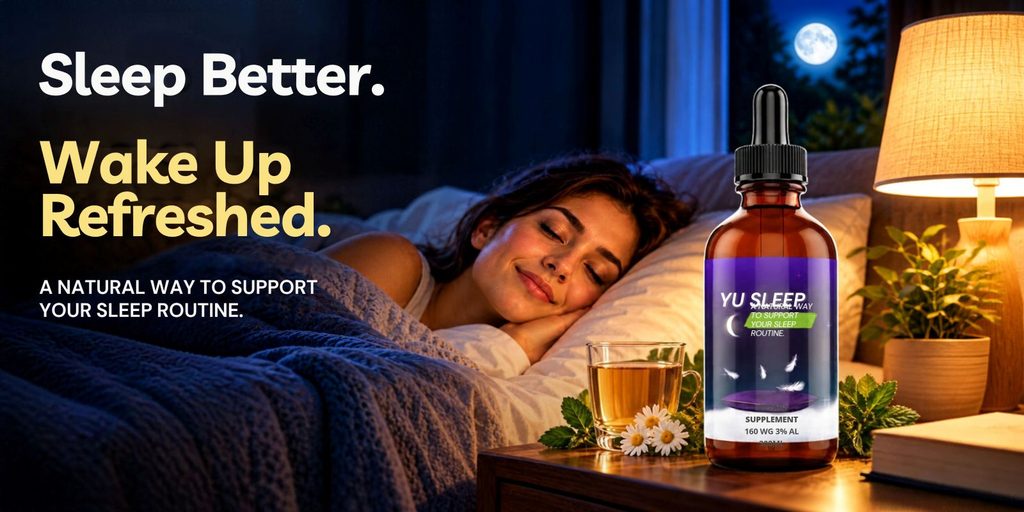
Yu Sleep is a liquid sleep support supplement that combines ten ingredients, including melatonin, magnesium glycinate, L-theanine, GABA, 5-HTP, lemon balm, and red tart cherry concentrate. The formula is designed to support relaxation and the body’s natural sleep-wake cycle.
But do these ingredients have scientific evidence behind them? What does each ingredient actually do? Are they included in meaningful quantities, or is the formula primarily built around marketing claims?

In this article, we examine every major Yu Sleep ingredient, explain its biological role, review the available scientific evidence, and discuss what consumers should know before purchasing the supplement.
Our aim is to separate established scientific information from preliminary research and manufacturer claims.
What Are the Ingredients in Yu Sleep?
According to the published Yu Sleep Supplement Facts information, each 2 mL serving contains three separately listed ingredients and a proprietary blend of seven additional ingredients.
The formula includes:
- Melatonin – 0.9 mg
- Vitamin B2 (Riboflavin 5-Phosphate) – 0.5 mg
- Vitamin B6 (Pyridoxal 5-Phosphate) – 0.5 mg
- Red Tart Cherry Concentrate
- Magnesium Glycinate
- Apigenin
- Lemon Balm Extract
- 5-HTP
- L-Theanine
- GABA
The last seven ingredients are included in a combined proprietary blend weighing 637 mg.
This means the manufacturer discloses the total weight of the blend but does not separately reveal the exact amount of each ingredient.
This is an important detail that consumers should understand when evaluating Yu Sleep.
Let’s examine each ingredient individually.
1. Melatonin – 0.9 mg
Melatonin is probably the most recognizable ingredient in Yu Sleep because of its direct connection to sleep.
It is a hormone naturally produced by the pineal gland in the brain. Its main function is to help regulate the body’s internal clock, known as the circadian rhythm.
Melatonin production generally increases in the evening when it gets dark. This signals to the body that it is time to prepare for sleep.
As morning approaches and exposure to daylight increases, melatonin production decreases.
This natural process helps regulate the sleep-wake cycle.
How does melatonin help with sleep?
Melatonin supplements are commonly used by people who experience disruptions to their internal body clock.
For example, someone travelling across multiple time zones may find it difficult to fall asleep according to the local time. Melatonin may help the body adjust to the new schedule when taken at an appropriate time.
It has also been studied for delayed sleep-wake phase disorder, a condition in which people naturally fall asleep and wake up much later than desired.
However, melatonin is not a conventional sedative and does not work equally well for every type of insomnia.
The National Center for Complementary and Integrative Health (NCCIH) notes that melatonin may be useful for certain sleep-timing problems, but there is insufficient strong evidence to recommend it as a treatment for chronic insomnia.
Why does Yu Sleep use only 0.9 mg?
Many standalone melatonin supplements contain 3 mg, 5 mg, or even 10 mg per serving.
Yu Sleep uses a lower amount of 0.9 mg.
The idea behind a lower-dose approach is to provide melatonin without automatically using a large supplemental dose.
However, more melatonin does not necessarily mean better sleep. The appropriate amount and timing depend on the individual and the sleep problem being addressed.
A lower dose should not automatically be assumed to prevent side effects or morning drowsiness.
Our assessment: Melatonin is one of the most scientifically relevant ingredients in Yu Sleep. It has established biological importance and evidence for certain sleep-timing problems. However, its presence does not establish that the complete Yu Sleep formula treats insomnia.
2. Vitamin B2 (Riboflavin 5-Phosphate) – 0.5 mg
Vitamin B2, also known as riboflavin, is an essential water-soluble vitamin.
It plays an important role in energy metabolism and helps the body convert nutrients from food into usable energy.
Riboflavin also supports normal cellular function and contributes to several biochemical processes in the body.
Yu Sleep uses riboflavin 5-phosphate, a phosphorylated form of vitamin B2.
What is its connection to sleep?
Vitamin B2 is not a sleeping ingredient in the traditional sense.
It does not directly signal the brain to fall asleep like melatonin.
Instead, it supports normal metabolic and cellular processes that are important for overall health.
Maintaining adequate vitamin B2 levels is important for the normal functioning of the body, but there is limited evidence that taking additional riboflavin improves sleep in people who already receive enough through their diet.
Yu Sleep provides 0.5 mg per serving.
Our assessment: Vitamin B2 is a useful nutritional component, but consumers should not expect it to produce a direct sleep-inducing effect.
3. Vitamin B6 (Pyridoxal 5-Phosphate) – 0.5 mg
Vitamin B6 is another essential vitamin included in Yu Sleep.
It participates in numerous biochemical reactions, including those involved in the production of neurotransmitters.
Neurotransmitters are chemical messengers that allow nerve cells to communicate with each other.
Vitamin B6 is involved in the production of several important neurotransmitters, including serotonin.
Serotonin is associated with mood regulation and other physiological processes. It is also part of the biological pathway involved in melatonin production.
Why is vitamin B6 included in a sleep supplement?
The relationship between vitamin B6, serotonin, and melatonin provides a scientific reason for including it in a sleep support formula.
However, this does not mean that taking extra vitamin B6 automatically increases melatonin production or improves sleep.
The body requires adequate vitamin B6 for normal biochemical functioning, but supplementation beyond nutritional requirements has not been established as a reliable treatment for insomnia.
Yu Sleep provides 0.5 mg of vitamin B6 per serving in the form of pyridoxal 5-phosphate.
Our assessment: Vitamin B6 supports important biological processes associated with neurotransmitter production. Its role in the formula is more nutritional than directly sleep-inducing.
4. Red Tart Cherry Concentrate
Red tart cherry is a fruit-derived ingredient included in Yu Sleep’s proprietary blend.
Tart cherries have attracted scientific interest because they contain several naturally occurring compounds, including polyphenols and small amounts of melatonin.
Polyphenols are plant compounds that have been studied for their antioxidant properties.
How could tart cherry support sleep?
Researchers have investigated whether tart cherry juice can influence sleep duration and sleep quality.
Some small human studies have reported improvements in certain sleep-related measurements among people consuming tart cherry products.
One possible explanation is their naturally occurring melatonin content.
Researchers have also investigated whether other compounds in tart cherries may contribute to their effects.
However, the evidence remains preliminary.
It is important to distinguish between drinking tart cherry juice in the quantities used in clinical studies and consuming a concentrated ingredient as part of a multi-ingredient supplement.
The amount of red tart cherry concentrate in Yu Sleep is not separately disclosed.
Therefore, we cannot assume that Yu Sleep provides the same exposure or potential benefits observed in tart cherry juice studies.
Our assessment: Red tart cherry is an interesting fruit-derived ingredient with preliminary research supporting further investigation. However, its individual contribution to Yu Sleep remains uncertain.
5. Magnesium Glycinate
Magnesium is an essential mineral involved in hundreds of biochemical reactions throughout the body.
It contributes to:
- Normal muscle function.
- Normal nerve function.
- Energy production.
- Protein synthesis.
- Bone health.
- Regulation of several physiological processes.
Magnesium glycinate is a form of magnesium in which magnesium is bound to glycine, an amino acid.
It is commonly used in supplements and is generally considered a well-tolerated form.
What is the connection between magnesium and sleep?
Magnesium has attracted attention in sleep research because of its involvement in nervous system function.
Researchers have investigated whether magnesium supplementation may improve sleep quality, particularly in older adults.
One possible explanation is that magnesium participates in processes involved in regulating nerve signaling and normal nervous system activity.
Some small studies have reported improvements in sleep-related measurements following magnesium supplementation.
However, the overall evidence is still limited, and magnesium should not be considered a proven treatment for insomnia.
People who are deficient in magnesium may benefit from correcting that deficiency, but someone who already receives adequate magnesium may not notice any meaningful sleep improvement from additional supplementation.
Why magnesium glycinate?
The glycinate form is often selected because it is generally well tolerated.
However, it is important to distinguish the weight of magnesium glycinate from the amount of elemental magnesium it provides.
Yu Sleep includes magnesium glycinate within its 637 mg proprietary blend.
The exact quantity of magnesium glycinate is not separately disclosed, and the label does not establish how much elemental magnesium one serving provides.
Our assessment: Magnesium is an important nutrient with some preliminary sleep-related research. However, without knowing its individual quantity in Yu Sleep, it is difficult to evaluate whether the formula provides an amount comparable to those investigated in studies.
6. Apigenin
Apigenin is a naturally occurring flavonoid found in several plants, including chamomile.
Flavonoids are plant compounds that have attracted scientific interest because of their potential antioxidant and other biological properties.
Chamomile has traditionally been used in herbal teas and preparations intended to promote relaxation.
Apigenin is one of the compounds researchers have investigated in connection with chamomile’s potential calming properties.
How might apigenin support sleep?
Some laboratory studies suggest that apigenin may interact with certain receptors involved in nervous system activity.
One area of research concerns GABA-related pathways.
GABA is an inhibitory neurotransmitter that helps regulate brain activity.
However, laboratory findings do not automatically translate into proven benefits in humans.
There is not enough high-quality clinical research to establish apigenin as an effective standalone treatment for insomnia.
It is also important to note that Yu Sleep does not separately disclose the amount of apigenin in its proprietary blend.
Our assessment: Apigenin is an interesting plant-derived compound, particularly because of its connection with chamomile. However, the evidence supporting its use as a sleep supplement remains preliminary.
7. Lemon Balm Extract
Lemon balm is a herb belonging to the mint family. Its scientific name is Melissa officinalis.
It has traditionally been used in herbal preparations intended to promote calmness and relaxation.
The leaves contain several naturally occurring plant compounds that have been studied for their potential effects on mood and nervous system activity.
Can lemon balm help with sleep?
Some preliminary research has investigated whether lemon balm may help reduce feelings of stress and support relaxation.
This is relevant because mental restlessness can interfere with the ability to fall asleep.
For example, someone may feel physically exhausted but continue thinking about work, responsibilities, or personal problems after getting into bed.
An ingredient that supports relaxation could potentially help such individuals wind down before bedtime.
However, the scientific evidence is still limited.
Some studies have investigated lemon balm in combination with other ingredients, making it difficult to determine how much of the observed effect comes from lemon balm itself.
Yu Sleep includes lemon balm extract in its proprietary blend, without disclosing its individual amount.
Our assessment: Lemon balm has a long history of traditional use and some preliminary research behind it. Its potential contribution to relaxation is interesting, but its effectiveness in Yu Sleep cannot be established from the available ingredient information.
8. 5-HTP (5-Hydroxytryptophan)
5-HTP is a naturally occurring compound involved in the production of serotonin.
It is commonly obtained from the seeds of the Griffonia simplicifolia plant for use in dietary supplements.
To understand why it appears in a sleep supplement, it helps to understand the relationship between serotonin and melatonin.
Serotonin is a neurotransmitter involved in mood regulation and several other biological processes.
The body can also use serotonin in the pathway that produces melatonin.
Melatonin, in turn, helps regulate the sleep-wake cycle.
Why is 5-HTP included in Yu Sleep?
The idea behind including 5-HTP is to provide a compound involved in serotonin production, which is connected to the body’s melatonin pathway.
However, this biological connection should not be interpreted as proof that taking 5-HTP increases melatonin production enough to improve sleep.
Research into 5-HTP supplementation for insomnia remains limited, and its effectiveness has not been firmly established.
Important safety consideration
5-HTP deserves particular attention because it can interact with medications that increase serotonin activity.
These include certain antidepressants and other medicines that affect serotonin.
Combining 5-HTP with such medications may increase the risk of serotonin syndrome, a potentially serious condition associated with excessive serotonin activity.
Possible warning signs include agitation, sweating, tremors, rapid heartbeat, diarrhoea, and changes in body temperature.
Anyone taking antidepressants or other serotonin-affecting medication should consult a healthcare professional before using a supplement containing 5-HTP.
Our assessment: 5-HTP has an interesting biological connection to serotonin and melatonin production, but its effectiveness for improving sleep remains uncertain. Its potential medication interactions are particularly important.
9. L-Theanine
L-theanine is an amino acid naturally found in tea leaves, particularly green tea.
It has attracted attention because of its potential calming properties.
Unlike caffeine, which is associated with stimulation and alertness, L-theanine has been investigated for its potential to support relaxation.
How might L-theanine help with sleep?
Some researchers have investigated whether L-theanine can help people manage mental stress and improve sleep-related outcomes.
One possible benefit is supporting a relaxed state without producing the strong sedation associated with some conventional sleep medications.
This makes L-theanine particularly interesting for people who struggle with racing thoughts before bedtime.
For example, someone may lie in bed feeling tired but continue thinking about the next day’s responsibilities.
A relaxation-supporting ingredient may be useful in such situations.
What does scientific research say?
A 2025 systematic review and meta-analysis published in the journal Sleep Medicine Reviews examined 19 studies involving 897 participants.
The researchers found improvements in certain self-reported sleep outcomes, including sleep onset and overall perceived sleep quality.
However, they also noted that more research is needed to establish the appropriate dose and duration of supplementation.
This is encouraging ingredient-level evidence, but it does not establish that Yu Sleep delivers the same benefits.
The individual quantity of L-theanine in Yu Sleep is not disclosed.
Our assessment: L-theanine is one of the more interesting ingredients in Yu Sleep from a research perspective. Human studies have reported promising results, but the undisclosed dose makes it difficult to determine how much benefit the product might provide.
10. GABA (Gamma-Aminobutyric Acid)
GABA is an important inhibitory neurotransmitter in the central nervous system.
In simple terms, it helps regulate brain activity by reducing excessive nerve signaling.
The brain uses several neurotransmitters to maintain a balance between excitation and inhibition.
GABA plays an important role in this balance.
Why is GABA included in a sleep supplement?
Because GABA is associated with calming nervous system activity, it has become a popular ingredient in supplements targeting relaxation and sleep.
The theory is that supporting GABA-related activity may help the body transition into a more relaxed state before bedtime.
However, there is an important scientific question concerning GABA supplements.
Researchers are still investigating how much orally consumed GABA can cross the blood-brain barrier and directly influence brain activity.
Some small human studies have investigated its potential effects on relaxation and sleep, but the evidence remains insufficient to establish oral GABA as a reliable treatment for insomnia.
Our assessment: GABA has a well-established role in normal brain function, but the effectiveness of oral GABA supplementation remains uncertain. Its presence in Yu Sleep does not guarantee a noticeable calming or sleep-inducing effect.
What Is the Most Important Ingredient in Yu Sleep?
If we look at the scientific evidence and the biological functions of the ingredients, melatonin is arguably the most directly relevant ingredient in Yu Sleep.
It has a well-established role in regulating the body’s internal clock and has been studied in several sleep-related conditions.
L-theanine is another interesting ingredient because human research has investigated its potential effects on relaxation and sleep quality.
Magnesium, lemon balm, and tart cherry also have research interest, although the strength of evidence varies.
The remaining ingredients provide additional nutritional or biological components, but their individual effectiveness for improving sleep is less established.
However, choosing the most important ingredient does not tell us whether the complete formula works.
The amount of each ingredient, the formulation, and the individual’s health and sleep problems all matter.
Understanding Yu Sleep’s 637 mg Proprietary Blend
One of the most important details about Yu Sleep is its proprietary blend.
The published Supplement Facts information lists a combined proprietary blend weighing 637 mg.
This blend contains:
- Red tart cherry concentrate.
- Magnesium glycinate.
- Apigenin.
- Lemon balm extract.
- 5-HTP.
- L-theanine.
- GABA.
The manufacturer discloses the total weight of these seven ingredients but does not provide the individual quantity of each one.
Why does this matter?
Scientific studies usually investigate individual ingredients at specific doses.
For example, research into L-theanine may investigate a particular daily amount. Magnesium studies may use a defined quantity of elemental magnesium.
Without knowing the individual quantities in Yu Sleep, consumers cannot directly compare its formula with the amounts used in those studies.
This creates three important limitations.
First, it is difficult to determine whether every ingredient is present in a meaningful quantity.
Second, consumers cannot easily compare the formulation with other supplements containing the same ingredients.
Third, it is difficult to determine which ingredient might be responsible if someone experiences an improvement.
Proprietary blends are permitted under US dietary supplement labelling rules, and they are used by many supplement manufacturers.
However, a fully transparent label would make it easier for consumers to evaluate the formulation.
This does not prove that Yu Sleep is ineffective. It simply means that the precise contribution of each ingredient cannot be independently assessed from the published label.
Are Yu Sleep Ingredients Scientifically Proven?
It is important to distinguish between three different levels of scientific evidence.
First: Ingredients with established biological functions.
Melatonin has an established role in regulating the sleep-wake cycle. Magnesium is an essential mineral, while vitamins B2 and B6 participate in normal metabolic and biochemical processes.
Second: Ingredients with promising but developing research.
L-theanine, tart cherry, magnesium, lemon balm, and apigenin have been investigated for their potential sleep-related benefits. Some studies have produced encouraging findings, but the strength of evidence varies.
Third: Ingredients with uncertain effectiveness as oral sleep supplements.
GABA and 5-HTP have biological relevance, but evidence supporting their effectiveness as treatments for insomnia remains limited.
Most importantly, research on these individual ingredients does not establish that Yu Sleep itself has been clinically proven to improve sleep.
A clinical trial of the complete finished formula would provide stronger evidence.
Are the Ingredients in Yu Sleep Natural?
Yu Sleep combines several ingredients derived from natural sources with other ingredients that can also be manufactured or supplied through different production methods.
For example:
- Melatonin is a hormone that can be produced synthetically for supplements.
- Red tart cherry concentrate is fruit-derived.
- Magnesium glycinate combines an essential mineral with glycine.
- Apigenin is a naturally occurring plant flavonoid.
- Lemon balm extract comes from a herb.
- 5-HTP is included as an ingredient sourced from Griffonia seed extract.
- L-theanine occurs naturally in tea leaves.
- GABA is also naturally present in the human body.
- Vitamins B2 and B6 are essential nutrients.
However, the term natural does not automatically mean safe, effective, or suitable for everyone.
Natural ingredients can still cause side effects or interact with prescription medications.
The quality, purity, dosage, and manufacturing standards of the finished supplement are also important.
Are There Any Side Effects or Interactions to Consider?
Even when a supplement contains familiar ingredients, consumers should consider potential side effects and medication interactions.
Melatonin may cause daytime sleepiness, headaches, dizziness, or nausea.
Magnesium supplements can cause gastrointestinal problems, particularly at higher supplemental amounts.
Some people may experience allergic reactions or digestive discomfort from herbal ingredients.
The most important interaction concern in Yu Sleep’s formula involves 5-HTP.
People taking antidepressants or other medicines that influence serotonin should not use 5-HTP without medical guidance.
Melatonin may also interact with certain medicines, including some blood thinners and medications used for other chronic conditions.
People taking blood pressure medication, sedatives, prescription sleep aids, or multiple medications should check with their healthcare professional before using Yu Sleep.
Pregnant or breastfeeding individuals should also seek medical advice before using the formula.
The product should not be treated as a substitute for medical evaluation or treatment of chronic insomnia.
Is Yu Sleep’s Liquid Formula Better Than Tablets?
Yu Sleep is supplied in liquid form rather than conventional tablets or capsules.
This may be convenient for people who dislike swallowing pills.
The liquid format also allows the manufacturer to combine several ingredients in a small serving.
However, liquid supplements are not automatically more effective than tablets or capsules.
The effectiveness and absorption of a supplement depend on several factors, including the ingredients, formulation, stability, and manufacturing quality.
Without comparative clinical studies, it is not possible to establish that Yu Sleep’s liquid format produces better sleep outcomes than an equivalent tablet or capsule formulation.
The choice between liquid and tablets is therefore largely a matter of convenience and personal preference.
What Should You Look for When Buying a Sleep Supplement?
Yu Sleep’s ingredient profile illustrates several important considerations when comparing sleep supplements.
1. Look for clearly disclosed ingredient quantities.
A product that lists the individual amounts of its ingredients makes it easier to compare the formula with scientific research.
2. Understand the difference between ingredients and clinical evidence.
A supplement can contain scientifically studied ingredients without the finished product itself having undergone clinical testing.
3. Check for possible medication interactions.
This is particularly important for people taking antidepressants, blood pressure medication, sedatives, or other prescription drugs.
4. Look at manufacturing and quality information.
Check whether the manufacturer provides information about quality control, product testing, and manufacturing standards.
5. Avoid exaggerated claims.
Be cautious of products claiming to cure insomnia, guarantee deep sleep, or eliminate all nighttime awakenings.
No dietary supplement should be assumed to work identically for every person.
Final Verdict: Is Yu Sleep’s Ingredient Formula Worth Considering?
Yu Sleep combines ten ingredients that target different aspects of sleep and relaxation.
Its formula includes melatonin, which has a well-established role in regulating the body’s sleep-wake cycle, alongside L-theanine, magnesium glycinate, lemon balm, tart cherry, GABA, 5-HTP, apigenin, and vitamins B2 and B6.
Some of these ingredients have promising scientific research behind them, while others have more limited evidence.
The most interesting components from a research perspective are melatonin and L-theanine. Magnesium and tart cherry are also worth investigating, although the available evidence does not establish their effectiveness in Yu Sleep’s particular formulation.
However, there is one significant limitation: the seven ingredients in the proprietary blend are not individually quantified.
This makes it difficult to determine whether the amounts included are comparable to those used in scientific studies.
Our overall assessment is that Yu Sleep has an interesting multi-ingredient formulation, but its complete ingredient combination should not be considered clinically proven to treat insomnia or guarantee better sleep.
For consumers considering the product, the most important factors are ingredient transparency, product quality, individual health needs, and realistic expectations.
A supplement’s ingredient list can tell you what it contains, but only appropriate clinical research can establish whether the complete product actually delivers the promised benefits.
Frequently Asked Questions About Yu Sleep Ingredients
How many ingredients does Yu Sleep contain?
Yu Sleep contains ten listed ingredients: melatonin, vitamin B2, vitamin B6, red tart cherry concentrate, magnesium glycinate, apigenin, lemon balm extract, 5-HTP, L-theanine, and GABA.
Does Yu Sleep contain melatonin?
Yes. Each published 2 mL serving contains 0.9 mg of melatonin.
Does Yu Sleep contain magnesium?
Yes. Magnesium glycinate is included in its 637 mg proprietary blend. However, the exact amount of magnesium glycinate and elemental magnesium per serving is not separately disclosed.
What is the purpose of L-theanine in Yu Sleep?
L-theanine is an amino acid naturally found in tea leaves. It has been studied for its potential calming properties and possible benefits for sleep quality and relaxation.
What is the purpose of GABA in Yu Sleep?
GABA is an inhibitory neurotransmitter that helps regulate nervous system activity. Oral GABA supplements have been investigated for their potential relaxation and sleep-related effects, but the evidence remains limited.
Why does Yu Sleep contain 5-HTP?
5-HTP is involved in serotonin production. Serotonin is also part of the biological pathway through which the body produces melatonin. However, the effectiveness of 5-HTP for improving insomnia has not been firmly established.
Is Yu Sleep free from synthetic ingredients?
Its formula includes plant-derived ingredients, vitamins, minerals, and melatonin. The fact that some ingredients are naturally occurring does not establish that the entire formula is free from synthetically manufactured components. Consumers should check the complete product label.
Does Yu Sleep disclose the amount of every ingredient?
No. It separately discloses the quantities of melatonin, vitamin B2, and vitamin B6. The other seven ingredients are included in a combined 637 mg proprietary blend without individual quantities.
Are Yu Sleep ingredients safe?
Many of its ingredients are commonly used in dietary supplements, but individual suitability varies. Melatonin and 5-HTP can interact with certain medications. People with medical conditions or taking prescription medicines should consult a healthcare professional before using the product.
Can Yu Sleep ingredients cure insomnia?
There is no established clinical evidence that the complete Yu Sleep formula cures insomnia. Persistent sleep problems may require medical evaluation and evidence-based treatment.
Medical Disclaimer: This article is intended for educational and informational purposes only. It does not constitute medical advice, diagnosis, or treatment. Scientific research on individual ingredients should not be interpreted as proof of the effectiveness of the complete Yu Sleep formula. Consult a qualified healthcare professional before starting a new supplement, particularly if you take prescription medication, are pregnant or breastfeeding, or have an existing health condition.
Affiliate Disclosure: This article contains affiliate links. If you purchase Yu Sleep through links on this page, Blimero may earn a commission at no additional cost to you. This commission helps support our website and allows us to continue creating product reviews, ingredient guides, and other useful content. Our goal is to provide informative and balanced content to help readers make better purchasing decisions.