
If you are considering trying Yu Sleep, one of the first questions you may have is how quickly it works. Will you feel sleepy within 30 minutes? Will you notice a difference after the first night? Or does it take several weeks of consistent use before you experience better sleep?
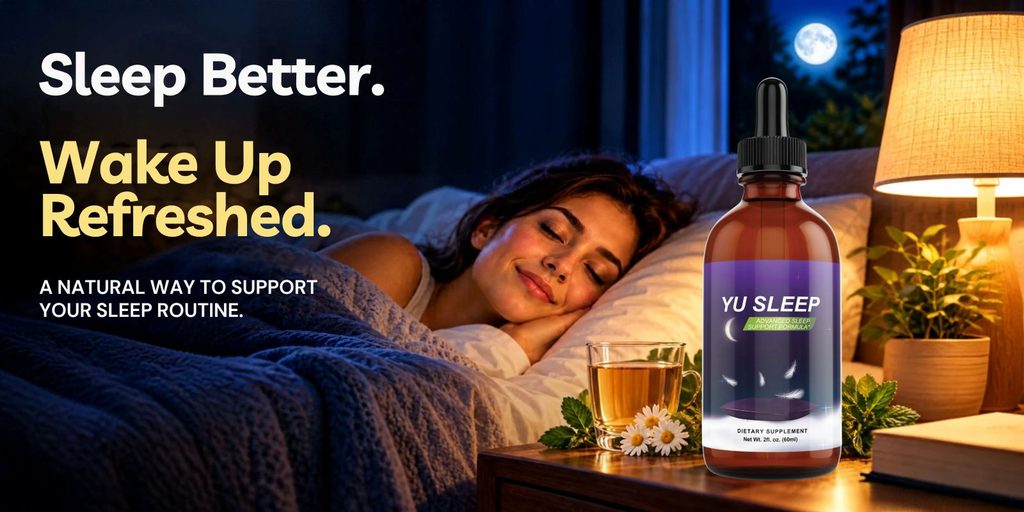
These are important questions because people who struggle with sleep often want relief as soon as possible. However, sleep supplements do not work exactly like prescription sleeping pills, and the time it takes to notice an effect can vary considerably.
Yu Sleep is a liquid sleep supplement formulated with melatonin, magnesium glycinate, L-theanine, GABA, 5-HTP, lemon balm, apigenin, and red tart cherry concentrate. Its formula is designed to support relaxation and the body’s natural sleep-wake cycle.

The manufacturer recommends taking the supplement before bedtime. However, there is an important distinction between the recommended time of use, the time individual ingredients may take to act, and the time it takes to notice a meaningful improvement in your sleep.
In this article, we will look at what you can realistically expect after taking Yu Sleep, whether it can work on the first night, how long you might need to try it, and what factors can influence the results.
How Quickly Does Yu Sleep Work?
Yu Sleep is generally intended to be taken approximately 30 minutes before bedtime. The product’s published directions recommend a serving of 2 mL, or two full droppers, before going to sleep.
Its formula contains 0.9 mg of melatonin, which helps regulate the body’s sleep-wake cycle. It also includes ingredients such as L-theanine, GABA, lemon balm, and magnesium glycinate, which are commonly used in sleep and relaxation supplements.
Some people may notice that they feel more relaxed or ready for bed on the first night. Others may not notice an obvious effect immediately.
It is important not to interpret the recommended 30-minute timing as a guarantee that everyone will fall asleep within 30 minutes. Melatonin products can have different onset times depending on the formulation, dose, timing, and individual response. The NHS, for example, notes that melatonin generally takes around one to two hours to work.
There is also limited independent clinical evidence establishing exactly how quickly the complete Yu Sleep formula works. Research on individual ingredients cannot automatically establish the onset time or effectiveness of the finished product.
A realistic expectation is that you may notice an effect during the first few nights, but you should assess your sleep over a longer period rather than judging the product on one night alone.
What to Expect After Taking Yu Sleep
Let’s look at a practical timeline of what you might experience. This is a guide for evaluating your response, not a clinically established timeline for Yu Sleep.
1. The First Night: You May Feel More Relaxed Before Bed
The first night is when you may begin noticing whether Yu Sleep suits you.
After taking the recommended serving, you might experience a gradual sense of relaxation as you prepare for sleep. You may find it easier to settle down, particularly if your usual bedtime problem involves feeling mentally alert or struggling to switch off.
This is partly why the formula includes ingredients such as L-theanine, GABA, and lemon balm.
However, not everyone experiences an obvious sensation after taking a sleep supplement. You should not expect a sudden feeling of sedation or an immediate knockout effect.
Your sleep may also depend on factors that have nothing to do with supplements, including stress, caffeine consumption, room temperature, noise, and your bedtime routine.
If you do not notice a difference on the first night, that does not automatically mean the supplement will never help. Equally, one good night’s sleep does not prove that the product is responsible.
2. After 3–7 Nights: Look for Early Changes
If you use Yu Sleep consistently according to its label directions, the first week can be a useful period for observing your response.
Instead of focusing only on whether you fall asleep faster, pay attention to several aspects of your sleep.
You might notice:
- It feels easier to relax when you go to bed.
- You spend less time feeling mentally alert at bedtime.
- Your bedtime becomes more consistent.
- You experience fewer difficulties settling down.
- You feel more rested in the morning.
These are possible changes, not guaranteed outcomes.
The manufacturer’s product information describes early improvements as something users may notice within the first several nights. However, such statements should be understood as product guidance rather than proof from a large independent clinical trial of the complete formula.
It is also worth remembering that sleep naturally varies from night to night. A stressful day, late coffee, an irregular bedtime, or excessive screen time can affect your sleep even when you are taking a supplement.
3. After 2–4 Weeks: Evaluate Your Overall Sleep Pattern
If you have been using Yu Sleep consistently for a couple of weeks, you have a better opportunity to assess whether it is making a meaningful difference.
Look beyond individual nights and consider your overall sleep pattern.
For example:
- Are you falling asleep more comfortably?
- Are you waking up less frequently?
- Are you finding it easier to maintain a regular bedtime?
- Do you feel more refreshed when you wake up?
- Has your sleep improved on most nights rather than just occasionally?
The distinction between an occasional good night and a consistent improvement is important.
However, there is no established clinical rule that Yu Sleep needs two to four weeks to work. Nor is there strong product-specific evidence proving that its ingredients gradually reset everyone’s sleep cycle over this period.
If you have not noticed any meaningful improvement after a reasonable trial, do not automatically assume that you need to keep taking more of the product or increase the serving.
Persistent sleep difficulties deserve proper attention, particularly if they are affecting your daytime functioning.
Why Does Yu Sleep Contain Melatonin?
Melatonin is one of the most important ingredients to understand when discussing how quickly Yu Sleep may work.
Melatonin is a hormone naturally produced by the body, primarily in response to darkness. It helps regulate the circadian rhythm, which is the internal system responsible for coordinating your sleep-wake cycle.
Your body generally produces more melatonin in the evening and less during daylight hours.
Supplemental melatonin provides an additional source of this hormone. It is commonly used to help with certain sleep-timing problems, including jet lag and delayed sleep schedules.
Yu Sleep contains 0.9 mg of melatonin per 2 mL serving, according to its published supplement facts.
The amount of melatonin is relevant because different doses and formulations can produce different responses. More melatonin does not necessarily mean better sleep.
The NHS states that melatonin typically takes around one to two hours to work, although the exact timing depends on the product and individual circumstances.
This is one reason you should not assume that taking Yu Sleep 30 minutes before bed guarantees that you will be asleep within that period.
Melatonin may be more useful for some sleep-timing problems than for others. It should not be considered a universal treatment for every form of insomnia.
How Do the Other Yu Sleep Ingredients Affect the Timeline?
Yu Sleep contains several additional ingredients intended to support relaxation and sleep. Understanding their proposed roles helps explain why the product is not simply a melatonin supplement.
However, the published formula places seven ingredients inside a 637 mg proprietary blend. Their individual quantities are not disclosed. This makes it difficult to determine whether each ingredient is present at a clinically meaningful dose.
L-Theanine
L-theanine is an amino acid naturally found in tea. It is commonly included in supplements designed to promote relaxation without acting like a conventional sedative.
Some research suggests that L-theanine supplementation may improve certain subjective measures of sleep. However, the available research does not establish exactly how quickly the amount in Yu Sleep would work.
A person who experiences stress or mental restlessness at bedtime may find the ingredient particularly relevant, but the actual response can vary.
GABA
GABA, or gamma-aminobutyric acid, is a neurotransmitter involved in regulating activity in the nervous system.
It is often included in relaxation supplements because of its role in the body’s calming processes.
However, research on oral GABA supplements and sleep is still limited. It is not possible to conclude that the GABA in Yu Sleep will produce an immediate calming effect in every user.
Magnesium Glycinate
Magnesium is an essential mineral involved in numerous bodily functions, including normal muscle and nerve function.
Magnesium glycinate is a form of magnesium commonly used in supplements.
Magnesium may be relevant to sleep, particularly when someone has inadequate magnesium intake. However, the evidence does not establish that taking magnesium glycinate automatically improves sleep in people who already have sufficient magnesium.
Yu Sleep does not disclose the individual amount of magnesium glycinate in its proprietary blend, making it difficult to assess the contribution of this ingredient.
Lemon Balm
Lemon balm is a herb traditionally used in relaxation and sleep-related products.
It has been studied for its potential calming properties, but the evidence remains limited and does not establish a reliable onset time for the amount contained in Yu Sleep.
Apigenin
Apigenin is a naturally occurring plant compound found in several plants, including chamomile.
It is often discussed in connection with relaxation and sleep because of its potential interaction with certain pathways involved in nervous system activity.
However, much of the interest in apigenin comes from preliminary research. There is not enough evidence to determine how much apigenin is required to produce a reliable sleep benefit in humans.
5-HTP
5-HTP is a compound involved in the production of serotonin, a neurotransmitter that plays several roles in the body.
Serotonin is also involved in pathways related to melatonin production.
Although 5-HTP is included in some sleep and mood supplements, the evidence supporting its use for sleep is limited. It can also interact with medicines that affect serotonin, including certain antidepressants.
Anyone taking antidepressants or other serotonin-affecting medication should consult a healthcare professional before using a product containing 5-HTP.
Red Tart Cherry Concentrate
Tart cherries contain naturally occurring compounds, including small amounts of melatonin and polyphenols.
Tart cherry products have been studied for their potential relationship with sleep, but the available evidence is still developing.
The amount of tart cherry concentrate in Yu Sleep’s proprietary blend is not separately disclosed. Therefore, it is not possible to determine how much it contributes to the overall effect.
Why Yu Sleep May Work Faster for Some People Than Others
Even when two people take the same supplement at the same time, their experiences can be different.
Several factors may influence how quickly someone notices a change.
1. The Type of Sleep Problem
Not all sleep difficulties have the same underlying cause.
Some people struggle to fall asleep because their bedtime is irregular. Others have racing thoughts, stress, frequent nighttime awakenings, or an underlying medical sleep disorder.
A supplement containing melatonin may be more relevant to certain sleep-timing problems than to other causes of poor sleep.
For example, someone who frequently travels across time zones may have a different sleep problem from someone who wakes repeatedly because of sleep apnea.
The more accurately you understand the cause of your sleep difficulty, the easier it becomes to decide whether a supplement is appropriate.
2. Caffeine Consumption
Caffeine can interfere with sleep, especially when consumed later in the day.
Coffee, tea, energy drinks, and some soft drinks contain caffeine. Even if you feel that caffeine no longer makes you energetic, it may still affect your ability to fall asleep.
If you take Yu Sleep but continue drinking coffee late in the evening, you may not experience the results you expect.
Reducing late-day caffeine can be a useful step when evaluating any sleep supplement.
3. Stress and Overthinking
Mental stress is another common reason people struggle to sleep.
You may feel physically tired but remain mentally alert because you are thinking about work, financial concerns, family responsibilities, or other problems.
Relaxation ingredients may be relevant to this type of bedtime difficulty, but a supplement cannot remove the underlying source of stress.
A consistent wind-down routine, relaxation exercises, and appropriate support for ongoing anxiety may be more important than relying on a supplement alone.
4. Irregular Sleep Schedule
Going to bed at different times every night can make it difficult to maintain a consistent sleep-wake rhythm.
For example, sleeping at 10:30 PM on some nights and 1:30 AM on others may make it harder to establish a predictable routine.
Taking Yu Sleep at a consistent time, while maintaining regular sleeping and waking hours, may make it easier to assess whether the supplement is helping.
5. Individual Differences
People can respond differently to the same ingredients.
Age, metabolism, existing health conditions, other medicines, and individual sensitivity may all influence the experience.
This is why one person’s experience should not be treated as a reliable prediction of another person’s results.
How to Take Yu Sleep for the Best Chance of Results
Following the product’s directions is important when evaluating any supplement.
The published directions for the formula discussed in this review recommend the following approach:
Take 2 mL, approximately 30 minutes before bedtime.
Use the dropper to measure the serving rather than estimating the amount.
Some product instructions describe taking the liquid under the tongue before swallowing. Follow the directions on the specific bottle you purchase, because product instructions and formulations can change.
You should also consider these practical habits:
Maintain a consistent bedtime. Try to go to bed and wake up at approximately the same time every day.
Avoid late caffeine. Reduce coffee, tea, and energy drinks in the hours before bedtime.
Limit bright screens. Avoid spending long periods scrolling through your phone immediately before sleep.
Create a relaxing environment. Keep your bedroom comfortable, quiet, and dark.
Avoid heavy meals close to bedtime. Large meals late at night can make some people uncomfortable and interfere with sleep.
Allow enough time for sleep. Do not take a sleep supplement when you have only a few hours available before you need to wake up.
These habits do not guarantee that Yu Sleep will work, but they can help remove some common obstacles to better sleep.
What If Yu Sleep Does Not Work on the First Night?
There is no need to conclude that the product has failed after a single night.
Sleep is influenced by several factors, and one night is not enough to establish whether a supplement is helpful.
If you have followed the label directions and experienced no noticeable difference, you can observe your sleep over several nights, provided the product is appropriate for you and you have no safety concerns.
However, do not increase the serving simply because you did not feel an immediate effect.
Also, do not combine Yu Sleep with alcohol, prescription sleeping pills, or other sleep supplements without checking with a healthcare professional.
If you experience an unusual reaction, excessive drowsiness, or other concerning symptoms, stop using it and seek appropriate medical advice.
What If Yu Sleep Still Does Not Work After 2–4 Weeks?
If you have used Yu Sleep consistently for a few weeks and have not noticed a meaningful improvement, it may be time to reconsider whether this type of supplement is suitable for your sleep problem.
There are several possible explanations.
First, the underlying cause may not be related to melatonin or relaxation. Second, the ingredients may not be effective for you. Third, the amounts of individual ingredients in the proprietary blend may not provide the benefit you expected.
It is also possible that your sleep difficulties are related to a condition that needs medical assessment.
For example, persistent insomnia, sleep apnea, restless legs syndrome, chronic pain, and certain mental health conditions can all interfere with sleep.
Cognitive behavioural therapy for insomnia, commonly called CBT-I, is an established treatment for chronic insomnia. A healthcare professional can help determine whether it is appropriate.
You should not continue buying a supplement indefinitely if it is not providing a noticeable benefit.
Does Yu Sleep Need to Be Taken Every Night?
The product’s published directions recommend regular use as part of a bedtime routine.
However, there is a difference between following the manufacturer’s suggested routine and proving that nightly use is medically necessary.
Whether you should use a melatonin-containing supplement regularly depends on your circumstances, the reason for your sleep difficulties, other medicines, and the advice of a healthcare professional.
If you feel that you need a sleep supplement every night for an extended period, it is sensible to discuss the problem with a doctor rather than assuming that continued supplementation is the answer.
Is Yu Sleep Fast-Acting Like Sleeping Pills?
No. It is better not to compare Yu Sleep directly with prescription sleeping medication.
Prescription sleep medicines can work through different mechanisms and may produce more noticeable sedative effects. Yu Sleep is a dietary supplement containing melatonin and other ingredients intended to support relaxation and sleep.
Its effects may be more subtle, and the evidence supporting its complete formula is not equivalent to the evidence required for an approved prescription medicine.
The goal should not be to feel heavily sedated. A useful sleep product, if it works for you, should help support a healthier sleep pattern without causing unacceptable side effects.
Safety Considerations Before Using Yu Sleep
Although Yu Sleep is marketed as a sleep supplement, natural ingredients are not automatically risk-free.
Its formula includes melatonin and 5-HTP, both of which deserve attention when considering medication interactions.
In particular:
- Consult a healthcare professional before combining Yu Sleep with antidepressants or other medicines that affect serotonin because of its 5-HTP content.
- Ask a doctor or pharmacist about possible interactions with sedatives, sleeping medicines, and other prescription medication.
- Do not combine it with alcohol.
- Do not drive or operate machinery if you feel drowsy after taking it.
- Seek medical advice if you are pregnant, breastfeeding, have a medical condition, or are considering giving it to a child.
If you regularly have trouble sleeping, wake up gasping for air, snore loudly, or experience significant daytime sleepiness, do not rely on a supplement as a substitute for medical evaluation.
Frequently Asked Questions
Can Yu Sleep work on the first night?
It may help some people feel more relaxed or ready for bed on the first night. However, individual responses vary, and there is no established clinical evidence proving that everyone will experience an immediate effect.
Should I take Yu Sleep 30 minutes before sleeping?
The published directions for the formula discussed in this article recommend taking 2 mL approximately 30 minutes before bedtime. Follow the instructions on your own product label.
How many days should I try Yu Sleep before judging the results?
One night is generally too little to evaluate a sleep supplement. Observing your sleep over several nights can provide a better initial picture. If you have no improvement after a few weeks, reconsider whether it is appropriate and speak with a healthcare professional if sleep difficulties continue.
Does Yu Sleep make you sleepy immediately?
Not necessarily. Some people may notice relaxation or drowsiness, while others may not feel an obvious effect. The timing can depend on individual sensitivity, the formulation, and other factors.
Why am I still awake after taking Yu Sleep?
Your sleep may be affected by caffeine, stress, irregular sleep schedules, screen use, or an underlying sleep condition. The supplement is not guaranteed to overcome all these factors.
Can I take more Yu Sleep if it does not work?
Do not increase the recommended serving to try to force an effect. Follow the product label and consult a healthcare professional before changing the amount.
Does Yu Sleep improve deep sleep?
The formula is marketed to support better sleep, but that does not establish that it increases deep sleep. Demonstrating an improvement in specific sleep stages would require appropriate clinical testing.
Is Yu Sleep suitable for long-term use?
Long-term suitability depends on the ingredients, your health, other medicines, and the reason you are using it. If you need sleep support regularly for an extended period, discuss it with a healthcare professional.
Final Verdict: How Long Does Yu Sleep Take to Work?
Yu Sleep is designed to be taken approximately 30 minutes before bedtime. Some people may notice relaxation or an easier bedtime routine within the first few nights, while others may not experience a noticeable difference.
A reasonable approach is to follow the product’s directions, maintain a consistent sleep schedule, and observe your sleep over time rather than expecting an immediate result.
The important point is that the complete Yu Sleep formula has not been established through strong independent clinical research with a verified timeline for results. Evidence about melatonin and individual ingredients should not be confused with proof that the finished product works within a specific number of minutes or days.
If your sleep improves, consider whether the improvement is consistent and meaningful. If you continue experiencing sleep difficulties, investigate the underlying cause instead of relying indefinitely on supplements.
Medical Disclaimer: This article is for informational and educational purposes only. It is not medical advice and should not replace consultation with a qualified healthcare professional. Speak with your doctor before using Yu Sleep if you take prescription medication, have an existing medical condition, or experience persistent sleep problems.
Affiliate Disclosure: This article contains affiliate links. If you purchase Yu Sleep through links on this page, Blimero may earn a commission at no additional cost to you. This helps support our website and allows us to continue publishing product research and reviews.