
Choosing an eye health supplement can be confusing. The supplement market offers dozens of products containing lutein, zeaxanthin, vitamins, minerals, antioxidants, and botanical extracts. Some focus on macular health, others are marketed for age-related vision support, and some claim to help protect the eyes from everyday screen exposure.
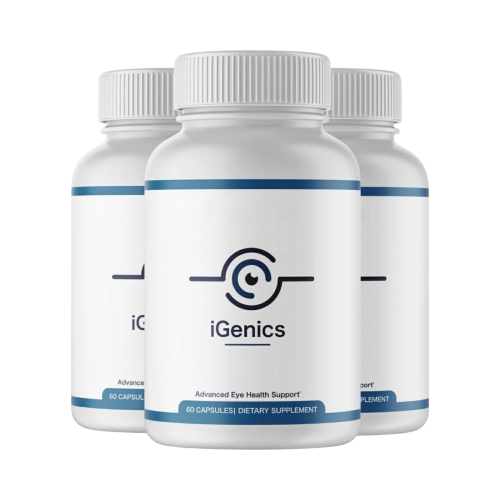
iGenics is one of the products in this category. It combines several nutrients and plant extracts in a single formula and is marketed as a comprehensive eye health supplement.
But how does it compare with other eye supplements? Is its multi-ingredient formula actually better than a simpler lutein and zeaxanthin supplement? Should consumers choose iGenics over an established AREDS2 formulation? And are there more affordable alternatives that offer similar nutritional value?

These are important questions because a higher price or a longer ingredient list does not necessarily mean a better supplement.
In this article, we compare iGenics with different types of eye health supplements, examine their ingredients and scientific evidence, and explain what consumers should consider before choosing one.
Understanding the Different Types of Eye Supplements
Before comparing individual products, it helps to understand that eye supplements are not all designed for the same purpose.
Some provide specific nutrients associated with macular health, while others combine several vitamins and botanical ingredients.
The major categories include:
- Comprehensive eye health supplements such as iGenics.
- Lutein and zeaxanthin supplements.
- AREDS2-based eye vitamins.
- General multivitamins containing eye-supporting nutrients.
- Botanical and antioxidant-based eye supplements.
- Omega-3 supplements.
Each category has different strengths and limitations.
For example, a product containing lutein and zeaxanthin may be a straightforward nutritional choice, while an AREDS2 formulation is intended for a specific group of people with age-related macular degeneration (AMD).
Understanding these differences is more useful than simply comparing the number of ingredients in each bottle.
1. iGenics vs Lutein and Zeaxanthin Supplements
Lutein and zeaxanthin are two of the most widely researched nutrients in the eye health supplement category.
Both are carotenoids naturally present in the retina, particularly in the macula, which is responsible for central vision and fine visual detail.
They are also naturally found in foods such as spinach, kale, and other leafy green vegetables.
Because of their importance in macular nutrition, many supplement manufacturers offer products containing these two ingredients.
What Does iGenics Offer?
The advertised iGenics formula contains several ingredients, including:
- Lutein
- Zeaxanthin
- Vitamin A
- Vitamin C
- Vitamin E
- Zinc
- Copper
- Bilberry extract
- Turmeric extract
- Ginkgo biloba
The idea behind this combination is to provide several nutrients associated with eye health in one supplement.
Rather than focusing only on carotenoids, iGenics combines them with vitamins, minerals, and plant extracts.
What Do Lutein and Zeaxanthin Supplements Offer?
Standalone lutein and zeaxanthin supplements are more focused.
They typically provide these two carotenoids without including a large collection of additional ingredients.
This can make it easier for consumers to understand what they are taking and compare the amounts supplied by different brands.
Some formulations contain approximately 10 mg of lutein and 2 mg of zeaxanthin, amounts also used in the AREDS2 research formulation.
However, not every product uses the same dosage.
Which Is Better?
The answer depends on what someone is looking for.
iGenics may appeal to consumers who prefer a multi-ingredient formula containing carotenoids, vitamins, minerals, and botanical extracts.
A standalone lutein and zeaxanthin supplement may be more suitable for someone who wants a simpler formulation.
There is also a cost consideration. A focused supplement may be less expensive because it contains fewer ingredients.
However, a simpler formula is not automatically more effective, just as a longer ingredient list does not automatically make iGenics superior.
Our assessment: iGenics offers a broader ingredient combination, while standalone lutein and zeaxanthin products provide a more focused nutritional approach. Consumers should compare actual dosages, product quality, and their individual requirements rather than choosing based on ingredient count.
2. iGenics vs AREDS2 Eye Supplements
This is one of the most important comparisons in the eye health supplement category.
AREDS2 is not simply a commercial supplement brand. It refers to a nutritional formulation investigated in a major clinical research programme conducted by the US National Eye Institute.
The research examined whether specific combinations of vitamins and minerals could slow the progression of age-related macular degeneration.
The results established an important role for AREDS2 supplementation in certain people with AMD.
What Is the AREDS2 Formula?
The standard AREDS2 formulation contains:
- Vitamin C: 500 mg
- Vitamin E: 400 IU
- Lutein: 10 mg
- Zeaxanthin: 2 mg
- Zinc: 80 mg
- Copper: 2 mg
One important feature is that AREDS2 replaces beta-carotene with lutein and zeaxanthin.
This matters because beta-carotene supplementation in the original AREDS formulation was associated with an increased risk of lung cancer among former smokers.
AREDS2 formulations avoid this particular concern.
What Does the Research Say?
The National Eye Institute reports that the AREDS and AREDS2 formulations can reduce the risk of progression from intermediate to advanced AMD by approximately 25%.
However, there is an important limitation.
These supplements do not prevent AMD from developing in otherwise healthy people, and they have not been shown to benefit people with early AMD in the original trials.
Their benefits are relevant to particular stages of the disease.
How Does iGenics Compare?
The advertised iGenics formula contains several nutrients that are also found in AREDS2, including:
- Vitamin C
- Vitamin E
- Zinc
- Copper
- Lutein
- Zeaxanthin
However, the advertised quantities differ from the standard AREDS2 formulation.
The iGenics product website lists 20 mg of lutein, 10 mg of zeaxanthin, 20 mg of zinc, and 500 mg of vitamin C per two-capsule serving.
The standard AREDS2 formulation contains 10 mg of lutein, 2 mg of zeaxanthin, and 80 mg of zinc.
This means that the two formulations are not identical.
More importantly, clinical evidence supporting AREDS2 cannot automatically be transferred to iGenics simply because both products contain some of the same nutrients.
Which Is Better?
For someone diagnosed with intermediate AMD, an appropriate AREDS2 formulation has a significant advantage because it is supported by large clinical trials.
iGenics should not be treated as an equivalent substitute.
For someone without AMD who simply wants general nutritional support, the comparison is less straightforward. Neither product should be assumed to prevent future eye disease.
Our assessment: AREDS2 is the stronger evidence-based choice for people who meet the medical criteria for its use. iGenics is a broader commercial supplement, but it does not have equivalent clinical evidence for the finished formula.
Anyone diagnosed with AMD should discuss the appropriate formulation with an ophthalmologist.
3. iGenics vs PreserVision AREDS 2
PreserVision is one of the established commercial brands associated with AREDS2-based eye supplements.
It is produced by Bausch + Lomb, a company known for its eye care products.
Its AREDS 2 formula is designed to provide the specific combination of nutrients used in the AREDS2 research.
What Makes PreserVision Different?
The main advantage of PreserVision AREDS 2 is its connection to the clinically studied AREDS2 nutrient formulation.
It provides:
- Vitamin C
- Vitamin E
- Zinc
- Copper
- Lutein
- Zeaxanthin
These nutrients are provided in amounts intended to match the AREDS2 formula.
This makes the product particularly relevant for people whose eye specialists recommend AREDS2 supplementation.
How Does iGenics Compare?
iGenics takes a different approach.
It combines carotenoids and essential nutrients with additional botanical extracts.
For example, its advertised ingredient profile includes bilberry, turmeric, and ginkgo biloba.
These ingredients are not part of the standard AREDS2 formulation.
This makes iGenics a broader formula in terms of ingredient variety, but that does not establish greater effectiveness.
PreserVision has the advantage of offering a formulation based on the specific nutrient combination studied in AREDS2.
iGenics has the advantage of offering additional botanical ingredients in one product.
Which Is Better?
For people with intermediate AMD who have been advised to take AREDS2, PreserVision AREDS 2 is a more directly relevant option.
For consumers looking for a broader supplement, iGenics may be interesting, but they should understand that its additional ingredients do not establish superior eye health benefits.
Our assessment: PreserVision AREDS 2 has the stronger clinical evidence for its intended use. iGenics offers a different ingredient combination, not a proven improvement over AREDS2.
4. iGenics vs Ocuvite Eye Supplements
Ocuvite is another recognised eye health supplement brand from Bausch + Lomb.
Unlike products based on one or two ingredients, Ocuvite offers different formulations intended to provide nutritional support for eye health.
Depending on the specific product, its formulas may include lutein, zeaxanthin, vitamins, minerals, and other nutrients.
What Does Ocuvite Offer?
Ocuvite products are designed around the idea of providing nutrients that contribute to normal eye function.
Some formulations focus on general nutritional support, while others target the nutritional needs of older adults.
It is important to distinguish between Ocuvite’s different products because they do not all contain identical ingredients or quantities.
How Does iGenics Compare?
Both iGenics and Ocuvite can contain combinations of carotenoids and vitamins.
However, iGenics places greater emphasis on its combination of botanical extracts, including bilberry, turmeric, and ginkgo biloba.
Ocuvite offers different formulations under an established eye care brand.
The more appropriate comparison is therefore between the exact iGenics label and the particular Ocuvite product being considered.
Which Is Better?
Ocuvite may appeal to consumers who prefer an established eye health supplement brand with several formulation choices.
iGenics may appeal to those interested in a formula combining vitamins, minerals, and botanical extracts.
Neither should be declared the winner without comparing their exact ingredient quantities, quality information, and intended use.
Our assessment: Ocuvite offers a more established brand presence in the eye supplement category, while iGenics offers a different multi-ingredient approach. The better option depends on the specific formulation and the consumer’s needs.
5. iGenics vs Basic Eye Health Multivitamins
Another alternative is a regular multivitamin containing nutrients associated with eye health.
Many general multivitamins provide vitamin A, vitamin C, vitamin E, zinc, and other essential nutrients.
Some also include lutein and zeaxanthin.
These products are usually designed to support general nutritional requirements rather than target a particular eye health concern.
What Are the Advantages of Multivitamins?
The main advantage is convenience and potentially lower cost.
Someone who wants general nutritional support may prefer a multivitamin rather than purchasing several separate supplements.
However, general multivitamins often contain different quantities of eye-related nutrients from specialised vision formulas.
For example, a multivitamin may contain vitamin A and zinc but no lutein or zeaxanthin.
Even when these carotenoids are included, their quantities may be lower than those found in specialised products.
How Does iGenics Compare?
iGenics is specifically marketed as an eye health supplement.
Its ingredient combination is more focused on nutrients and botanical extracts associated with eye health.
A general multivitamin may be sufficient for someone who simply wants to meet daily nutritional requirements, but it should not be assumed to provide the same formulation as a dedicated eye supplement.
Which Is Better?
If someone has a general nutritional gap, a suitable multivitamin may be a more economical option.
If someone is specifically interested in nutrients associated with macular health, a targeted formulation may be more relevant.
However, neither option should be used as a substitute for medical treatment.
Our assessment: A multivitamin may offer better overall nutritional value for some people, while iGenics offers a more specialised combination. The choice depends on what nutrients a person actually needs.
6. iGenics vs Botanical Eye Supplements
Botanical ingredients are increasingly common in supplements marketed for eye health.
These products often contain extracts such as bilberry, saffron, ginkgo biloba, and turmeric.
iGenics belongs partly to this category because it combines several botanical ingredients with vitamins and minerals.
Bilberry
Bilberry contains naturally occurring anthocyanins, which are compounds with antioxidant properties.
It has been investigated for possible effects on eye health.
However, evidence that bilberry supplementation improves eyesight or prevents common age-related eye conditions remains limited.
Saffron
Saffron contains compounds such as crocin and crocetin.
Some research has investigated saffron supplementation in relation to retinal function.
Although the findings are interesting, evidence from individual studies does not establish that every commercial saffron supplement provides the same results.
Ginkgo Biloba
Ginkgo biloba has been investigated for its potential effects on circulation and other biological processes.
However, evidence supporting its use for improving eyesight is not conclusive.
It can also interact with certain medicines, including medicines that affect blood clotting.
Turmeric
Turmeric contains curcumin and other compounds that have been studied for their antioxidant and anti-inflammatory properties.
However, laboratory findings do not automatically demonstrate that taking a turmeric supplement improves vision.
Which Is Better?
A botanical supplement may appeal to people interested in plant-derived ingredients.
However, consumers should not assume that natural ingredients are automatically safer or more effective.
The quality of the extracts, dosage, manufacturing standards, and possible medication interactions all matter.
Our assessment: iGenics offers the convenience of combining several botanical extracts with vitamins and minerals. But there is not enough clinical evidence to conclude that this combination produces better vision outcomes than other eye supplements.
7. iGenics vs Omega-3 Eye Supplements
Omega-3 fatty acids are another popular category of nutritional supplements.
They are commonly obtained from fish oil or algae-based products.
The two best-known long-chain omega-3 fatty acids are EPA and DHA.
DHA is an important structural component of the retina, which explains the interest in omega-3s for eye health.
What Do Omega-3 Supplements Offer?
Omega-3 supplements are commonly used for general nutritional support.
They are also investigated for possible benefits in certain aspects of eye health, including dry-eye symptoms.
However, the evidence depends on the particular condition and formulation.
One important finding from the AREDS2 trial was that adding omega-3 fatty acids to the AREDS formulation did not produce an additional overall reduction in the progression of advanced AMD.
This is an important distinction when evaluating eye supplements.
How Does iGenics Compare?
iGenics is primarily a combination of vitamins, minerals, carotenoids, and botanical extracts.
It is not primarily an omega-3 supplement.
Therefore, the two products have different nutritional profiles.
A person interested in omega-3 intake may consider fish or algae-based supplements, while someone interested in lutein and zeaxanthin may prefer a carotenoid-focused formula.
Which Is Better?
Neither is universally better.
They provide different nutrients, and the appropriate choice depends on individual dietary intake and health needs.
Omega-3 supplementation should not be assumed to prevent AMD, and iGenics should not be assumed to treat dry eye.
8. Which Eye Supplement Offers the Best Scientific Evidence?
Scientific evidence should be one of the most important factors when choosing a supplement.
A product may contain attractive ingredients, but the strength of evidence supporting those ingredients varies considerably.
Here is a closer look at the evidence for some important ingredients and formulations.
AREDS2 Formula
AREDS2 has strong clinical evidence for slowing the progression of intermediate AMD to advanced AMD in appropriate patients.
This is one of the best-established uses of nutritional supplementation in eye care.
It is not a proven way to prevent AMD in healthy individuals.
Lutein and Zeaxanthin
These carotenoids are important components of the macular pigment.
They have been investigated extensively, particularly in the context of AMD and macular health.
Their strongest established clinical relevance comes from their inclusion in the AREDS2 formulation.
Bilberry
Bilberry has antioxidant properties, but convincing clinical evidence for improving eyesight or preventing common eye diseases is limited.
Saffron
Some studies have investigated saffron in people with retinal conditions.
However, more research is required to establish its effectiveness across different products and populations.
Ginkgo Biloba
Ginkgo has been studied for several potential health effects, but evidence supporting its use as a vision-improving supplement remains insufficient.
Turmeric
Turmeric contains compounds with interesting biological properties.
However, there is insufficient clinical evidence to conclude that ordinary turmeric supplementation improves eyesight.
The important lesson is that an ingredient’s scientific reputation should not be confused with proof that a particular finished supplement works.
9. Which Eye Supplement Is the Best Value for Money?
Price is another important consideration.
A more expensive supplement is not necessarily a better product.
When comparing products, consumers should calculate the actual daily cost and examine how much of each important ingredient they receive.
For example, a supplement costing $30 per month may provide a similar amount of lutein to a product costing $50 per month.
In such a situation, the more expensive product needs to justify the additional cost through other meaningful features.
The following factors should be considered.
Ingredient Quantities
Check the amount of lutein, zeaxanthin, vitamins, minerals, and botanical extracts per daily serving.
Do not rely on the number of ingredients alone.
Product Quality
Look for transparent labelling, appropriate manufacturing standards, and credible quality testing.
Scientific Evidence
Consider whether the formula is based on clinical research or simply contains ingredients that have been studied individually.
Daily Cost
Compare the price per serving rather than the total price of the bottle.
Refund and Return Policy
For products sold online, examine the actual refund terms before ordering.
Suitability
A product that contains unnecessary nutrients may not offer good value, even if its price appears reasonable.
10. Which Eye Supplement Should You Choose Based on Your Needs?
There is no single eye supplement that is best for everyone.
The right choice depends on the reason someone is considering supplementation.
If You Have Intermediate Age-Related Macular Degeneration
An ophthalmologist may recommend an appropriate AREDS2 formulation.
This category has the strongest clinical evidence for slowing disease progression in eligible patients.
iGenics should not be used as a substitute for a recommended AREDS2 formulation.
If You Want Lutein and Zeaxanthin
A focused supplement containing these two carotenoids may be worth considering.
Compare the amounts per serving and the overall product quality.
If You Want a Multi-Ingredient Eye Supplement
iGenics may be worth researching because it combines vitamins, minerals, carotenoids, and botanical extracts.
However, check the exact ingredient quantities and understand that the finished formula does not have equivalent clinical evidence to AREDS2.
If You Want General Nutritional Support
A balanced diet and an appropriate multivitamin may be sufficient, depending on your nutritional requirements.
There is no reason to assume that everyone needs a specialised eye supplement.
If You Experience Dry Eyes
Eye supplements should not be your first assumption for treating persistent dryness.
Dry eye can have several causes, and an eye care professional can recommend appropriate treatments.
Omega-3 supplements have been investigated for dry-eye symptoms, but research findings are mixed.
If You Spend Long Hours Looking at Screens
Screen-related discomfort can be associated with reduced blinking, prolonged near work, and environmental conditions.
Taking regular breaks, adjusting screen position, and managing screen time may be more useful than relying on an eye supplement.
Supplements should not be marketed as a proven way to reverse digital eye strain.
11. Important Factors to Consider Before Buying Any Eye Supplement
Before choosing iGenics or another eye health supplement, consider the following points.
Check the Complete Supplement Facts Label
Do not rely entirely on advertising claims.
Look for the actual quantity of every ingredient per serving.
A product may advertise a long list of ingredients without clearly communicating whether each one is supplied in a meaningful amount.
Avoid Products That Promise to Restore Eyesight
No ordinary dietary supplement should be expected to reverse established vision loss or cure cataracts, glaucoma, or other eye diseases.
Be cautious about products making dramatic claims.
Consider Your Existing Medication
Some ingredients can interact with prescription medicines.
For example, ginkgo biloba may increase bleeding risk, particularly when combined with certain medicines.
High-dose vitamin and mineral supplementation may also be inappropriate for some individuals.
Discuss a multi-ingredient supplement with a healthcare professional if you take regular medication.
Look for Quality and Manufacturing Information
Consumers should look for transparent manufacturing details, batch information, appropriate quality testing, and a clearly identifiable manufacturer.
Claims such as FDA-registered manufacturing facility should not be confused with FDA approval of a dietary supplement.
Do Not Ignore Eye Examinations
Regular eye examinations are important, especially as people get older.
Changes in vision can have several causes, some of which require medical treatment rather than nutritional supplementation.
12. Final Verdict: Is iGenics Better Than Other Eye Supplements?
After comparing iGenics with different types of eye health supplements, one thing becomes clear: there is no universal winner.
Each category offers a different combination of ingredients, evidence, and intended use.
iGenics has an interesting multi-ingredient formulation. It combines carotenoids, vitamins, minerals, and botanical extracts in one product.
This may appeal to consumers who prefer a broader nutritional supplement rather than purchasing several individual products.
However, having more ingredients does not automatically make a supplement more effective.
AREDS2-based supplements have a major advantage when it comes to clinical evidence for people with intermediate AMD. Their formulation has been studied in large clinical trials, and its benefits are recognised by the National Eye Institute.
Standalone lutein and zeaxanthin products may be more straightforward for consumers who want these specific nutrients.
Ocuvite and PreserVision provide established commercial options, although the exact formulation matters.
General multivitamins may offer better value for people who simply want broader nutritional support.
Botanical supplements provide additional plant-derived compounds, but their clinical evidence for improving eyesight remains limited.
Our final assessment of iGenics:
iGenics is worth considering as a multi-ingredient eye health supplement, but there is currently insufficient evidence to conclude that it is superior to established alternatives.
Its biggest appeal is ingredient variety and convenience, not proven superiority in clinical outcomes.
For consumers considering a purchase, the best approach is to compare the actual ingredient quantities, daily cost, manufacturing quality, and scientific evidence.
Rather than choosing the product with the longest ingredient list or the most impressive marketing claims, choose a supplement that matches your nutritional needs and has credible evidence behind its intended use.
And if you have an existing eye condition, speak with an ophthalmologist before deciding which supplement is appropriate.
Frequently Asked Questions
1. Is iGenics better than regular eye vitamins?
Not necessarily. iGenics contains a combination of vitamins, minerals, carotenoids, and botanical extracts. However, whether it is better depends on the ingredients, quantities, quality, and the intended purpose of supplementation.
2. Is iGenics better than AREDS2?
There is no established clinical evidence showing that iGenics is better than AREDS2. AREDS2 has clinical evidence for slowing the progression of intermediate AMD in eligible patients.
3. Is PreserVision better than iGenics?
PreserVision AREDS 2 has an advantage for people who need the clinically studied AREDS2 formulation. iGenics offers a broader combination of botanical extracts and nutrients, but the two products should not be considered equivalent.
4. Which is better: lutein or iGenics?
Lutein is an individual nutrient, while iGenics is a multi-ingredient supplement that includes lutein and other ingredients. Someone interested specifically in lutein and zeaxanthin may prefer a focused supplement, while someone looking for a broader formula may consider iGenics.
5. Are expensive eye supplements more effective?
Not necessarily. Price does not establish effectiveness. Ingredient quantities, product quality, manufacturing standards, and clinical evidence are more important considerations.
6. Can eye supplements improve eyesight?
Some nutritional supplements can support specific eye health needs. AREDS2, for example, can slow the progression of intermediate AMD in eligible patients. However, ordinary eye supplements should not be expected to reverse vision loss or restore normal eyesight.
7. Can I take iGenics with other multivitamins?
Combining supplements may result in excessive intake of certain vitamins or minerals. Check the combined ingredient quantities and consult a healthcare professional before taking multiple products together.
8. Which eye supplement is best for people over 50?
There is no single best supplement for everyone over 50. People with intermediate AMD may benefit from an appropriate AREDS2 formulation, while others may only need a balanced diet and routine eye examinations. Individual needs should guide the decision.
Affiliate Disclosure: This article contains affiliate links. We may earn a commission if you purchase through our links, at no additional cost to you.