
Access to clean drinking water is something most people take for granted. We turn on a tap, fill a glass, cook, shower, and carry on with our daily routines. But water shortages, droughts, infrastructure failures, contamination concerns, and natural disasters have made many people think more seriously about having an independent water supply.
This has created growing interest in off-grid water solutions, emergency preparedness, rainwater collection, water filtration, and atmospheric water generators.
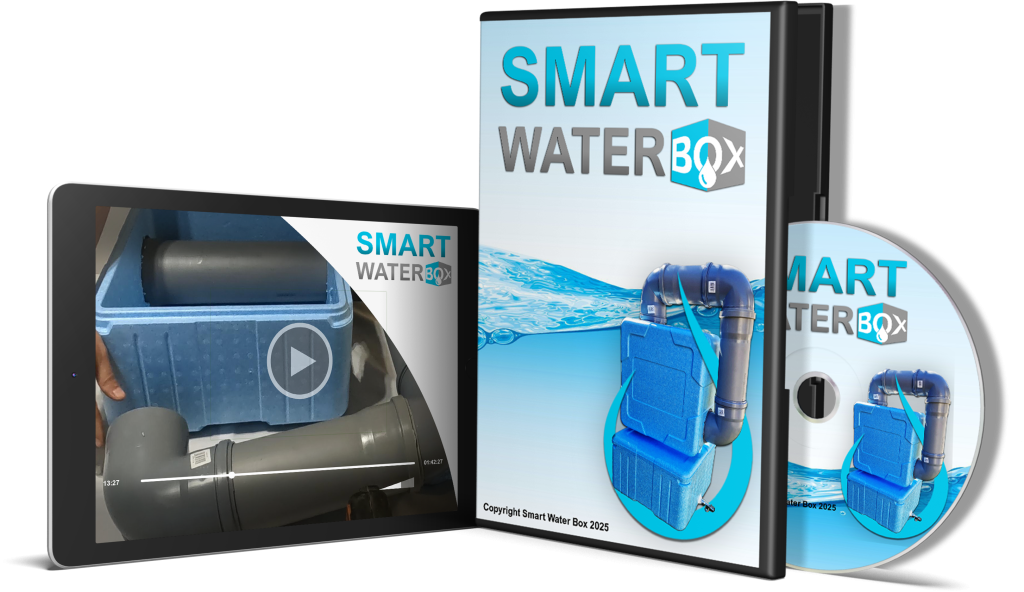
One product attracting attention in this area is Smart Water Box.
The product is promoted as a DIY solution that supposedly teaches ordinary people how to build a system capable of collecting water from the humidity in the surrounding air. Its sales presentation makes some impressive claims, including the possibility of producing up to 40 gallons of water per day and building the system for a relatively small amount of money.

But what exactly is Smart Water Box? Does it include an actual machine? How does the proposed technology work? Are the production claims realistic? What materials might be required? And is the digital guide worth purchasing?
In this detailed Smart Water Box review, we examine the product, its advertised features, the underlying atmospheric water generation technology, the construction claims, the price, the bonuses, and the potential limitations.
Our objective is to help readers understand what they are actually buying before spending their money.
What Is Smart Water Box?
Smart Water Box is marketed as a downloadable DIY guide that teaches customers how to build an atmospheric water generation system.
Rather than purchasing a finished water generator, customers receive digital instructions, diagrams, materials information, and a step-by-step construction guide.
The central idea is to collect moisture from the surrounding air and turn it into liquid water through condensation.
This process is known as atmospheric water generation, commonly abbreviated as AWG.
The concept is not new. Water can be extracted from humid air by cooling it until the moisture condenses, much like water droplets forming on the outside of a cold glass.
Smart Water Box presents this principle as a relatively affordable home project that could help individuals create an additional water source.
According to the sales presentation, the guide includes:
- Simplified blueprints and diagrams
- A list of materials and tools
- Step-by-step construction instructions
- Information about collecting water from atmospheric humidity
- Safety and water-storage guidance
- Troubleshooting instructions
- Information about possible upgrades
- Access to customer support
The manufacturer also advertises additional DIY guides as bonuses.
One important distinction should be understood immediately: Smart Water Box is a digital information product, not a physical water generator delivered to your home.
You purchase the guide and are expected to obtain the necessary materials and construct the system yourself.
That means the actual cost of using the product will be higher than the digital guide’s purchase price.
How Does Smart Water Box Work?
To understand the product, it helps to understand the basic science behind atmospheric water generation.
Air naturally contains water vapour. The amount of moisture present depends on factors such as temperature, relative humidity, weather conditions, and location.
When humid air comes into contact with a sufficiently cold surface, some of its water vapour can condense into liquid droplets.
This is the same basic process that occurs when:
- Water droplets appear on a cold bottle
- Condensation forms on windows during humid weather
- An air conditioner collects water while cooling a room
- A dehumidifier removes moisture from indoor air
An atmospheric water generator uses this principle to collect water deliberately.
Step 1: Drawing Air Into the System
The first stage involves moving surrounding air through the device.
A fan or another airflow mechanism draws air into the system so that moisture in the air can be collected.
The amount of water available depends heavily on the humidity and temperature of the surrounding environment.
Air in a humid tropical climate contains more moisture than air in a very dry desert environment.
Step 2: Cooling the Air
In a conventional condensation-based atmospheric water generator, the air passes over a cold surface.
When the surface temperature falls below the dew point, water vapour begins to condense.
The dew point is the temperature at which air becomes saturated with water vapour.
The resulting droplets collect on the cooling surface.
This is broadly similar to how an air conditioner or dehumidifier removes moisture from the air.
Step 3: Collecting the Condensed Water
The condensed droplets are directed into a collection container or holding tank.
The system needs suitable materials and a design that prevents contamination during collection.
Water collection is only one part of the process. The surfaces, tubing, container, and other components that come into contact with the water must also be suitable for their intended use.
Step 4: Treating and Storing the Water
Water collected from air should not automatically be assumed to be safe to drink.
Depending on the system design and environmental conditions, it may contain contaminants introduced through the air, collection surfaces, storage containers, or plumbing components.
Appropriate treatment, sanitation, and safe storage procedures are therefore essential.
Smart Water Box claims that its guide includes safety and storage instructions. Buyers should carefully examine those instructions and independently verify that any proposed treatment method is suitable for producing drinking water.
Is Atmospheric Water Generation Real?
Yes. Atmospheric water generation is a genuine technology.
Commercial atmospheric water generators already exist, and some use refrigeration-based condensation to extract moisture from the air.
There are also other approaches, including systems using desiccant materials that absorb moisture and subsequently release it for collection.
However, the existence of atmospheric water generation technology does not automatically prove that every DIY design will produce large quantities of water.
Actual performance depends on engineering, climate, humidity, temperature, energy consumption, cooling capacity, airflow, and the quality of the system’s construction.
This is particularly important when evaluating the Smart Water Box production claims.
What Does Smart Water Box Claim Its System Can Produce?
One of the most attention-grabbing claims in the sales presentation is that the proposed system can produce up to 40 gallons of water per day.
That is a substantial amount of water.
For perspective, 40 US gallons is approximately 151 litres.
If a system genuinely produced that amount consistently, it could provide a significant supplementary water supply for a household.
However, buyers should treat this figure as a promotional claim rather than a verified performance specification.
The amount of water that can be extracted from air is limited by the amount of moisture available and the system’s ability to collect it.
A design that produces a modest quantity of water under one set of conditions may perform very differently in another climate.
To establish whether a DIY system can consistently produce 40 gallons per day, independent testing would be necessary.
Such testing should measure:
- Temperature and relative humidity
- Water collected over a complete 24-hour period
- Electricity consumption
- Operating time
- Water quality
- Performance under different weather conditions
- Reliability over extended use
The sales presentation does not provide sufficient independently verified test data to establish that the proposed DIY system can reliably produce 40 gallons every day.
This is one of the most important limitations to consider before purchasing the guide.
Can You Really Extract Water From Thin Air?
Yes, but the phrase “water from thin air” can make the process sound easier than it actually is.
Air contains water vapour, but extracting that moisture requires energy or a suitable moisture-collection mechanism.
In a conventional refrigeration-based system, electricity is needed to cool the air and create condensation.
The process is not equivalent to producing unlimited water without any energy input.
The amount of water collected depends on the moisture content of the air and the efficiency of the equipment.
For example, a humid environment generally offers better conditions for atmospheric water collection than an extremely dry environment.
This is why atmospheric water generators are often more practical in certain climates than others.
The technology is real, but the operating conditions matter.
What Do You Get When You Purchase Smart Water Box?
According to the product presentation, the purchase includes a collection of digital resources designed to help customers plan and construct their own atmospheric water generator.
Let’s examine the advertised components.
1. Smart Water Box DIY Guide
This is the main product.
The guide is presented as a step-by-step resource that explains how to construct the proposed water-generation system.
The sales presentation describes the instructions as simplified versions of technical plans, intended to make the project accessible to ordinary homeowners rather than professional engineers.
The guide is advertised as including information about the design, construction process, and operation of the system.
The quality of this main guide is the most important factor in determining whether Smart Water Box offers good value.
A useful DIY guide should provide much more than a collection of general explanations.
Ideally, it should include clear diagrams, accurate dimensions, component specifications, safety information, and realistic expectations about performance.
Customers should also be able to identify exactly which materials are required before beginning construction.
2. Blueprints and Schematics
The product presentation describes the blueprints as a simplified version of the proposed atmospheric water generator design.
These are intended to help customers understand how the different components fit together.
For a technical DIY project, diagrams can be particularly useful.
A person may understand the general principle of condensation but still struggle to assemble a functioning system without clear illustrations.
However, the practical value of the blueprints depends on their accuracy, completeness, and technical detail.
A drawing that illustrates the general arrangement of components is not necessarily a professionally validated engineering plan.
Customers should not assume that references to military or aerospace technology mean that the supplied plans have been independently authenticated or tested by those organisations.
3. Materials and Tools List
Another advertised component is a materials and tools list.
This is an important feature because DIY projects can become expensive when buyers purchase incorrect components or repeatedly modify a design.
A good materials list should identify the necessary components, their specifications, quantities, and intended functions.
For an atmospheric water-generation system, the relevant categories may include:
- Airflow components
- Cooling equipment
- Heat-exchange components
- Condensation collection materials
- Water storage containers
- Suitable tubing and connections
- Electrical components
- Water-treatment equipment
The exact components will depend on the design.
Buyers should examine the actual list before purchasing additional materials.
It is also important to remember that inexpensive components are not always suitable for systems intended to produce drinking water.
Materials that come into contact with collected water should be selected with food-contact and drinking-water safety in mind.
4. Step-by-Step Construction Instructions
The product is promoted as a guide that ordinary people can follow, even without extensive engineering experience.
The sales presentation suggests that the system can be built over a weekend.
However, this should be treated as a marketing estimate rather than a guaranteed construction timeline.
The actual time required will depend on:
- The complexity of the design
- The availability of materials
- The builder’s experience
- The tools available
- Whether modifications are necessary
- Whether the instructions are sufficiently detailed
A first-time DIY builder may need considerably longer.
It is also possible that some components will require technical knowledge or professional assistance.
5. Safety and Water Storage Information
This is arguably one of the most important parts of the product.
Collecting water is not the same as producing safe drinking water.
Even if water appears clear and tastes normal, that does not establish that it is free from harmful microorganisms or chemical contaminants.
A responsible water-generation guide should explain the difference between collecting water, treating water, and storing it safely.
It should also explain how to prevent contamination from equipment surfaces and storage containers.
Customers should verify the safety recommendations rather than assuming that every collected batch will automatically be potable.
6. Troubleshooting and Upgrade Information
DIY systems do not always work perfectly on the first attempt.
Fans may fail, connections may leak, condensation may not form efficiently, and water collection rates may be lower than expected.
Troubleshooting information can therefore add meaningful value.
The product presentation says that the guide includes a troubleshooting checklist and information about possible upgrades or scaling.
However, the actual usefulness of this material depends on how specific and technically accurate the instructions are.
What Are the Free Bonuses Included With Smart Water Box?
The sales presentation also advertises additional digital resources.
These are presented as bonuses that customers receive with the main guide.
Bonus 1: SunHeat DIY
The first advertised bonus is called SunHeat DIY.
It is described as a guide to building a solar-powered water-heating system.
The idea is to use sunlight to heat water through a DIY arrangement involving inexpensive materials.
The advertised contents include:
- Instructions for constructing solar water-heating panels
- A materials list
- Measurements and design information
- Guidance on mounting the system
- Suggestions for integrating it with an existing water setup
- Information about storing heated water
Solar water heating is an established concept.
Commercial solar water heaters are widely used, and simpler DIY arrangements can also capture solar heat.
However, performance depends on the design, sunlight availability, insulation, storage capacity, and operating conditions.
The bonus may be useful to people interested in reducing conventional water-heating costs, but buyers should assess the actual instructions before assuming that it will provide a complete household hot-water solution.
Bonus 2: Home DIY Secrets
The second advertised bonus is called Home DIY Secrets.
It is presented as a collection of practical home-improvement and money-saving projects.
The sales page describes topics such as:
- Basic home repairs
- Home insulation improvements
- Energy-saving ideas
- Utility-cost reduction
- DIY cleaning products
- General household maintenance
These topics may appeal to people who enjoy doing home projects themselves.
The practical value depends on whether the guide provides accurate instructions and useful information rather than simply repeating general DIY advice.
Some household repairs are straightforward, while electrical, structural, plumbing, and gas-related work may require qualified professionals.
A DIY guide should not encourage people to perform work that could create safety risks or violate local regulations.
Are the Bonuses Valuable?
The two additional guides may increase the overall appeal of the package, particularly for people interested in home improvement and self-sufficiency.
However, it is important not to assign a high financial value to digital bonuses simply because a sales page advertises them as expensive products.
Their actual value depends on their contents, accuracy, completeness, and practical usefulness.
The main reason to purchase Smart Water Box should be the quality of its water-generation instructions, not the perceived value of the bonuses.
Does Smart Water Box Really Cost Only $39?
The sales page examined advertises Smart Water Box for a one-time payment of $39.
The offer is presented as an instant digital download rather than a physical product delivery.
According to the promotional presentation, the purchase includes the main guide, the additional resources, and access to support.
The page also describes the payment as a one-time purchase without a subscription.
At $39, the initial price is relatively accessible compared with the cost of many commercial water-generation systems.
However, it is important to understand that this is only the price of the digital guide.
Customers must separately purchase the materials required to build the proposed system.
The sales presentation estimates that construction could cost under $110 if parts are purchased new, with some people supposedly spending less by reusing materials.
These are promotional estimates, not independently verified cost figures.
Actual costs will depend on local prices, the availability of components, shipping, tools, and any additional parts needed to complete the system.
Therefore, the total investment could be higher than the initial $39 payment.
What Is the Real Total Cost?
A realistic cost assessment should include several components:
Digital guide: The advertised purchase price is $39.
Materials: The cost depends on the exact design and components required.
Tools: Some buyers may already own the necessary tools, while others may need to purchase or rent them.
Electricity: A conventional condensation-based system requires energy to move and cool air.
Water treatment: Additional treatment equipment or testing may be necessary to establish drinking-water safety.
Maintenance: Fans, cooling components, connections, and other parts may require maintenance or replacement.
Storage: Suitable water storage containers may add to the total investment.
This is why buyers should avoid assuming that a complete, reliable, drinking-water-producing system will cost only $39 or even the advertised construction estimate.
Is the $39 Price Reasonable?
The answer depends on the quality of the information included in the guide.
A detailed DIY manual with clear diagrams, accurate specifications, realistic performance expectations, and useful safety information could provide value to someone interested in building an atmospheric water generator.
A vague collection of general instructions would be much less useful.
At $39, the purchase price is relatively modest compared with the cost of a commercial atmospheric water generator.
However, the guide’s value cannot be judged only by comparing its price with the price of finished equipment.
The customer is paying for information, not for a tested machine.
The real question is whether the guide contains sufficiently detailed and reliable information to help someone build a functioning system safely.
The available promotional material does not provide enough independent evidence to answer that question conclusively.
Can Smart Water Box Really Produce 40 Gallons of Water Per Day?
This is one of the biggest questions potential buyers should investigate.
The sales presentation claims that the proposed system can produce up to 40 gallons per day.
That figure sounds impressive, but atmospheric water production is governed by basic physical limits.
The amount of water available in the air depends on temperature and relative humidity.
A system also needs sufficient cooling capacity, airflow, and energy to collect the moisture.
Why Humidity Matters
Relative humidity measures how close the air is to being saturated with water vapour at a given temperature.
When relative humidity is high, the air generally contains more water vapour.
This creates more favourable conditions for atmospheric water generation.
In dry environments, there may be much less moisture available to collect.
Consequently, a system may produce substantially different quantities of water depending on the weather.
Why Temperature Matters
Temperature also affects how much moisture air can hold.
Warm air can contain more water vapour than cold air at the same relative humidity.
This means that temperature and humidity need to be considered together when estimating potential water production.
A system operating in a warm, humid environment may perform differently from the same design operating in a cooler or drier environment.
Why Cooling Capacity Matters
Even if the air contains plenty of moisture, the equipment must be capable of cooling it sufficiently.
A small fan and a basic cooling arrangement cannot automatically be expected to produce large volumes of water.
The heat removed from the air must also be managed.
This is an important engineering consideration that can affect both water output and electricity consumption.
What About the 40-Gallon Claim?
The advertised figure should not be treated as a guaranteed daily output.
To evaluate it properly, buyers would need independently verified measurements showing the system’s performance under specified conditions.
Without those measurements, it is impossible to establish whether 40 gallons per day is realistic for the proposed DIY design.
This does not mean that the basic technology is impossible.
It means that the specific output claim needs evidence.
Is the Water Produced by Smart Water Box Safe to Drink?
Water safety deserves special attention.
People may assume that water extracted from air is naturally pure because it does not come from a river, lake, or underground source.
That assumption is not necessarily correct.
Air can contain dust, pollutants, microorganisms, and other airborne particles.
Water may also become contaminated when it passes over equipment surfaces or enters a storage container.
The materials used in a DIY system can introduce additional risks if they are not suitable for contact with drinking water.
Why Water Treatment Matters
A responsible atmospheric water-generation system should consider several aspects of water quality.
These include:
- Microbiological safety
- Chemical contamination
- Collection-surface cleanliness
- Storage-container hygiene
- Prevention of microbial growth
- Appropriate treatment and testing
The exact treatment requirements depend on the design and the conditions in which the system operates.
Boiling, filtration, and disinfection are not interchangeable solutions for every contaminant.
For example, boiling can kill many disease-causing microorganisms but does not remove dissolved metals or chemical pollutants.
Likewise, ordinary particulate filtration does not necessarily remove all dissolved contaminants or microorganisms.
Water intended for drinking should be evaluated using appropriate testing and treatment methods.
The Smart Water Box sales page says the guide includes safety and storage protocols. However, buyers should independently assess whether those instructions are sufficiently detailed and technically sound.
Never assume that water is safe to drink simply because it looks clear.
Does Smart Water Box Work Without Electricity?
This is another important point.
The product is promoted as an off-grid water solution, but the basic condensation process requires energy to cool air below its dew point.
A conventional atmospheric water generator uses electricity to operate cooling equipment and fans.
Therefore, a DIY system based on refrigeration and condensation will generally require an electricity source.
That source could potentially be connected to a conventional electrical supply or an appropriately designed alternative power system.
But off-grid operation is not the same as electricity-free operation.
If the system depends on electrical components, buyers need to understand how much power it requires and whether the proposed design can operate reliably using an alternative energy source.
The product’s promotional claims about independence from the conventional water supply should not be interpreted as proof that the system operates without energy.
Can You Build Smart Water Box Without Engineering Experience?
The product is marketed toward ordinary homeowners, including people who do not have professional engineering backgrounds.
This is an appealing idea because many DIY enthusiasts enjoy learning new skills and building useful household equipment.
However, there is a difference between assembling a simple household project and constructing a reliable atmospheric water generator.
The project may involve airflow, cooling, condensation, electrical connections, plumbing, storage, and water treatment.
A clear guide can make these concepts easier to understand, but it cannot eliminate the need for careful construction.
The actual difficulty will depend on the design and the experience of the person building it.
Someone who regularly works with tools and household equipment may find the project easier than someone attempting their first technical DIY build.
Buyers should also consider whether they have access to the required tools and materials.
The claim that almost anyone can build the system in a weekend should be treated as a promotional estimate rather than a guaranteed result.
Is Smart Water Box Suitable for Emergency Preparedness?
Emergency preparedness is one of the strongest potential reasons to explore alternative water sources.
Natural disasters, infrastructure failures, droughts, and temporary supply interruptions can disrupt access to water.
Households may therefore benefit from having a backup water plan.
Smart Water Box is marketed toward people interested in off-grid living and water independence.
The idea of being able to generate additional water at home may sound attractive.
However, there is an important distinction between a supplementary water source and a dependable emergency supply.
A DIY atmospheric water generator should not be relied upon as the only source of drinking water during an emergency unless its performance and safety have been properly established.
For emergency preparedness, it is sensible to consider several options:
- Properly stored drinking water
- Commercially available water containers
- Reliable filtration equipment
- Approved water-treatment methods
- Rainwater collection where legally permitted
- Backup arrangements appropriate to local conditions
A combination of solutions is generally more resilient than depending on one untested device.
The Smart Water Box concept may be interesting as a DIY project, but its output and reliability need independent verification before it can be considered a dependable emergency water source.
Is Smart Water Box Suitable for People Living in Hot and Humid Climates?
Climate is particularly important for atmospheric water generation.
People living in humid regions may have more favourable conditions for extracting moisture from air than those living in dry environments.
However, humidity alone does not determine performance.
Temperature, cooling capacity, airflow, electricity consumption, and equipment efficiency also matter.
For example, a warm and humid environment may contain substantial moisture, but the system still needs sufficient cooling capacity to condense it.
A very hot environment can also increase the cooling load.
Therefore, buyers should not assume that a particular climate guarantees a specific water output.
It is better to evaluate the system using local temperature and humidity measurements.
What Is the Difference Between Smart Water Box and a Commercial Atmospheric Water Generator?
Commercial atmospheric water generators are complete machines designed to extract moisture from the air.
They typically include an engineered combination of:
- Air intake and filtration
- Cooling equipment
- Condensation surfaces
- Water collection systems
- Water treatment components
- Storage arrangements
- Electrical controls
They are sold as finished equipment, and their specifications may include rated water output and electricity consumption under stated operating conditions.
Smart Water Box, by contrast, is a digital DIY guide.
It aims to teach customers how to construct their own system rather than supplying a finished, commercially tested appliance.
This creates a difference in both price and responsibility.
A commercial machine may cost considerably more, but the buyer receives an assembled product with manufacturer specifications.
With a DIY guide, the customer is responsible for sourcing materials, building the system, checking its performance, and ensuring that the resulting water is safe.
Neither option is automatically better.
The right choice depends on the buyer’s budget, technical skills, intended use, and willingness to handle construction and testing.
Smart Water Box vs. Rainwater Harvesting
Rainwater harvesting is another way of creating an alternative water supply.
It involves collecting rainfall from roofs or other suitable surfaces and directing it into storage containers.
The approach is relatively straightforward, but its effectiveness depends on rainfall patterns, collection area, storage capacity, and local regulations.
Smart Water Box uses a different concept.
Instead of collecting rainfall, it aims to extract water vapour already present in the surrounding air.
Advantages of Rainwater Harvesting
Rainwater harvesting can collect substantial amounts of water during periods of rainfall.
A suitably designed system can be relatively simple and may provide water for gardening, cleaning, and other non-drinking uses.
However, rainfall can be seasonal or unpredictable.
Collected water may also require treatment, depending on the intended use.
Potential Advantages of Atmospheric Water Generation
Atmospheric water generation does not depend on rainfall occurring at that particular moment.
It may collect moisture whenever the environmental conditions and equipment allow.
However, it requires suitable operating conditions and energy.
Which Is Better?
Neither solution is universally better.
Rainwater harvesting may be more practical in areas with regular rainfall and sufficient roof space.
Atmospheric water generation may be worth exploring in humid environments where suitable equipment and electricity are available.
Some households may benefit from having both systems as part of a broader water-management strategy.
Smart Water Box vs. Water Filtration Systems
Water filtration systems are designed to treat an existing water source.
They do not normally create water from air.
Instead, they remove or reduce selected contaminants from water supplied through a tap, well, storage tank, or another source.
Different filtration technologies address different contaminants.
For example, activated carbon filters can reduce certain chemicals and improve taste, while reverse osmosis systems can reduce a broader range of dissolved substances.
The correct system depends on the water-quality problem.
Smart Water Box approaches the issue from a different direction by attempting to collect moisture from air.
It is therefore not a direct replacement for a conventional water purifier.
A person with an existing water supply may find a properly selected filtration system more practical than building a new water-generation device.
Someone interested in an additional water source may find atmospheric water generation worth investigating.
Is Smart Water Box Legit or a Scam?
This is a reasonable question, especially because the sales presentation uses dramatic storytelling and makes some extraordinary claims.
There are several things to separate when evaluating the product.
First, atmospheric water generation is a real scientific and engineering concept.
Second, Smart Water Box is advertised as a digital guide containing instructions and plans, not as a ready-made machine.
Third, the specific performance claims made in the marketing material need independent verification.
The sales presentation describes a story involving military engineering documents, NASA-related technology, secret research, and an allegedly suppressed water-generation system.
It also uses a dramatic narrative about water shortages, government control, and a family surviving a wildfire.
These are promotional storytelling elements. They should not be treated as independently verified historical or engineering evidence.
The sales page itself identifies the author as using a pen name.
References to NASA, military technology, submarines, or classified research do not establish that the supplied plans were developed, approved, or tested by those organisations.
The basic science of condensation is real, but that is not the same as proving the specific Smart Water Box design will deliver the advertised results.
A fair assessment is that Smart Water Box is a real digital product being marketed around a genuine scientific principle, but its stronger performance and historical claims should be approached cautiously.
Before purchasing, buyers should focus on the actual contents of the guide, the construction requirements, the safety instructions, and the evidence supporting its advertised output.
What Does the Sales Presentation Claim About the Author?
The sales presentation uses a first-person story about a man who supposedly discovers technical plans through a relative with a military engineering background.
The story describes the development of a homemade atmospheric water generator and claims that the system helped protect a family during a wildfire.
It also describes the alleged use of technology inspired by military submarines and space-related water-recovery systems.
These claims create an emotional narrative around independence and emergency preparedness.
However, the product page does not provide sufficient independent documentation to verify the story or establish the claimed connection to classified military or NASA technology.
The promotional page also states that the author uses a pen name.
Readers should therefore distinguish between the story used to sell the product and independently verifiable evidence about the technology.
The most useful way to assess Smart Water Box is to examine its technical content rather than rely on the emotional narrative.
What About the 60-Day Money-Back Guarantee?
The Smart Water Box sales page advertises a 60-day money-back guarantee.
This is an attractive feature because it gives customers a defined period to evaluate their purchase.
According to the promotional presentation, customers who are dissatisfied can request a refund within the guarantee period.
The page describes the guarantee as a no-questions-asked policy.
However, buyers should always confirm the current refund conditions at checkout.
It is sensible to check:
- When the 60-day period begins
- Whether the purchase is eligible for a full refund
- How refund requests must be submitted
- Whether any special conditions apply to digital downloads
- Which company handles the refund
- How long refunds generally take to process
The product is sold through ClickBank, which acts as the retailer for the transaction.
Customers should retain their order confirmation and use the appropriate order-support channel if they need assistance.
A money-back guarantee can reduce the financial risk of trying a digital product, but it does not prove that the instructions will work or that the resulting device will produce a particular amount of water.
What Does the Smart Water Box Affiliate Page Tell Us?
The product also has an affiliate programme.
According to its affiliate information page, Smart Water Box uses ClickBank to manage affiliate sales, billing, and commission payments.
The affiliate page advertises a commission of 75% per sale.
It also lists several promotional versions, including different sales-page and pricing options.
The affiliate page claims that affiliates have achieved conversion rates of approximately 9–12% or higher and earnings per click above $2 on cold traffic.
These are promotional performance claims made by the vendor. They should not be treated as independently verified results or as a guarantee of what every affiliate will earn.
For consumers, the important point is that Smart Water Box is marketed through an affiliate-based sales model.
That does not automatically make the product unreliable. Many legitimate digital products use affiliate marketing.
However, it is another reason to evaluate the product independently rather than relying only on promotional testimonials or sales claims.
What Are the Main Advantages of Smart Water Box?
There are several aspects of the product that may appeal to the right buyer.
1. Affordable Initial Purchase Price
The advertised $39 price is relatively accessible for a digital DIY guide.
It is considerably less than the purchase price of many commercial atmospheric water generators.
However, buyers must budget separately for materials and any additional equipment.
2. Interesting Technology
Atmospheric water generation is a genuine and interesting application of thermodynamics.
People interested in engineering, sustainability, and DIY projects may find the underlying concept worth exploring.
3. Potential Learning Value
The guide is marketed as an introduction to building a system that extracts moisture from air.
For someone interested in understanding condensation-based water collection, a well-prepared instructional resource could have educational value.
4. Detailed DIY Materials
The advertised inclusion of blueprints, materials information, and construction instructions is potentially useful.
A well-organised manual can save time compared with researching every component independently.
The actual quality of these materials, however, needs to be assessed.
5. Additional DIY Bonuses
The solar water-heating and home-improvement guides may appeal to people interested in broader household self-sufficiency.
6. Advertised Refund Guarantee
The 60-day guarantee provides an additional layer of reassurance, subject to the current refund terms.
What Are the Disadvantages of Smart Water Box?
A balanced review should also examine the limitations.
1. You Do Not Receive a Finished Machine
This is the biggest point buyers need to understand.
Smart Water Box is a digital guide.
Customers must build the proposed system themselves.
Anyone expecting a ready-to-use appliance delivered to their doorstep may be disappointed.
2. Additional Construction Costs
The $39 purchase price does not include all the materials, tools, electricity, storage equipment, and treatment components required for a functioning system.
The actual project cost may be considerably higher.
3. Water Production Is Climate-Dependent
Atmospheric water generation depends on environmental conditions.
A system that performs well in humid conditions may produce much less water in dry conditions.
The advertised daily output should therefore not be treated as a guarantee.
4. Electricity May Be Required
A conventional condensation-based design needs energy to move and cool air.
Buyers should understand the energy requirements before assuming that the system offers complete independence from the electricity grid.
5. Water Safety Requires Careful Attention
Collected water is not automatically drinking water.
The design, materials, treatment process, and storage conditions all affect water quality.
This is a serious consideration for anyone intending to use the system for drinking or cooking.
6. Limited Independent Performance Evidence
The sales presentation contains impressive production claims, but it does not provide enough independently verified testing to establish that the DIY system consistently produces up to 40 gallons per day.
This makes it difficult to evaluate the product’s practical performance before purchasing.
7. Technical Skill May Still Be Necessary
Although the product is marketed as suitable for beginners, building a reliable system may involve technical work.
Some people may need additional guidance or professional help.
Who Should Consider Buying Smart Water Box?
Smart Water Box may be worth researching for people who:
- Enjoy DIY engineering projects
- Are interested in atmospheric water generation
- Want to learn how condensation-based water collection works
- Have experience with household tools and equipment
- Are interested in off-grid living
- Want to experiment with alternative water sources
- Understand that the product is a guide rather than a finished appliance
- Are comfortable purchasing additional materials and equipment
For these buyers, the guide may be an interesting educational or experimental project.
The most important thing is to have realistic expectations about the work involved and the possible output.
Who Should Probably Avoid Smart Water Box?
The product may not be suitable for everyone.
People Looking for an Immediate Water Supply
If you need a ready-to-use source of drinking water, a digital construction guide is not the most direct solution.
A commercially manufactured water purifier, properly stored drinking water, or another established water-supply arrangement may be more appropriate.
People Expecting 40 Gallons Every Day
Anyone purchasing the guide solely because they expect a guaranteed 40-gallon daily output should reconsider.
The advertised figure has not been independently established for the proposed DIY design.
People Who Dislike DIY Projects
The product requires construction work.
If you do not enjoy sourcing materials, assembling equipment, troubleshooting, and learning technical concepts, the project may become frustrating.
People Living in Very Dry Environments
Atmospheric water generation is strongly influenced by available moisture.
In very dry conditions, water production may be limited.
People Who Need Guaranteed Drinking-Water Quality
If your primary requirement is a dependable source of safe drinking water, you should not rely on an untested DIY system.
Any water-generation arrangement needs appropriate treatment, testing, and safe storage.
Is Smart Water Box Useful for People Living in India?
India has a wide range of climatic conditions, so the potential suitability of atmospheric water generation varies by region.
Some parts of the country experience high humidity, particularly during the monsoon season and in coastal areas.
Other regions experience relatively dry conditions during certain months.
This means that a DIY atmospheric water generator may perform differently depending on where it is installed and the time of year.
For example, a humid coastal location may provide more favourable conditions for collecting atmospheric moisture than a dry inland region.
However, even in humid locations, the system needs adequate cooling capacity and energy.
There are also practical considerations for Indian buyers.
Availability of Components
Some components may be easy to find through local electrical, refrigeration, hardware, and plumbing suppliers.
Others may need to be purchased online or sourced from specialised vendors.
The actual availability and price will depend on the design.
Electricity Consumption
Electricity consumption is important in India, particularly if the objective is to create an off-grid water source.
A system that produces water but consumes substantial electricity may not provide the expected financial savings.
Water Quality
Water quality and safe storage are particularly important in hot environments.
Storage containers, tubing, and collection surfaces should be suitable for drinking-water use.
Appropriate testing and treatment are necessary before consumption.
Local Regulations
Any construction involving electrical systems, plumbing, water collection, or modifications to property should comply with applicable safety and local requirements.
Indian buyers should also check whether the proposed materials and construction methods are appropriate for local conditions.
Overall, Smart Water Box may be interesting to Indian DIY enthusiasts, but its performance and economics should be evaluated using local climate conditions and component prices rather than relying on promotional estimates from another country.
Is Smart Water Box Better Than Buying Bottled Water?
The sales presentation compares the proposed system with the recurring cost and inconvenience of buying bottled water.
This is an understandable comparison, but the economics depend on several variables.
Bottled water is convenient and requires no construction.
However, buying it regularly can become expensive, and storage and plastic waste may be concerns for some households.
A DIY atmospheric water generator may offer an alternative source, but it requires equipment, electricity, maintenance, and water treatment.
The initial cost of the guide is only a small part of the total investment.
To compare the options fairly, consumers should calculate:
- The total construction cost
- Electricity consumption
- Maintenance expenses
- Water-treatment costs
- Actual daily water production
- The price of bottled water in their area
Without reliable performance measurements, it is not possible to establish how quickly a Smart Water Box installation would recover its costs.
It may be an interesting project, but buyers should not assume that it will automatically eliminate their bottled-water expenses.
Can Smart Water Box Help You Become Completely Independent of Municipal Water?
The product is marketed around the idea of water independence.
However, complete independence from municipal water is a much bigger goal than building one DIY generator.
A household needs water for drinking, cooking, bathing, cleaning, laundry, sanitation, and other activities.
The amount required depends on household size, lifestyle, climate, and local conditions.
Even if an atmospheric water generator produces a useful quantity of water, its output may not be sufficient for every household need.
The system may also depend on electricity, replacement components, and suitable environmental conditions.
Therefore, it is more realistic to think of atmospheric water generation as a potential supplementary water source rather than assuming that one small DIY project can replace an entire municipal water supply.
What Should You Check Before Buying Smart Water Box?
Before purchasing the guide, take some time to evaluate the product carefully.
Here are the most important questions to consider.
Is it a physical product?
No. The advertised product is a digital guide and associated resources.
What is the purchase price?
The sales page examined advertises a $39 one-time payment. Confirm the current price at checkout.
Are materials included?
The guide is advertised as including a materials list, but the physical construction components must be purchased separately.
Does it guarantee 40 gallons per day?
The sales presentation claims up to 40 gallons per day, but this output has not been independently verified for the proposed DIY design.
Does it work in every climate?
No. Atmospheric water generation depends on humidity, temperature, and equipment performance.
Does it require electricity?
A conventional condensation-based system requires energy for airflow and cooling.
Is the collected water automatically safe to drink?
No. Water quality, treatment, and storage must be properly addressed.
Is there a refund guarantee?
The sales page advertises a 60-day money-back guarantee. Check the current conditions before purchasing.
These questions help establish realistic expectations and reduce the possibility of disappointment.
Final Verdict: Is Smart Water Box Worth Buying?
Smart Water Box is an interesting digital DIY product built around a genuine scientific concept: extracting moisture from the atmosphere and collecting it as liquid water.
The idea has practical applications, and commercial atmospheric water generators demonstrate that the underlying technology is real.
The product’s main appeal is that it attempts to make this concept accessible to ordinary people through a downloadable guide containing blueprints, materials information, construction instructions, and water-storage guidance.
It also advertises two additional DIY resources covering solar water heating and household improvements.
At the advertised price of $39, the initial purchase is relatively inexpensive compared with commercial water-generation equipment.
However, there are important qualifications.
First, buyers are not receiving a finished water generator. They must construct the system themselves and pay separately for the required materials.
Second, atmospheric water production depends heavily on environmental conditions and energy availability.
Third, the advertised claim of up to 40 gallons per day has not been established through independent testing of the proposed DIY system.
Fourth, collecting water does not automatically make it safe to drink. Appropriate water treatment, testing, and storage are essential.
Finally, the dramatic military and NASA-related narrative used in the sales presentation should not be mistaken for independently verified evidence of the design’s origins or performance.
Our Assessment
Smart Water Box may be worth considering for people who enjoy DIY projects, want to learn about atmospheric water generation, and are comfortable experimenting with alternative water-collection systems.
It is less suitable for someone who expects an immediate, guaranteed, maintenance-free source of drinking water.
The guide’s real value depends on the quality of its instructions, the accuracy of its diagrams, the usefulness of its materials list, and whether the proposed design can perform safely and reliably under the buyer’s local conditions.
We would recommend evaluating the actual technical information before making a purchase and treating the 40-gallon output as an unverified promotional claim rather than a guaranteed result.
The bottom line: Smart Water Box presents an interesting DIY concept at a relatively low initial price, but buyers should understand that they are purchasing instructions, not a finished machine. It may appeal to technically curious DIY enthusiasts, but anyone seeking a dependable household drinking-water solution should compare it with established alternatives and prioritise independently verified performance and water safety.
Affiliate Disclosure: Blimero may earn a commission if you purchase Smart Water Box through our affiliate promotion, at no additional cost to you.