
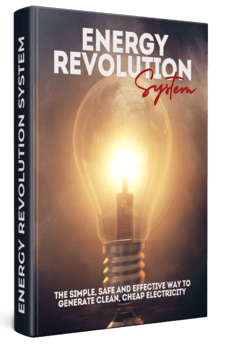
Looking for an alternative approach to home energy and lower electricity costs? The Energy Revolution System is a digital DIY guide marketed to people interested in exploring an alternative energy concept inspired by the historical electrical experiments of Nikola Tesla.
With electricity costs placing pressure on household budgets, it is understandable why people look for ways to reduce their dependence on conventional power. Solar panels, energy-efficient appliances, battery storage, and other technologies have made energy management an increasingly important consideration for homeowners.
The Energy Revolution System takes a different approach. Instead of selling a ready-made generator or a conventional solar installation, it presents instructions and technical diagrams for a do-it-yourself electrical project based on a coil design associated with Tesla’s work.
But what exactly does the program offer? Is it a practical project for someone interested in electrical experimentation? What equipment would you need? And how much confidence should you place in the claims about generating electricity and reducing household bills?
In this detailed Energy Revolution System review, we examine the product’s concept, advertised contents, underlying electrical principles, potential advantages, important limitations, safety considerations, and the questions you should answer before making a purchase.
Our goal is to help you understand what you may be getting rather than simply repeating the strongest claims made in promotional material.

What Is the Energy Revolution System?
The Energy Revolution System is a digital instructional product marketed around a do-it-yourself approach to alternative energy.
According to its product presentation, the program draws inspiration from Nikola Tesla’s historical work on electrical coils and electromagnetic principles. It is intended to help readers explore a coil-based electrical project using instructions, diagrams, and a materials list.
An important distinction is that the product is presented as a digital guide rather than a completed electrical device delivered to your home.
In practical terms, you should expect instructional material rather than a ready-to-use generator, unless the current offer explicitly states otherwise. You should also expect to investigate the required components and any additional project expenses before beginning a build.
The product’s central appeal is the possibility of learning about an alternative electrical design without immediately committing to a conventional home-energy installation.
It may attract people who enjoy technical projects, want to learn more about electromagnetic principles, or are curious about the relationship between historical electrical inventions and modern DIY experimentation.
However, there is a significant difference between an interesting electrical concept and a demonstrated energy system capable of supplying meaningful amounts of electricity.
The existence of a genuine historical electrical patent does not establish that a modern implementation will produce the performance or savings described in advertising.
For that reason, the Energy Revolution System is best evaluated as a proposed DIY project whose practical usefulness depends on the actual instructions, construction requirements, measured output, operating costs, and supporting evidence.
Why Is the Energy Revolution System Attracting Attention?
Electricity is an essential household expense. Lighting, refrigeration, computers, air conditioning, heating, entertainment systems, and numerous everyday appliances all contribute to energy consumption.
For homeowners who want to control their budgets, even a modest reduction in electricity use can be valuable over time.
This creates a natural interest in alternative energy technologies and unconventional approaches to electrical generation.
The Energy Revolution System appeals to that interest by presenting an alternative to the conventional options people typically encounter.
Its promotional material emphasizes Tesla-inspired electrical principles and suggests that a relatively accessible DIY project could help people rethink how they approach home energy.
For someone interested in electronics, that concept may sound intriguing.
However, the financial case for any energy project must ultimately be based on measurable results. A system needs to produce useful electrical output, operate safely, and justify its total cost before it can be considered a practical way to save money.
The important question is not simply whether a design looks innovative. It is whether a completed system can deliver the required electricity reliably and economically.
What Do You Actually Get With the Energy Revolution System?
One of the first things prospective buyers should understand is the difference between purchasing instructions and purchasing equipment.
The Energy Revolution System is advertised as a digital product that provides guidance for exploring and building a coil-based electrical device.
The product presentation describes a DIY approach rather than a conventional commercial generator that arrives assembled and ready for operation.
The digital materials are intended to explain the concept and help readers understand the proposed construction process.
The Main Instructional Guide
The main guide is the central component of the advertised product.
Its purpose is to explain the proposed project and give readers a reference they can consult while learning about the design.
When evaluating the guide, pay attention to whether it provides clear diagrams, a complete materials list, component specifications, assembly instructions, testing procedures, and appropriate safety information.
These details matter because electrical projects can be difficult to reproduce when instructions omit important measurements or assume that the reader already possesses specialist knowledge.
A useful guide should help a reader understand not just what to assemble, but also how to determine whether the completed project is operating as intended.
The availability of a manual does not, by itself, demonstrate that the device will generate the advertised amount of electricity. That question requires technical testing.
Diagrams and Construction Information
Technical diagrams can make an unfamiliar electrical concept easier to understand.
For a project involving coils and circuits, a diagram may help illustrate component placement, winding arrangements, connections, and the overall structure of the proposed design.
The quality of those diagrams is important. Incorrect connections, incomplete specifications, or ambiguous instructions can make a project difficult to reproduce and potentially unsafe.
Before beginning any electrical build, readers should ensure that the instructions are sufficiently detailed for their skill level and that they understand the risks involved.
A Materials List
A materials list can help readers identify the components they may need to obtain separately.
However, the existence of a list does not mean that all required components are included in the purchase.
You should determine which items must be sourced independently, whether specialist tools are required, and whether the components have clearly specified electrical ratings.
The cost of these materials should be considered part of the overall project budget.
A low-cost digital guide can become a more expensive undertaking if construction requires additional parts, repeated experiments, replacement components, or professional assistance.
Additional Digital Resources
The seller’s promotional material also describes supplementary resources and bonus materials.
These may provide additional background information about home energy, electrical concepts, or related subjects. The precise contents and availability should be verified against the current offer before ordering.
It is sensible to distinguish educational bonuses from essential technical documentation. Additional reading material may be useful, but it does not substitute for complete construction instructions, reliable measurements, or independent evidence of performance.
How Does the Energy Revolution System Claim to Work?
The product’s concept is associated with a bifilar coil, a type of electrical coil involving two wires wound in a particular arrangement.
To understand the idea, it helps to separate the established electrical principle from the performance claims made about the modern product.
Understanding the Bifilar Coil
A bifilar coil generally uses two parallel wire windings. Depending on how the wires are connected and arranged, this configuration can affect the coil’s electrical characteristics, including its inductance and capacitance.
Nikola Tesla’s historical work included a patent for a coil used in electromagnets. That historical reference is real, but it is important to understand what it establishes.
A patent describing an electrical arrangement does not prove that every later device inspired by that arrangement will achieve a particular result.
The performance of a modern circuit depends on its complete design, components, power source, operating conditions, and electrical load.
A coil can store energy in a magnetic field, and capacitive components can store energy in an electric field. These are established principles of electrical engineering.
However, storing, transferring, or releasing energy is not the same as creating energy without an input.
What About the Claims of Generating Electricity?
The Energy Revolution System is promoted as a way to explore alternative electricity generation and potentially reduce household dependence on conventional power.
That is an ambitious proposition, and it deserves careful evaluation.
Any practical electricity-generating system must have a source of energy. Solar panels convert sunlight, wind turbines convert energy from moving air, and conventional generators convert mechanical energy into electrical energy.
A coil can be part of an electrical system, but its presence alone does not establish an independent source of energy.
If a device is claimed to produce more usable energy than it consumes, that claim would require particularly strong, reproducible evidence.
The relevant measurements include the energy supplied to the system, the electricity produced, the power required by any supporting components, and the total energy balance over an appropriate period.
Without those measurements, it would be premature to conclude that a particular DIY design can provide the electricity output described in promotional material.
Can the System Reduce Household Electricity Bills?
The product is marketed around the possibility of reducing electricity expenses.
However, actual savings depend on how much usable energy a system produces, which household appliances it can support, how reliably it operates, and how much it costs to build and maintain.
A system that produces a small amount of electricity may have educational value without meaningfully changing a household’s monthly bill.
A system that requires additional equipment, substantial input power, frequent repairs, or specialist installation may also prove less economical than expected.
For these reasons, claims about large percentage reductions in electricity bills should be treated as promotional claims unless supported by credible, independent testing.
The Energy Revolution System’s sales presentation alone does not establish that a typical household will achieve a particular percentage of savings.
What Is the Connection Between Nikola Tesla and the Energy Revolution System?
Nikola Tesla was an inventor and electrical engineer whose work contributed to the development of alternating-current electrical systems and other electrical technologies.
His historical work on coils and electromagnetic principles is part of the broader history of electrical engineering.
The Energy Revolution System uses this history as part of its product narrative.
For people interested in Tesla’s inventions, the connection may make the project sound appealing. It provides a historical starting point for exploring a particular electrical arrangement.
Nevertheless, historical inspiration should not be confused with independent verification of a modern product.
There are three separate questions worth considering.
First, did Tesla investigate the underlying electrical concept? Historical patents and technical records can help answer that question.
Second, does the modern design accurately implement the relevant electrical principles? That requires a detailed examination of the actual circuit and construction instructions.
Third, does the completed device deliver the claimed power output and financial savings? That requires measurements and reproducible testing.
An affirmative answer to the first question does not automatically establish the answers to the other two.
This distinction is important when evaluating products that use famous inventors or historical discoveries to establish credibility.
Is the Energy Revolution System a Ready-Made Generator?
No. The product is presented as a digital DIY guide, rather than a conventional, fully assembled generator.
This distinction affects what you should expect after purchasing it.
You are not necessarily purchasing a finished device that can be connected to your home and immediately begin supplying electricity.
Instead, the advertised concept involves learning about the proposed design and potentially building a device using separately sourced components.
If you are looking for an appliance that provides dependable electricity during a power outage, you should evaluate established backup-power products according to their rated output, runtime, safety features, warranty, and suitability for your intended loads.
If your interest is learning about electrical systems or experimenting with a DIY project, an instructional guide may be a different type of purchase.
Your expectations should match the actual product being offered.
Potential Advantages of the Energy Revolution System
Although the product’s performance claims require independent verification, there are several reasons someone might investigate it.
1. An Interest in DIY Electrical Projects
Some people enjoy understanding how electrical systems work and learning by building projects.
For this audience, an instructional guide can provide a starting point for exploring a concept that might otherwise seem unfamiliar.
The value of that experience depends on the quality of the documentation and the reader’s ability to understand the underlying principles.
A DIY project should be approached as an opportunity to learn rather than as a guaranteed route to financial savings.
2. An Introduction to Electromagnetic Concepts
Coils, inductance, capacitance, and electromagnetic fields are important concepts in electrical engineering.
A well-written educational resource can help readers develop a better understanding of how these components behave in circuits.
However, a useful introduction should explain the underlying principles accurately and distinguish established science from speculative claims about performance.
Readers should be willing to verify technical explanations rather than assuming that every statement in a promotional guide is correct.
3. A Digital Delivery Format
The product is advertised as a digital download.
This format can be convenient because readers can consult electronic documents without waiting for a physical package to arrive.
Digital instructions may also be easier to revisit while studying a project.
However, convenient delivery does not establish the technical quality of the content or guarantee that the proposed device will work as advertised.
4. An Opportunity to Explore an Alternative Concept
People interested in unconventional electrical designs may find the concept worth examining.
The important distinction is between exploring an idea and relying on it.
A person may investigate an unfamiliar design for educational reasons while still recognizing that the system needs to demonstrate its output, safety, and economic value before being trusted for a practical application.
5. The Possibility of Learning Through Measurement
Electrical experimentation can teach useful lessons about voltage, current, resistance, power, and energy consumption.
If a project is approached with appropriate technical knowledge and safety precautions, measuring its actual performance can help a reader develop a more realistic understanding of the claims being made.
Any measurements should be conducted using suitable equipment and safe procedures. Mains electricity and improvised connections can be dangerous, so beginners should not attempt hazardous electrical work without qualified supervision.
Important Limitations to Understand Before Buying
A balanced review needs to examine not just the potential attractions of a product, but also the uncertainties that could affect the buying decision.
1. The Product Is a Guide, Not a Guaranteed Energy Solution
The purchase provides access to instructional material, not an independently certified promise of a particular amount of electricity.
The difference is important.
A guide can explain a proposed design without establishing that the design will deliver the advertised outcome under real-world conditions.
Before spending money, consider whether you would still value the instructional material if the project did not produce substantial electricity savings.
2. The Major Savings Claims Need Evidence
Promotional material associated with the Energy Revolution System makes substantial claims about reducing electricity bills.
However, the available marketing information does not independently establish that a typical household can achieve those savings.
Reliable evidence would require clearly documented testing, including the device’s power input, usable output, operating duration, and performance under specified conditions.
Without this information, large savings percentages should not be treated as dependable forecasts.
3. Additional Components May Be Necessary
The cost of a DIY project is not necessarily limited to the digital guide.
Depending on the actual instructions, you may need to obtain electrical components, tools, testing equipment, and other materials separately.
You may also need to replace parts or seek assistance if the construction proves difficult.
Before starting, identify the complete list of required materials and estimate the total cost. Avoid assuming that a project will remain inexpensive simply because its instructional material is digitally delivered.
4. Technical Knowledge May Be Required
Electrical projects vary considerably in difficulty.
Understanding a diagram is not the same as being able to construct, test, troubleshoot, and operate a circuit safely.
If the instructions involve components or voltages beyond your experience, obtain help from a qualified professional.
Do not connect an experimental device directly to household wiring or attempt to bypass electrical protection systems.
5. A Historical Patent Is Not a Performance Certificate
Tesla’s historical work can provide useful context for understanding the electrical principles behind the product’s narrative.
However, it cannot establish that a modern DIY system will power household appliances or deliver a particular financial return.
Those claims must be evaluated using the specifications and measured performance of the actual device.
6. A Money-Back Guarantee Does Not Establish Technical Effectiveness
The product’s promotional material advertises a money-back guarantee.
Such a policy may provide a way to request a refund if the purchase does not meet your expectations, subject to its applicable terms.
However, a refund policy does not establish that the underlying technical claims are correct.
Read the written terms carefully and retain your order confirmation and other purchase records.
What Would It Take to Verify the System’s Performance?
This is one of the most useful questions to ask before purchasing an alternative-energy product.
Rather than relying on a dramatic testimonial or a percentage displayed in advertising, look for measurable evidence.
Measure the Actual Electrical Output
A meaningful evaluation would record the system’s usable electrical output over a defined period.
Voltage alone is not enough to establish how much useful power a device supplies. Current, operating conditions, the nature of the electrical load, and the duration of operation also matter.
A proper evaluation should measure energy in appropriate units and account for the power required to operate the complete system.
Identify the Energy Source
Every practical electricity-generating system must obtain energy from somewhere.
A credible technical explanation should identify the input energy source and explain how it is converted into usable electrical output.
If the system uses an external power source, that input must be accounted for when assessing efficiency and cost.
Test Under Realistic Conditions
A small demonstration is not equivalent to a system capable of supplying a household.
Different appliances have different power requirements. Some also require substantially more power during startup than during normal operation.
Testing should therefore identify which loads the system can support, how long it can support them, and whether its output remains stable.
Compare Total Costs With Actual Savings
Even if a device produces useful electricity, its financial value depends on the cost of construction, operation, maintenance, and replacement components.
A realistic calculation should compare the total project cost with measured reductions in electricity purchased from the utility.
Without reliable output and cost data, it is not possible to establish a dependable payback period.
These are the same basic principles that should be applied to any proposed home-energy investment.
Energy Revolution System vs. Established Home-Energy Options
Anyone looking to reduce electricity costs should compare the product with solutions that have established specifications and measurable performance.
Solar Panels
Solar panels convert sunlight into electricity through photovoltaic cells.
Their output depends on factors such as sunlight, panel orientation, shading, system design, and weather conditions.
Solar installations can involve significant upfront costs, but their expected output can be estimated using location-specific solar data and equipment specifications.
Before investing in any alternative, compare its demonstrated output and total cost with a properly designed solar installation.
Battery Storage
A battery stores energy supplied by an external source, such as solar panels or the electricity grid.
It can make that stored energy available later, depending on the system’s capacity and power ratings.
However, a battery is not an independent source of unlimited energy. Its usable capacity and charging requirements must be considered when evaluating backup power or savings.
Energy-Efficient Appliances
Replacing inefficient appliances, using LED lighting, improving insulation where applicable, and reducing unnecessary consumption can lower electricity use.
These approaches focus on reducing demand rather than claiming to produce additional electricity.
Their potential value can often be assessed by comparing equipment ratings and measuring household consumption before and after a change.
Conventional Backup Generators
A conventional generator converts energy from a defined fuel source into electrical power.
Its rated output, runtime, fuel consumption, and maintenance requirements can be evaluated using manufacturer specifications and real-world operating data.
A DIY electrical project should not be assumed to provide equivalent reliability or output without comparable evidence.
Smart Energy Monitoring
Energy monitors and smart meters can help identify which appliances consume the most electricity and when usage peaks.
This information can reveal practical opportunities to reduce consumption without undertaking an experimental electrical build.
The most suitable option depends on your energy needs, budget, location, and intended use.
Is the Energy Revolution System Suitable for Beginners?
The answer depends on what you mean by a beginner.
If you are interested in reading about electrical concepts and exploring how coils work, the guide’s subject may be appealing.
If you have little experience with electrical construction, however, you should not assume that a written guide will make every part of the project simple or safe.
Before beginning, consider your familiarity with basic circuit diagrams, electrical measurements, component specifications, and troubleshooting.
You should also check whether the instructions clearly identify safety requirements and the limits of the proposed design.
Never experiment with household mains wiring, improvised high-voltage equipment, or unprotected electrical connections merely because a guide suggests that construction is straightforward.
If the project exceeds your knowledge, seek qualified assistance.
A product marketed as a DIY project should still be approached with appropriate care.
Is the Energy Revolution System Worth Considering?
There is no single answer that applies to everyone.
The product may appeal to people who are curious about electrical engineering, interested in alternative-energy concepts, or looking for a digital guide to study.
However, someone whose primary objective is to cut monthly electricity costs should approach it differently from someone purchasing it as an educational project.
For the first person, the critical questions concern verified power output, dependable savings, total construction costs, and reliability.
For the second, the quality of the instructions, the educational value, and the safety of the proposed project may be more important.
The product’s promotional material does not independently establish that the system can deliver dramatic reductions in household electricity bills. Consequently, it would be unwise to purchase it on the assumption that substantial savings are guaranteed.
Before deciding, consider the following questions:
- Do you understand that the advertised product is a digital guide rather than a ready-made generator?
- Are you comfortable evaluating the technical claims rather than accepting them at face value?
- Can you establish what components and tools would be required?
- Do the instructions provide sufficient information for a safe and technically sound project?
- Would the purchase still make sense to you if the system did not produce substantial financial savings?
- Have you compared the idea with established ways to reduce electricity consumption?
If you can answer these questions thoughtfully, you will be in a better position to decide whether the product fits your interests and expectations.
What About the Money-Back Guarantee?
The seller advertises a money-back guarantee associated with the Energy Revolution System.
A guarantee can be relevant when evaluating a digital purchase, but the written terms matter more than the headline.
Before ordering, review the current refund window, the process for requesting a refund, the applicable deadlines, and any conditions stated by the seller or payment processor.
Keep your order confirmation and payment records in case you need to contact customer support.
It is also important to understand what a guarantee does and does not mean.
A refund policy may provide a remedy under its terms if you are dissatisfied with the purchase. It does not prove that the design produces a particular amount of electricity, that the project is suitable for your home, or that you will save money.
Make your decision based on the product’s actual contents, realistic expectations, and the written purchase terms.
Frequently Asked Questions About the Energy Revolution System
What exactly is the Energy Revolution System?
The Energy Revolution System is a digital DIY guide marketed around an electrical project inspired by historical Tesla coil concepts.
It is presented as instructional material rather than a conventional, ready-made household generator.
Is the Energy Revolution System a physical product?
The offer is described as a digital product. Buyers should expect electronic instructional materials rather than assume that a completed generator or a physical construction kit will be shipped to them.
Verify the current product description before ordering.
Does the Energy Revolution System use Tesla’s inventions?
The product’s promotional narrative refers to Nikola Tesla’s work on electrical coils, including the bifilar coil concept.
Tesla’s historical work is documented, but that does not establish that the modern product achieves every result attributed to it in advertising.
What is a bifilar coil?
A bifilar coil generally consists of two wires wound alongside one another. Its electrical characteristics depend on the winding arrangement and how the wires are connected.
Coils of this type are part of established electrical engineering, but their existence does not demonstrate that a particular device can produce unlimited energy or deliver substantial household savings.
Can the Energy Revolution System generate free electricity?
The promotional material presents the project as an alternative-energy concept. However, the available product information does not independently establish that it can generate electricity without an energy input.
Any claim of net energy production beyond the energy supplied to a system would require particularly strong and reproducible evidence.
Can it reduce electricity bills by a large percentage?
The product is marketed with claims about substantial potential savings, but those claims should not be treated as typical or guaranteed outcomes without independent measurements.
Actual savings depend on usable output, household demand, construction and operating costs, and the amount of electricity displaced.
Can the Energy Revolution System power an entire home?
That should not be assumed.
A household requires a reliable source of electricity with sufficient continuous output and the capacity to handle startup loads. The product’s marketing material alone does not establish that a DIY device built from its instructions can meet those requirements.
Do I need to purchase additional parts?
Because the product is presented as a digital DIY guide, additional components and tools may be required.
Check the materials list and construction requirements before purchasing so that you can estimate the complete project cost.
Is the system easy to build?
The difficulty depends on the actual instructions, the components involved, and your technical experience.
Do not assume that a project is suitable for an inexperienced builder simply because it is advertised as a DIY solution. Obtain qualified help if you are unfamiliar with the electrical work involved.
Is the Energy Revolution System safe?
Safety depends on the actual circuit, construction quality, operating conditions, and the precautions taken during testing.
Improper electrical construction can cause electric shock, burns, overheating, or fire. Follow appropriate electrical safety practices and obtain qualified supervision when needed.
Do not connect an experimental device directly to household wiring or bypass protective equipment.
Is the Energy Revolution System a scam?
A responsible assessment should distinguish between the existence of a purchasable digital product and the accuracy of its performance claims.
The product is advertised through an established digital-product marketplace, but that fact alone does not establish that its electricity-generation or savings claims are correct.
Prospective buyers should carefully examine the product’s contents, technical evidence, seller information, and refund terms. Extraordinary claims should not be accepted without reliable supporting evidence.
Is the product suitable for someone who wants to learn about electricity?
It may be of interest to people who enjoy reading about electrical concepts and exploring DIY projects.
However, the educational value depends on the quality and accuracy of the material. Anyone considering a hands-on build should ensure that the instructions and safety requirements are appropriate for their level of experience.
Can the system replace solar panels?
It should not be regarded as a proven replacement for solar panels without comparable evidence concerning output, reliability, safety, and cost.
Solar technology has established engineering specifications and measurable performance characteristics. An alternative system should be assessed using the same practical standards.
Does the Energy Revolution System include a refund policy?
The seller advertises a money-back guarantee. Review the current written terms before ordering to understand the applicable conditions and the procedure for requesting a refund.
What should I check before making a purchase?
Start by confirming exactly what is included in the digital product. Review the construction requirements, required materials, technical specifications, safety instructions, seller information, and refund policy.
Most importantly, distinguish the manufacturer’s claims from results that have been independently demonstrated.
Final Verdict: Energy Revolution System Review
The Energy Revolution System is a digital DIY energy guide that uses Tesla-inspired electrical concepts as the foundation of its marketing.
Its subject may appeal to people who are interested in electromagnetic principles, alternative-energy ideas, and technical projects they can investigate independently.
However, the key question is whether the actual design can deliver the electricity output, reliability, and financial savings suggested in promotional material.
Those outcomes should not be assumed from a historical patent, an appealing explanation, or a testimonial. They require appropriate measurements and reproducible evidence.
The product should also be understood for what it is: an instructional guide rather than a guaranteed, ready-to-use home-energy solution. Additional materials, tools, construction effort, and safety precautions may be necessary.
If your interest is educational, evaluate the quality of the guide and whether the project is appropriate for your technical experience.
If your primary goal is to lower electricity costs, compare the proposal with established energy-efficiency measures, solar installations, battery storage, and other solutions with measurable performance.
Ultimately, an informed decision comes from understanding the product’s actual contents, verifying the claims that matter to you, and considering the total cost and potential limitations.
Interested in learning more about the Energy Revolution System?
Review the product presentation to examine the advertised instructions, materials, included resources, and purchase terms. Take time to evaluate the technical claims and safety requirements before deciding whether the project is suitable for you.
Important Information
This review is intended for informational and educational purposes. It is based on available product descriptions and promotional claims and does not represent independent laboratory testing of the device. No particular electricity output, reduction in household bills, or financial return is guaranteed.
Electrical projects can present serious safety risks. Do not connect experimental equipment to household wiring or undertake electrical work beyond your qualifications. Consult a qualified professional where appropriate.
Affiliate Disclosure
Blimero may earn a commission if you purchase the Energy Revolution System through an affiliate link on this page. This may help support our website and the creation of product reviews.
Our aim is to provide useful information so readers can evaluate products with realistic expectations. An affiliate relationship should not be interpreted as independent verification of a manufacturer’s technical or performance claims.