
When purchasing an eye health supplement, one of the first questions people ask is how long it takes to notice results. Nobody wants to spend money on a product for several months without knowing whether it is doing anything.
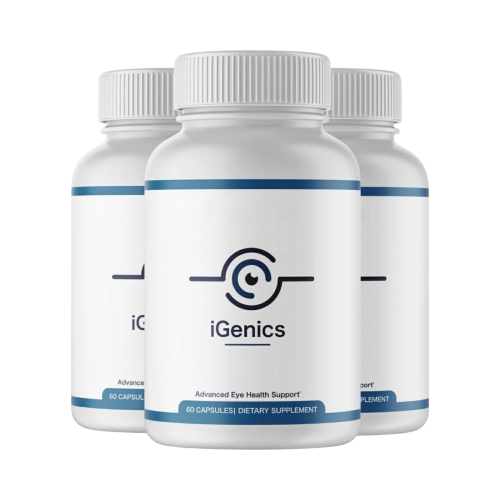
iGenics is a vision support supplement marketed to people who want to maintain their eye health and support normal visual function. Its formula combines vitamins, minerals, carotenoids, and botanical extracts, including lutein, zeaxanthin, bilberry, saffron, and ginkgo biloba.
But how quickly do these ingredients work? Can you notice a difference within a few days? Does iGenics require several weeks or months of consistent use? And what should you realistically expect after taking it for 30, 60, or 90 days?

These are important questions because nutritional supplements generally work differently from prescription medicines. Their effects depend on the ingredients, dosage, nutritional status, individual health, and the reason someone is taking them.
In this article, we examine how long iGenics might take to produce nutritional effects, what its ingredients do, what users should realistically expect over time, and when it may be appropriate to reconsider taking the supplement.
How Long Does iGenics Take to Work?
There is no scientifically established timeframe for when iGenics starts working.
The manufacturer markets it as a daily eye health supplement, but there is no publicly established clinical evidence demonstrating that the complete iGenics formula produces noticeable improvements in a specific number of days or weeks.
This distinction is important.
Some nutrients can influence the body’s nutritional status relatively quickly, while changes in tissue nutrient levels or biological markers may take longer.
However, this does not mean that a person will necessarily notice an improvement in eyesight.
For example, lutein and zeaxanthin are carotenoids that accumulate in the macula. Research examining changes in macular pigment has generally involved supplementation over several weeks or months.
But changes in macular pigment are not the same as improved visual acuity or the reversal of an eye condition.
Therefore, it would be misleading to promise that iGenics will improve eyesight within 7, 30, or 90 days.
The realistic expectation: iGenics should be viewed as a nutritional supplement rather than a fast-acting vision treatment. There is insufficient evidence to establish how long the complete formula takes to produce a measurable benefit, or whether it produces a noticeable benefit in every user.
Why Does It Take Time for Eye Supplements to Work?
To understand why eye supplements may require consistent use, it helps to understand how nutritional ingredients function in the body.
Unlike medicines designed to produce a specific immediate effect, nutritional supplements provide nutrients that participate in normal biological processes.
Some nutrients are absorbed and used relatively quickly. Others may gradually influence nutrient concentrations in particular tissues.
Several factors affect this process.
1. Nutrient Absorption
After consuming a supplement, its ingredients must be released, absorbed through the digestive system, and made available to the body.
The absorption process differs between nutrients.
For example, lutein and zeaxanthin are fat-soluble carotenoids. Their absorption can be influenced by dietary fat and the formulation in which they are supplied.
2. Nutritional Status Before Supplementation
Someone who has an inadequate intake of a particular nutrient may respond differently from someone who already receives sufficient amounts through food.
For example, correcting a nutritional deficiency may provide benefits that would not necessarily occur in someone whose nutrient levels were already adequate.
This is one reason why the same supplement can produce different outcomes in different individuals.
3. Tissue Accumulation
Certain nutrients are present in specific tissues.
Lutein and zeaxanthin, for example, are concentrated in the macula.
Research examining changes in macular pigment has generally evaluated supplementation over periods of weeks and months.
However, increasing nutrient concentrations does not automatically mean that a person will experience clearer vision.
4. Individual Health Conditions
Age, digestive health, diet, medication use, and existing eye conditions can all influence nutritional requirements and potential outcomes.
Someone with an underlying eye disease may require specific medical treatment rather than general nutritional supplementation.
What to Expect After Taking iGenics: A 30, 60 and 90-Day Perspective
Many supplement manufacturers encourage customers to use their products consistently.
However, there is an important difference between following a supplement routine and having scientifically demonstrated results.
The following timeline explains what consumers can reasonably expect from a nutritional perspective. It is not a proven iGenics results timeline.
First 7 Days: Getting Started
During the first week, most people should not expect noticeable changes in their eyesight from starting iGenics.
The body begins processing and absorbing the nutrients in the supplement, but this does not mean that visual performance will improve within a few days.
Some people may experience digestive discomfort or other unwanted effects when starting a new supplement.
Others may notice nothing unusual.
It is also possible that someone will feel that their eyes are more comfortable, but this does not establish that the supplement caused the improvement.
Changes in sleep, screen exposure, hydration, and environmental conditions can also affect how the eyes feel.
What to expect during the first week:
- Establishing a daily supplementation routine.
- Becoming familiar with the product and its serving instructions.
- Monitoring for possible unwanted reactions.
- No guaranteed improvement in eyesight.
- No established evidence of immediate vision benefits.
After 2 Weeks: Consistent Use
After approximately two weeks, someone taking iGenics regularly will have had more exposure to its ingredients.
However, there is still no established evidence that this period is sufficient to produce noticeable improvements in vision.
Lutein and zeaxanthin are not instant-acting ingredients.
Their role in macular nutrition is associated with longer-term nutritional processes rather than an immediate change in eyesight.
During this period, users should focus on following the product instructions and checking whether they experience any adverse reactions.
It is also a good time to review whether the supplement contains ingredients that overlap with other vitamins or medicines they take.
What to expect after two weeks:
- Continued exposure to the supplement’s ingredients.
- Possible adjustment to a new supplement routine.
- No guaranteed improvement in blurred vision, reading ability, or night vision.
- The opportunity to assess tolerance and suitability.
After 30 Days: One Month of Use
A month is a common period used when evaluating dietary supplement routines.
However, there is no verified clinical evidence establishing that 30 days of iGenics use produces measurable improvements in eyesight.
Some research on individual eye health nutrients has examined changes over longer periods.
For example, studies investigating lutein and zeaxanthin supplementation have evaluated changes in macular pigment over several months.
This is different from proving that iGenics improves vision after one month.
Someone taking the supplement should not assume that the absence of noticeable changes means that the product is failing.
Likewise, they should not assume that feeling better proves that the supplement is working.
What to expect after 30 days:
- A month of consistent supplementation.
- An opportunity to review tolerability and daily routine.
- No guaranteed improvement in visual clarity.
- A reason to reassess whether the product is appropriate for individual needs.
After 60 Days: Two Months of Use
By the second month, someone following the supplement routine will have consumed the product for a longer period.
This is relevant when considering nutrients such as lutein and zeaxanthin, because research into macular pigment changes often involves longer supplementation periods.
However, there is still no established iGenics-specific clinical timeline demonstrating that two months of use improves eyesight.
People should be particularly careful about interpreting subjective changes.
For example, someone might notice less eye discomfort after reducing screen time or improving their sleep habits during the same period.
It would be difficult to attribute that improvement specifically to iGenics.
What to expect after 60 days:
- Longer-term exposure to the formula.
- An opportunity to assess whether continued supplementation makes sense.
- No guaranteed improvement in visual acuity.
- The importance of continuing appropriate eye examinations.
After 90 Days: Three Months of Use
Three months is a commonly used period in nutritional research.
Some studies examining carotenoid supplementation have evaluated outcomes over approximately three months or longer.
However, the results of these studies cannot automatically be applied to iGenics.
There is no established evidence that taking iGenics for 90 days produces a particular improvement in eyesight.
For someone considering longer-term supplementation, this is a sensible point to review the following:
- Whether the supplement is appropriate for their nutritional needs.
- Whether they are experiencing any unwanted effects.
- Whether the product’s ingredient quantities are suitable.
- Whether they are taking overlapping supplements.
- Whether there is a medically justified reason to continue.
What to expect after 90 days: A longer period of consistent supplementation, but not a guaranteed improvement in eyesight or protection against eye diseases.
How Long Do iGenics Ingredients Take to Work?
One way to understand the possible timeframe is to examine the major ingredients individually.
However, it is important to remember that research on an individual ingredient does not establish the effectiveness or timeframe of the complete iGenics formula.
1. Lutein
Lutein is one of the most widely studied carotenoids in eye health research.
It is naturally present in the macula and contributes to the macular pigment.
Research has investigated whether lutein supplementation can increase macular pigment optical density.
These studies generally involve consistent supplementation over several weeks or months.
The rate of change varies between individuals and depends on factors such as starting nutritional status, dosage, and absorption.
Importantly, an increase in macular pigment does not automatically translate into a noticeable improvement in eyesight.
2. Zeaxanthin
Zeaxanthin is another carotenoid concentrated in the macula.
It works alongside lutein as part of the macular pigment.
Like lutein, zeaxanthin is not an ingredient that should be expected to produce immediate changes in vision.
Research examining its effects generally evaluates nutritional and macular outcomes over longer periods.
Its presence in iGenics does not establish that users will experience clearer eyesight after a specific number of weeks.
3. Bilberry Extract
Bilberry contains naturally occurring anthocyanins, which have antioxidant properties.
It has been studied for various potential biological effects, including possible effects relevant to eye health.
However, convincing clinical evidence that bilberry supplementation improves eyesight or prevents common eye conditions remains limited.
There is no scientifically established timeframe for bilberry in iGenics to produce noticeable vision benefits.
Consumers should also be cautious about claims that bilberry can dramatically improve night vision.
4. Saffron
Saffron contains compounds such as crocin and crocetin.
Some research has investigated saffron supplementation in people with certain retinal conditions.
These studies have examined outcomes over periods of weeks or months.
However, findings from specific saffron preparations and research populations cannot automatically be applied to every commercial supplement.
There is insufficient evidence to establish when saffron in iGenics might produce a measurable benefit.
5. Ginkgo Biloba
Ginkgo biloba has been investigated for its possible effects on circulation and other biological processes.
However, evidence supporting its use for improving eyesight is not conclusive.
There is no established timeframe for ginkgo supplementation to improve vision.
It is also important to remember that ginkgo may interact with certain medicines, particularly those that affect blood clotting.
6. Vitamin A
Vitamin A is essential for normal vision.
It plays an important role in the visual cycle, which allows the eyes to function properly in different lighting conditions.
People with vitamin A deficiency can experience problems such as night blindness.
Correcting a genuine deficiency can help address deficiency-related problems, but the timing and extent of improvement depend on the severity and cause of the deficiency.
However, people who already receive adequate vitamin A should not expect additional supplementation to improve their eyesight.
Excessive preformed vitamin A can also be harmful.
7. Vitamin C and Vitamin E
Vitamins C and E are antioxidants involved in protecting cells from oxidative damage.
They have been studied as part of nutritional formulations intended for certain eye health conditions.
However, neither vitamin should be expected to produce an immediate improvement in visual clarity.
Their effects depend on nutritional requirements, dosage, and the overall formulation.
8. Zinc
Zinc is an essential mineral involved in several biological functions, including processes important for normal vision.
It is also included in the AREDS2 nutritional formulation.
People with inadequate zinc intake may benefit from appropriate correction of their nutritional status.
However, taking extra zinc does not automatically improve eyesight in people who already have sufficient levels.
Excessive zinc intake can cause side effects and interfere with copper absorption.
What Results Should You Actually Expect From iGenics?
One of the biggest mistakes consumers make when buying eye supplements is expecting improvements that the ingredients have not been proven to deliver.
It is important to distinguish between nutritional support and treatment of an existing vision problem.
Let’s examine some common expectations.
Can iGenics Improve Blurred Vision?
There is no established clinical evidence that iGenics reverses blurred vision.
Blurred vision can have several causes, including:
- Refractive errors.
- Dry eye.
- Cataracts.
- Diabetes-related eye changes.
- Retinal conditions.
- Other eye or neurological problems.
The appropriate treatment depends on the underlying cause.
If you experience persistent blurred vision, an eye examination is more useful than simply starting a supplement.
Sudden blurred vision or sudden loss of vision requires urgent medical assessment.
Can iGenics Improve Night Vision?
Vitamin A is essential for normal vision, particularly in low-light conditions.
A deficiency can contribute to night blindness.
However, people who already have adequate vitamin A intake should not expect additional vitamin A to improve their night vision.
There is insufficient evidence that the complete iGenics formula improves night vision in otherwise healthy individuals.
Can iGenics Help With Digital Eye Strain?
Digital eye strain is commonly associated with prolonged screen use, reduced blinking, and focusing demands.
There is insufficient evidence that iGenics treats this condition.
Taking screen breaks, adjusting screen position, managing glare, and addressing dry-eye symptoms may be more useful.
Can iGenics Prevent Age-Related Macular Degeneration?
There is no established clinical evidence that iGenics prevents AMD.
The AREDS2 formulation has demonstrated benefits for slowing progression in specific groups of people who already have intermediate AMD.
However, this evidence cannot be transferred automatically to iGenics.
People with AMD should follow their ophthalmologist’s recommendations.
Can iGenics Restore Lost Eyesight?
No established evidence shows that iGenics can reverse established vision loss.
A dietary supplement should not be considered a substitute for glasses, prescription medicines, eye procedures, or other appropriate medical treatments.
Why Do Some People Notice Results While Others Do Not?
People sometimes report different experiences when taking the same nutritional supplement.
There are several reasons why this can happen.
Differences in Nutritional Status
Someone who has inadequate intake of a particular nutrient may experience benefits from correcting that deficiency.
Someone whose nutrient intake is already sufficient may not notice any difference.
This is one of the most important factors influencing nutritional supplementation.
Differences in Diet
People who regularly eat leafy vegetables, fruits, eggs, nuts, and other nutrient-rich foods may already receive many nutrients found in eye supplements.
Someone with a limited diet may have different nutritional requirements.
Differences in Age and Health
Age, digestive function, existing medical conditions, and medication use can influence nutrient requirements and absorption.
Differences in Expectations
Some people expect immediate improvements in visual clarity.
When these changes do not occur, they may conclude that the supplement is ineffective.
However, nutritional support does not necessarily produce a noticeable sensation or immediate change in vision.
Other Lifestyle Changes
People sometimes begin taking a supplement at the same time that they improve their diet, reduce screen time, sleep better, or take more breaks.
If they experience improvements in eye comfort, it can be difficult to determine which change was responsible.
Does Taking iGenics for Longer Produce Better Results?
It is tempting to assume that taking a supplement for six months or a year must produce better results than taking it for one month.
However, this is not necessarily true.
The benefits of nutritional supplementation depend on whether a person actually needs the ingredients and whether the formulation provides appropriate quantities.
Taking unnecessary nutrients for longer periods does not automatically provide additional benefits.
In some cases, prolonged excessive intake can be harmful.
For example:
- Excessive vitamin A can cause toxicity.
- Excessive zinc can interfere with copper absorption.
- High-dose vitamin E may increase bleeding risk in certain circumstances.
- Some botanical extracts can interact with prescription medicines.
Therefore, long-term use should be based on suitability and safety rather than the assumption that more time always means better results.
What Should You Do If You Notice No Improvement After 30 Days?
Not noticing a change after one month does not necessarily mean that a supplement has failed.
However, it is also not a reason to continue taking it indefinitely.
Consider the following steps.
1. Review Your Expectations
Ask yourself what you expected iGenics to do.
Were you expecting clearer eyesight, less eye fatigue, better night vision, or general nutritional support?
These are different outcomes, and the scientific evidence for them varies.
2. Check the Ingredient Quantities
Review the complete Supplement Facts label.
The presence of an ingredient does not establish that it is included in an appropriate quantity.
3. Evaluate Your Diet
Consider whether you already receive adequate nutrients through food and other supplements.
If your nutritional intake is already sufficient, additional supplementation may offer limited value.
4. Do Not Increase the Dosage
Taking more than the recommended serving will not necessarily make the product work faster.
It may increase the risk of side effects or excessive nutrient intake.
5. Get an Eye Examination
If your original reason for taking iGenics was blurred vision, difficulty reading, or another visual problem, arrange an eye examination.
Do not rely on supplements to diagnose or treat an underlying condition.
6. Reconsider Whether You Need It
After reviewing your nutritional needs and medical circumstances, discuss continued use with a healthcare professional if necessary.
There is no reason to continue a supplement simply because you have already spent money on it.
Can You Speed Up the Results of iGenics?
There is no proven method to make iGenics work faster.
However, maintaining healthy habits can support normal eye function and overall health.
Some useful practices include:
Eat a Nutrient-Rich Diet
Include foods containing carotenoids, vitamins, minerals, and healthy fats.
Examples include:
- Spinach.
- Kale.
- Broccoli.
- Eggs.
- Carrots.
- Sweet potatoes.
- Oranges.
- Almonds.
- Sunflower seeds.
- Fish.
Maintain Healthy Screen Habits
If you spend several hours working on a computer, take regular breaks and avoid prolonged uninterrupted near work.
Get Adequate Sleep
Poor sleep can contribute to tiredness and eye discomfort.
Maintaining a regular sleep schedule supports general health.
Avoid Smoking
Smoking is an important modifiable risk factor for several eye conditions, including age-related macular degeneration.
Avoiding tobacco is a meaningful step towards protecting long-term health.
Schedule Regular Eye Examinations
Eye examinations can detect conditions that may not produce noticeable symptoms in their early stages.
This is particularly important for older adults and people with diabetes or a family history of certain eye conditions.
These habits are useful regardless of whether someone decides to take iGenics.
Is It Worth Buying a Six-Month Supply of iGenics?
The manufacturer offers larger purchasing packages that reduce the advertised cost per bottle.
A six-bottle package may look attractive because it provides a lower unit price than purchasing one bottle at a time.
However, buying six months of a supplement before establishing whether it is appropriate for you may not be the best financial decision.
There are several things to consider.
First, there is no established clinical timeframe showing that iGenics produces noticeable results after six months.
Second, individual nutritional requirements vary.
Third, long-term use may not be necessary for someone who already receives adequate nutrients through their diet.
Fourth, customers should understand the manufacturer’s current money-back guarantee and return conditions before purchasing a larger package.
For someone who has never used the product, the largest package is not automatically the best choice.
A lower cost per bottle does not necessarily mean better overall value.
Final Verdict: How Long Does iGenics Take to Work?
So, how long does iGenics take to work?
The honest answer is that there is no scientifically established timeframe for the complete iGenics formula.
Its ingredients have different biological roles, and research on nutrients such as lutein and zeaxanthin has often examined changes over several weeks or months.
However, these studies do not establish that iGenics improves eyesight after 30, 60, or 90 days.
The most important distinction is between nutritional support and noticeable improvements in vision.
Some ingredients in iGenics are relevant to normal eye function and have been studied in the context of macular health. However, there is insufficient clinical evidence to conclude that the finished product improves visual acuity, reverses blurred vision, restores lost eyesight, or prevents eye diseases.
Our assessment:
- Do not expect immediate results within a few days.
- Do not assume that one month of use will produce noticeable vision improvements.
- Understand that changes in nutrient levels are not the same as improved eyesight.
- Do not increase the recommended serving to accelerate results.
- Do not continue taking the supplement indefinitely without considering whether it is appropriate for your needs.
Ultimately, iGenics should be viewed as a nutritional supplement rather than a fast-acting vision treatment.
If you are considering buying it, focus on its ingredients, quantities, product quality, and suitability for your individual circumstances rather than relying on promises of quick results.
If you have an existing eye condition or experience changes in vision, consult an ophthalmologist rather than waiting for a supplement to work.
Frequently Asked Questions
1. How quickly does iGenics start working?
There is no scientifically established timeframe for when iGenics starts working. Its ingredients have different biological roles, and research on some nutrients has examined changes over several weeks or months. However, this does not establish when or whether users will notice benefits from the complete formula.
2. Can iGenics work within seven days?
There is no established evidence that iGenics produces noticeable improvements in eyesight within seven days. It should not be considered an instant vision treatment.
3. How long should I take iGenics before expecting results?
There is no clinically validated duration for expecting results from iGenics. The appropriate duration depends on individual nutritional needs, product suitability, and professional advice.
4. Does iGenics improve eyesight after 30 days?
There is insufficient clinical evidence to establish that 30 days of iGenics use improves eyesight. Research on individual nutrients should not be confused with proof of effectiveness for the finished formula.
5. Does iGenics work better after three months?
Longer use does not automatically produce better results. Some nutrients have been studied over several months, but there is no established evidence that three months of iGenics produces a particular vision benefit.
6. Can iGenics improve blurry vision?
There is no established evidence that iGenics reverses blurred vision. Blurred vision can have several causes, and an eye examination is important to identify the underlying problem.
7. Can iGenics help with night vision?
Vitamin A is essential for normal low-light vision, and correcting a genuine deficiency can help address deficiency-related night blindness. However, there is insufficient evidence that iGenics improves night vision in people who already have adequate vitamin A intake.
8. Should I continue iGenics if I do not notice any difference?
Not necessarily. Review your nutritional needs, ingredient quantities, and reason for taking the supplement. If you are unsure whether continued use is appropriate, consult a healthcare professional.
9. Can I take more iGenics to get faster results?
No. Taking more than the recommended serving is not proven to accelerate results and may increase the risk of excessive nutrient intake or unwanted effects.
10. Does iGenics prevent age-related macular degeneration?
There is no established clinical evidence that the complete iGenics formula prevents AMD. The AREDS2 formulation has demonstrated benefits for slowing progression in certain people who already have intermediate AMD.
11. Can I take iGenics for years?
Long-term use should depend on individual nutritional needs, the complete formulation, and safety considerations. Consult a healthcare professional before making it a permanent part of your daily routine.
12. What if my eyesight gets worse while taking iGenics?
Do not wait for the supplement to work. Arrange an eye examination promptly. Sudden vision loss, a sudden increase in floaters, flashes of light, or a curtain-like shadow across your vision requires urgent medical attention.
Medical Disclaimer: This article is intended for general educational purposes only and should not be considered medical advice. Dietary supplements are not substitutes for professional eye care, diagnosis, or treatment. Consult a qualified healthcare professional before starting a supplement, particularly if you have an existing medical condition or take prescription medication.
Affiliate Disclosure: This article contains affiliate links. If you purchase iGenics through our links, we may earn a commission at no additional cost to you. This helps support Blimero and allows us to continue publishing independent product reviews and research.