
Maintaining healthy eyesight is important at every stage of life. From reading and working on computers to driving at night and enjoying everyday activities, good vision plays an essential role in our quality of life.
As people grow older, concerns about eye health often increase. Some experience difficulty focusing on nearby objects, while others become more concerned about retinal health, age-related vision changes, and maintaining clear eyesight.
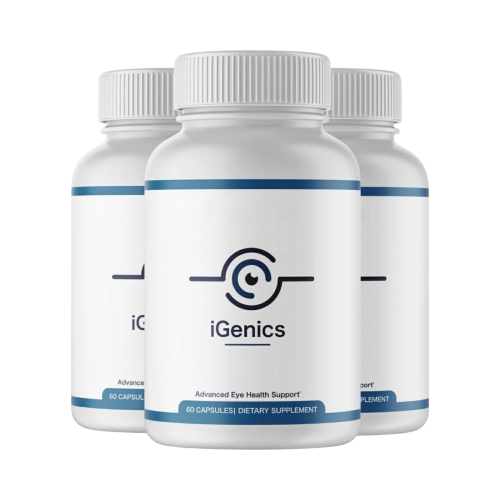
These concerns have contributed to growing interest in nutritional supplements designed to support eye health. One product in this category is iGenics, a dietary supplement marketed for vision support and general eye wellness.
According to the manufacturer, iGenics combines 12 ingredients, including vitamins, minerals, and botanical extracts. Its featured ingredients include ginkgo biloba, bilberry, saffron, and turmeric, alongside nutrients associated with established nutritional approaches to age-related eye health.

But does iGenics live up to its claims? What ingredients does it contain, what benefits might they offer, and what should you know before considering this supplement?
In this comprehensive iGenics Vision Supplement review, we examine its formulation, potential benefits, scientific background, safety considerations, and limitations to help you make an informed decision.
What Is iGenics?
iGenics is a dietary supplement marketed by Science Genics for people interested in supporting their eye health through nutritional supplementation.
The manufacturer describes it as a plant-based formula containing 12 ingredients selected to support normal eye function and overall vision wellness.
The product’s formulation combines botanical extracts with nutrients associated with eye health. Its marketing emphasizes antioxidant support, nutritional support for aging eyes, and ingredients commonly discussed in connection with retinal health.
The main areas of interest include:
- Supporting normal eye health through nutritional supplementation.
- Providing nutrients involved in normal visual function.
- Supplying antioxidant compounds.
- Supporting nutritional needs associated with aging eyes.
- Combining multiple ingredients in a convenient daily supplement.
iGenics is intended to complement a healthy lifestyle rather than replace medical treatment.
It is important to understand that supporting normal eye health is different from treating an existing eye condition. A dietary supplement should not be expected to correct every cause of blurred vision, reverse established vision loss, or replace prescription glasses and medical care.
The effectiveness of any supplement depends on its precise formulation, ingredient quantities, quality, and the needs of the individual using it.
Why Is Eye Health Important as We Age?
The eyes contain several interconnected structures that work together to produce vision. Among the most important is the retina, a light-sensitive layer at the back of the eye that converts incoming light into signals interpreted by the brain.
The macula is the central part of the retina. It is responsible for detailed central vision, which is essential for reading, recognizing faces, and seeing fine details.
Over time, different changes can affect the eyes. Some are a normal part of aging, while others result from medical conditions that require professional assessment.
Common concerns include:
- Difficulty focusing on nearby objects.
- Dryness and irritation.
- Glare or discomfort in bright light.
- Difficulty seeing clearly at night.
- Age-related changes affecting the lens or retina.
- Eye fatigue after prolonged close-up work.
Nutrition plays an important role in maintaining normal eye function. Certain vitamins and minerals support visual processes, while antioxidant nutrients contribute to the body’s normal cellular protection mechanisms.
However, not every vision problem is caused by inadequate nutrition. Blurred vision, night-vision difficulties, and other symptoms may result from refractive errors, cataracts, retinal disorders, diabetes, or other conditions.
This distinction matters when evaluating a product such as iGenics. A supplement may provide nutritional support in appropriate circumstances, but it cannot be assumed to address the underlying cause of every eye-related problem.
How Does iGenics Work?
The manufacturer presents iGenics as a combination of botanical ingredients and nutrients intended to support eye health.
Its approach centers on nutritional support and antioxidant compounds. These are relevant areas of research because normal eye function depends on adequate nutrition and the health of delicate tissues, including the retina.
There are several ways nutritional ingredients may contribute to general eye wellness.
1. Supporting Normal Visual Function
The eyes depend on several essential nutrients to function properly.
Vitamin A, for example, plays a fundamental role in the visual cycle, while zinc contributes to normal biological processes involved in maintaining health.
Obtaining adequate amounts of these nutrients is important. When a genuine deficiency exists, correcting it can help address the problems associated with that deficiency.
However, taking additional nutrients does not automatically improve eyesight in someone who already receives sufficient amounts.
The benefit depends on the nutrient, the dosage, and the person’s nutritional status.
2. Providing Antioxidant Support
Oxidative stress occurs when the production of reactive molecules exceeds the body’s ability to manage them.
Antioxidants are involved in the body’s normal response to oxidative processes. Several vitamins and plant-derived compounds have antioxidant properties and have been studied for their possible roles in maintaining health.
Ingredients such as bilberry, saffron, turmeric, and certain vitamins are included in nutritional products partly because of these properties.
Nevertheless, antioxidant activity alone does not prove that a supplement improves visual sharpness, prevents an eye disease, or reverses vision loss.
Those outcomes require evidence from appropriate clinical studies involving the finished product.
3. Providing Nutrients Associated With Macular Health
The macula is important for detailed central vision, and certain nutrients have been studied for their role in age-related macular degeneration.
Specific combinations of vitamins, minerals, and carotenoids have demonstrated benefits for particular groups of people with this condition.
However, those findings apply to the formulations and patient groups studied. A commercial supplement containing some similar ingredients cannot automatically be assumed to offer identical benefits.
For anyone considering iGenics because of a diagnosed retinal condition, the precise ingredient quantities are especially important.
4. Complementing a Healthy Lifestyle
Nutritional supplementation is only one potential component of an eye-health routine.
A balanced diet, regular eye examinations, management of underlying health conditions, appropriate eye protection, and healthy screen habits can also play important roles.
iGenics may appeal to people who prefer a supplement combining several ingredients. Whether it offers a meaningful advantage depends on its formulation and the individual’s needs.
iGenics Ingredients: A Detailed Review
The manufacturer describes iGenics as containing 12 ingredients and highlights several botanical extracts alongside nutrients associated with eye health.
The following sections explain the general properties of the principal ingredients discussed in the product’s marketing.
The exact quantities of the ingredients should be confirmed from the product’s complete Supplement Facts label. Without that information, it is not possible to determine whether the formula provides clinically relevant amounts of each ingredient or whether it is equivalent to a studied nutritional formulation.
1. Ginkgo Biloba
Ginkgo biloba is a plant whose leaves contain compounds that have attracted research interest because of their biological and antioxidant properties.
It is used in a variety of dietary supplements and has been investigated for several potential health applications.
In iGenics, ginkgo biloba is presented as one of the botanical ingredients intended to support the formula’s overall approach to eye wellness.
Researchers have investigated whether ginkgo may have a role in certain aspects of eye health. However, evidence that ginkgo improves vision or prevents the progression of eye disease remains inconclusive.
The presence of ginkgo in a supplement should therefore not be interpreted as proof that the product protects against vision loss.
Safety is also important. Ginkgo may cause side effects, including headache, dizziness, and digestive discomfort. It can also interact with certain medicines, particularly those that affect blood clotting.
People taking prescription medicines should consult a healthcare professional before using a supplement containing ginkgo biloba.
2. Bilberry
Bilberry is a dark-colored berry that contains plant compounds known as anthocyanins.
These compounds have antioxidant properties and have attracted scientific interest in several areas of health research.
Bilberry is frequently included in products marketed for eye health, partly because of traditional claims relating to eyesight and low-light vision.
However, traditional use does not establish that a supplement improves night vision or corrects blurred vision.
The potential effects of bilberry depend on factors such as the type of extract, the amount used, and the quality of the available evidence.
Its inclusion in iGenics may be of interest to people examining the botanical components of the formula, but it should not be treated as a proven solution for every vision-related concern.
3. Saffron
Saffron is a spice obtained from the flower of Crocus sativus. It contains several naturally occurring compounds that have been studied for their biological effects.
Saffron has attracted research interest in connection with retinal function and certain aspects of age-related eye health.
Some studies have explored its potential effects in people with particular retinal conditions. However, findings from research involving specific saffron extracts cannot automatically be applied to every commercial supplement.
The type of extract, amount used, duration of use, and characteristics of the participants may differ from those associated with iGenics.
Consequently, the inclusion of saffron is an interesting aspect of the formula, but it does not establish that the finished supplement improves eyesight.
4. Turmeric
Turmeric is a widely used culinary spice containing curcumin and related compounds.
Curcumin has been studied for its antioxidant and other biological properties, leading to research into its potential applications in different areas of health.
In iGenics, turmeric is presented as one of the botanical ingredients intended to complement the nutritional components of the formula.
However, laboratory research involving curcumin is not the same as evidence that an oral supplement produces meaningful improvements in human vision.
Turmeric supplements can also cause side effects, including digestive discomfort and acid reflux. Some concentrated formulations have been associated with reports of liver injury.
People with existing medical conditions or those taking prescription medicines should seek professional advice before using concentrated turmeric supplements.
5. BioPerine or Black Pepper Extract
The manufacturer’s marketing refers to turmeric combined with BioPerine, a branded black pepper extract.
Black pepper contains piperine, a compound studied for its effects on the absorption and metabolism of certain substances.
Piperine is sometimes included in supplements to influence how the body absorbs particular ingredients.
However, increasing absorption does not automatically make a supplement more effective or safer. It may also affect the way the body processes certain medicines.
The significance of BioPerine in iGenics depends on the amount used, the other ingredients in the formula, and the available evidence for the combination.
People who take prescription medicines should not assume that an ingredient is risk-free simply because it is plant-derived.
6. Vitamin C
Vitamin C is an essential nutrient involved in several biological processes, including collagen formation and antioxidant activity.
Adequate vitamin C intake is important for normal health, and the nutrient is included in certain nutritional formulations developed for people with age-related macular degeneration.
However, the evidence supporting specific eye-health formulations does not demonstrate that vitamin C alone improves eyesight.
Its relevance depends on the amount supplied, the presence of other ingredients, and the individual’s nutritional needs.
People who already receive sufficient vitamin C through their diet may not benefit from additional supplementation unless there is another reason to take it.
7. Vitamin E
Vitamin E is a nutrient with antioxidant functions that help protect cell membranes as part of normal biological processes.
It has been included in studied nutritional formulations for certain people with age-related macular degeneration.
However, the evidence relates to specific combinations of nutrients and particular groups of patients. It should not be interpreted as proof that any supplement containing vitamin E will produce the same benefits.
The quantity matters. High-dose vitamin E supplementation may create risks, including interactions with medicines that affect blood clotting.
Before combining several supplements, it is sensible to check the amount of vitamin E supplied by each product.
8. Zinc
Zinc is an essential mineral involved in numerous biological processes throughout the body.
It contributes to normal immune function, cellular activity, and the metabolism of vitamin A.
Zinc is also included in established nutritional formulations used for certain people with age-related macular degeneration.
However, the amounts used in specific clinical formulations may differ from those found in ordinary multivitamins or commercial eye supplements.
Taking multiple products containing zinc can result in unnecessarily high intake. Excessive zinc supplementation may cause digestive problems and interfere with copper absorption.
The appropriate amount depends on the formulation and the individual’s nutritional needs.
9. Vitamin A
Vitamin A plays an essential role in normal vision, particularly the processes that allow the eyes to respond to light.
A significant vitamin A deficiency can cause serious eye problems. Correcting a genuine deficiency is important for maintaining normal visual function.
However, people who already obtain sufficient vitamin A should not assume that additional supplementation will make their eyesight sharper.
The form and quantity of vitamin A matter. Excessive intake of certain forms can be harmful, and high-dose vitamin A requires particular caution during pregnancy.
Anyone considering a supplement containing vitamin A should check the label and consider their total intake from food and other supplements.
10. Lutein
Lutein is a carotenoid found in leafy green vegetables and certain other foods. It is also present in the macula, where it contributes to the eye’s natural pigment.
Lutein has been studied in connection with macular health and is included in established nutritional formulations for certain people with age-related macular degeneration.
However, its presence in a supplement does not prove that the product prevents eye disease or improves visual sharpness in everyone.
The amount supplied and the combination of ingredients are important.
People considering iGenics for a diagnosed retinal condition should verify the full formulation rather than relying on the presence of lutein alone.
11. Zeaxanthin
Zeaxanthin is another carotenoid found in the macula. It occurs naturally in certain foods and has been studied alongside lutein for its role in eye health.
Both compounds are included in the AREDS2 nutritional formulation used for specific groups of people with age-related macular degeneration.
However, the benefits demonstrated in clinical research relate to particular ingredient combinations and dosages.
A supplement should not be considered equivalent to AREDS2 merely because its marketing mentions similar nutrients.
The full ingredient label should be reviewed before drawing conclusions about the product’s suitability for someone with an existing retinal condition.
12. Other Ingredients in the Formula
The manufacturer describes iGenics as a 12-ingredient supplement combining botanical extracts and nutrients associated with eye health.
A multi-ingredient formula may be convenient for people who prefer to take one product rather than several separate supplements.
However, a longer ingredient list does not automatically mean greater effectiveness.
The amount of each ingredient, its quality, the evidence supporting its use, and its interactions with other components all matter.
For a reliable assessment, consumers should be able to review the complete Supplement Facts panel, including the quantity of each ingredient per serving.
Without a complete, verifiable ingredient breakdown and clinical trials on the finished formula, it is not possible to establish that all the ingredients work together to produce the advertised outcomes.
What Are the Potential Benefits of iGenics?
iGenics is marketed as a supplement for people interested in supporting eye health. Its potential relevance depends on the formula’s composition and the needs of the person taking it.
1. General Nutritional Support for Eye Health
The eyes require adequate nutrition to function normally.
A supplement containing appropriate amounts of essential nutrients may help address certain nutritional gaps, depending on a person’s diet and health.
However, supplementation is not automatically necessary for everyone. People who already obtain adequate nutrients through food may not experience additional benefits from taking more.
2. Antioxidant Nutrient Support
The formula includes ingredients marketed for their antioxidant properties.
Antioxidants play a role in normal cellular processes, and researchers continue to investigate their relevance to eye health.
Nevertheless, evidence of antioxidant activity does not prove that a supplement prevents vision loss, reverses age-related changes, or treats an eye disease.
The more reasonable conclusion is that antioxidant nutrients may contribute to normal health, while specific clinical benefits require evidence from appropriate studies.
3. Nutrients Associated With Macular Health
Certain nutrients, including vitamins C and E, zinc, lutein, and zeaxanthin, have been studied in specific combinations for age-related macular degeneration.
The evidence supports the use of particular formulations in certain people with this condition.
It does not establish that every supplement containing similar ingredients offers the same benefits.
If you have been diagnosed with macular degeneration, ask your ophthalmologist whether a specific AREDS2 formulation is appropriate rather than assuming that iGenics is an equivalent substitute.
4. Convenience of a Multi-Ingredient Formula
A single supplement containing several nutrients and botanical extracts may be convenient for people who prefer a consolidated approach to supplementation.
This can make it easier to manage a daily routine.
However, convenience does not establish effectiveness. The complete formulation and ingredient quantities remain more important than the number of components.
5. Encouraging Greater Attention to Eye Wellness
Considering a supplement may encourage people to pay more attention to their health and daily habits.
That can be useful if it leads to regular eye examinations, better nutrition, appropriate screen habits, and the management of underlying medical conditions.
These measures are valuable independently of whether someone chooses to take iGenics.
6. Potential Relevance for Specific Nutritional Needs
People with inadequate dietary intake of certain nutrients may benefit from correcting those gaps.
However, the appropriate approach depends on the nutrient involved and the reason for the deficiency.
Blurred vision, night-vision difficulties, and other symptoms should not automatically be attributed to a nutritional deficiency that a supplement can correct.
What Does the Science Say About AREDS2?
The iGenics marketing refers to the AREDS2 approach, making it important to understand what this research actually established.
AREDS2 was a major clinical research study examining nutritional supplements in people at risk of progression from age-related macular degeneration to more advanced disease.
The studied formulation contains specific amounts of vitamin C, vitamin E, lutein, zeaxanthin, zinc, and copper.
Research found that this formulation can help slow the progression of age-related macular degeneration in certain people with intermediate disease or late AMD affecting one eye.
However, several important distinctions apply.
First, AREDS2 is not intended for everyone. It has not been established as a universal method for improving eyesight in people without the relevant condition.
Second, the formula contains specific quantities of nutrients. A product with a similar list of ingredients is not automatically equivalent.
Third, AREDS2 is not a cure for macular degeneration. Its purpose is to help slow progression in suitable patients, not restore vision that has already been lost.
Finally, evidence supporting AREDS2 should not be generalized to every botanical ingredient found in commercial eye supplements.
For these reasons, iGenics should not be described as clinically proven to reverse vision loss simply because its marketing refers to the AREDS2 approach.
If you have been diagnosed with age-related macular degeneration, discuss the appropriate nutritional formulation with your ophthalmologist.
Can iGenics Improve Blurred Vision?
Blurred vision is a symptom rather than a diagnosis.
It may result from refractive errors, dry eyes, cataracts, retinal problems, changes in blood sugar, or other medical conditions.
The appropriate response depends on the cause.
For example, blurred vision caused by an incorrect glasses prescription generally requires an updated prescription rather than a nutritional supplement. Vision changes associated with retinal disease may require specialist assessment and treatment.
The available product information does not establish that iGenics reliably corrects blurred vision.
If you experience persistent or worsening blurriness, arrange an eye examination instead of assuming that a supplement will resolve the problem.
Sudden vision loss, a sudden increase in floaters, flashes of light, a curtain-like shadow, or severe eye pain requires urgent medical assessment.
Can iGenics Help With Night Vision?
Night vision depends on several aspects of normal eye function, including the retina’s ability to respond to low light.
Vitamin A is essential for normal vision, and a significant deficiency can cause difficulties seeing in dim conditions. Correcting that deficiency is important.
However, difficulty seeing at night can have other causes, including cataracts, retinal disorders, and certain medication effects.
Although iGenics is marketed for general eye support, the available product information does not establish that it reliably improves night vision in otherwise adequately nourished adults.
Anyone experiencing a noticeable decline in night vision should have their eyes examined, particularly if the problem is new or worsening.
Can iGenics Reduce Digital Eye Strain?
Many people spend several hours each day looking at computers, phones, and other digital screens.
Extended screen use can contribute to tired eyes, temporary difficulty focusing, and dryness. People often blink less frequently when concentrating on a screen, which can aggravate dry-eye symptoms.
These symptoms do not necessarily indicate permanent eye damage.
Practical steps that may help include:
- Taking regular breaks from close-up work.
- Looking at a distant object periodically.
- Adjusting screen brightness and contrast.
- Keeping the screen at a comfortable viewing distance.
- Reducing glare and improving room lighting.
- Blinking regularly and addressing dry-eye symptoms.
- Getting an eye examination if discomfort persists.
The available product information does not establish that iGenics has been shown in robust clinical trials to reduce digital eye strain.
It is therefore sensible to address screen habits and underlying causes rather than relying on a supplement alone.
How Long Does iGenics Take to Work?
The time required to notice a benefit from a supplement depends on its ingredients, dosage, reason for use, and the individual’s circumstances.
If someone has a genuine nutritional deficiency, correcting it may improve certain deficiency-related symptoms over time. That does not mean the same timeline applies to someone whose vision changes are caused by another condition.
The available product information does not establish a reliable timeline in which users can expect clearer vision from iGenics.
Be cautious about claims promising dramatic improvements within a fixed number of days or weeks. Testimonials cannot establish how consistently a product works, and changes in symptoms may have causes unrelated to supplementation.
If you decide to use iGenics after consulting a healthcare professional, follow the product label and discuss changes in your vision with an eye-care provider.
Is iGenics Safe?
Safety is an important consideration when evaluating any dietary supplement, including products made with vitamins, minerals, and botanical extracts.
The manufacturer describes iGenics as a natural, plant-based product and makes claims about its manufacturing standards and quality testing. These claims should be assessed alongside the actual product label and available documentation.
Natural ingredients can still cause side effects or interact with medicines.
For example, ginkgo biloba may increase bleeding risk when used with certain medicines. Turmeric supplements can cause digestive symptoms and, in some formulations, have been associated with liver injury.
Other considerations include taking excessive amounts of certain vitamins and minerals or duplicating ingredients already present in other supplements.
Before using iGenics, consider the following precautions:
- If you take prescription medicines: Ask a doctor or pharmacist to check for potential interactions.
- If you have a diagnosed eye condition: Confirm whether the formula is appropriate for your condition.
- If you already take an eye-health supplement: Compare the labels to avoid unnecessary duplication of nutrients.
- If you are pregnant or breastfeeding: Seek medical advice before taking a multi-ingredient supplement.
- If you have a medical condition: Discuss the product with a qualified healthcare professional.
- If you develop an adverse reaction: Stop using the product and seek appropriate medical advice.
People who take multiple medicines or have existing health conditions should be particularly careful about adding botanical supplements to their routine.
A product should not be assumed to be completely safe simply because it contains natural ingredients.
Is iGenics FDA Approved?
Dietary supplements are regulated differently from prescription medicines. They are not generally approved by the U.S. Food and Drug Administration for safety and effectiveness before being marketed.
A statement that a product is made in an FDA-registered facility does not mean the FDA has approved the supplement to treat, cure, or prevent an eye condition.
The manufacturer makes claims about iGenics’ production and quality standards. Such claims should be understood as manufacturing-related statements rather than proof that the product has been clinically demonstrated to improve vision.
Consumers who want greater confidence in a supplement should review the complete ingredient label, the manufacturer’s quality documentation, and any available independent testing information.
What Makes iGenics Different From Other Eye Supplements?
The eye-health supplement market includes products containing vitamins, minerals, carotenoids, and botanical extracts.
iGenics distinguishes itself through its combination of nutrients and plant-derived ingredients.
A Combination of Nutrients and Botanical Extracts
The product combines ingredients associated with eye-health research with botanical extracts such as ginkgo biloba, bilberry, saffron, and turmeric.
This combination may appeal to consumers interested in a multi-ingredient formula.
However, a larger ingredient list does not automatically mean better results. The amounts provided and the evidence supporting the finished product are more important than the number of ingredients.
Reference to the AREDS2 Approach
The manufacturer highlights ingredients associated with the AREDS2 approach.
This is relevant because specific AREDS2 formulations have been studied in people with certain stages of age-related macular degeneration.
However, a reference to AREDS2 does not establish that iGenics contains the same formulation, provides equivalent quantities, or has been demonstrated to deliver the same clinical benefits.
Anyone considering the product for a diagnosed eye condition should verify the full ingredient label and consult an ophthalmologist.
Plant-Based Formulation
The manufacturer describes iGenics as a plant-based formula.
This may appeal to people who prefer supplements containing botanical ingredients.
Nevertheless, labels such as “natural” and “plant-based” do not independently establish that a product is more effective or safer than alternatives.
Ingredient quality, dosage, manufacturing controls, and individual tolerability remain important.
Manufacturing and Quality Claims
The manufacturer makes claims about the product’s manufacturing standards and ingredient testing.
These are relevant factors when evaluating a supplement, but the claims should not be treated as independent verification of every aspect of its production process.
Consumers who prioritize quality assurance should look for clear information about testing, manufacturing standards, and the organizations involved in any independent verification.
Who Might Consider iGenics?
iGenics may interest adults who want to learn more about nutritional supplements marketed for general eye wellness.
It may be worth discussing with a healthcare professional if you:
- Want to review your nutritional approach to maintaining eye health.
- Prefer a supplement combining multiple nutrients and botanical ingredients.
- Are interested in nutritional approaches to age-related eye health.
- Want to check whether the product’s ingredients are appropriate alongside your existing routine.
However, the product may not be suitable for everyone, and the presence of familiar ingredients should not be the only basis for a purchasing decision.
People with diagnosed eye diseases should prioritize professional advice about appropriate treatments and supplements.
People with unexplained vision changes should seek an eye examination rather than self-treating with a supplement.
Those who already take a multivitamin or another eye-health formula should check for overlapping ingredients before adding iGenics.
Who Should Be Cautious About Using iGenics?
Some people should seek professional advice before using a multi-ingredient supplement.
This includes people taking blood-thinning medicines or other prescription drugs that may interact with botanical extracts, as well as people with significant medical conditions.
People who have previously experienced adverse reactions to supplements should review the complete ingredient list carefully.
Anyone diagnosed with age-related macular degeneration should ask their ophthalmologist whether a specific AREDS2 formulation is appropriate. A commercial product should not be assumed to be interchangeable with a clinically studied formula.
It is also important not to delay treatment for a potentially serious eye condition while trying a supplement.
A product marketed for eye wellness should never replace appropriate diagnosis and treatment.
How Should You Evaluate iGenics Before Buying?
Before deciding whether iGenics is appropriate for you, it helps to look beyond the marketing claims and examine the practical details.
Check the Full Supplement Facts Label
Confirm the complete ingredient list and the quantity of each ingredient per serving.
This is especially important if you are comparing iGenics with an AREDS2 supplement or already take vitamins and minerals.
If the complete label is unavailable or unclear, consider contacting the manufacturer before making a decision.
Look for Evidence on the Finished Product
Research on an individual ingredient does not prove that the finished supplement delivers the same effects.
Ideally, evidence should relate to the exact formulation, dosage, and outcome being claimed.
The available product information does not establish that iGenics itself has been proven in robust clinical trials to reverse vision loss or treat eye disease.
Consider Your Actual Eye-Health Needs
Someone seeking general nutritional support has different needs from someone diagnosed with macular degeneration, glaucoma, cataracts, or another eye condition.
The right approach depends on the individual’s circumstances, not simply on which supplement has the longest ingredient list.
Review the Manufacturer’s Policies
Before ordering, review the seller’s terms, shipping arrangements, customer support information, and return policy.
A money-back guarantee may reduce some of the financial risk of trying a product, but it does not guarantee a particular health outcome.
Speak With a Qualified Professional
A doctor, pharmacist, or eye-care professional can help determine whether additional supplementation makes sense and whether the product could interact with medicines you take.
This is particularly important if you have a diagnosed condition or are considering a supplement as an alternative to recommended treatment.
iGenics Money-Back Guarantee
The manufacturer advertises a 180-day money-back guarantee.
According to the product’s marketing, customers can contact customer support within the stated period and request a refund under the applicable terms. The manufacturer states that returned products, including empty bottles, may qualify.
The guarantee may offer reassurance to consumers who are uncertain about whether the product will meet their expectations.
However, read the current terms carefully before placing an order. Check the return deadline, return address, shipping responsibilities, refund exclusions, and any other applicable conditions.
A money-back guarantee is a commercial policy, not clinical evidence that a supplement works.
It is also important to remember that using a supplement for several months cannot establish that it prevents future eye disease or replaces the need for professional eye care.
Frequently Asked Questions About iGenics
What is iGenics used for?
iGenics is marketed as a dietary supplement intended to support general eye health and normal visual function. The manufacturer describes a blend of vitamins, minerals, and botanical ingredients.
It has not been established as a treatment for eye disease and should not replace professional diagnosis or treatment.
Does iGenics contain ingredients associated with AREDS2?
The manufacturer refers to ingredients associated with the AREDS2 approach. However, the exact formulation and ingredient quantities should be checked against the established AREDS2 formula.
Similar marketing descriptions do not prove that two supplements are equivalent.
Can iGenics restore lost eyesight?
The available product information does not establish that iGenics restores lost eyesight.
The cause of vision loss matters. Some conditions are treatable, while others require ongoing management. An eye-care professional can determine the appropriate approach.
Can iGenics prevent macular degeneration?
The product’s reference to AREDS2 should not be interpreted as proof that iGenics prevents macular degeneration.
Specific AREDS2 formulations may help slow progression in certain people who already have intermediate AMD or late AMD affecting one eye. They are not a universal prevention strategy for everyone.
Can iGenics replace glasses or contact lenses?
No. Glasses and contact lenses correct refractive errors by changing how light focuses on the retina. A nutritional supplement is not a substitute for corrective lenses.
If your current prescription no longer seems adequate, arrange an eye examination.
Can iGenics replace prescribed eye medication?
No. Do not stop or change prescribed treatment because you are considering a supplement.
If you want to add iGenics to your routine, discuss it with the healthcare professional managing your condition.
Is iGenics suitable for older adults?
The product is marketed toward adults interested in supporting eye health as they age.
However, suitability depends on the person’s medical history, medication use, nutritional needs, and existing eye conditions.
Older adults who take multiple medicines should check for potential interactions before using a supplement containing botanical ingredients.
Can iGenics be taken with other supplements?
That depends on the ingredients and quantities in each product.
Taking multiple supplements can lead to unnecessary duplication of vitamins and minerals. Review the labels and ask a pharmacist or doctor if you are unsure whether the products can be used together.
Does iGenics have side effects?
Potential side effects depend on the formulation and the individual. Botanical ingredients can cause digestive symptoms or interact with medicines, and excessive intake of some vitamins and minerals can be harmful.
Review the complete label and consult a healthcare professional if you have medical conditions or take medication.
Is iGenics FDA approved?
Dietary supplements are not generally approved by the FDA for safety and effectiveness before marketing in the same way as prescription medicines.
A statement that a supplement is made in an FDA-registered facility does not mean the FDA has approved it to treat an eye condition.
How long should I take iGenics?
Follow the product label and consult a healthcare professional about whether ongoing use is appropriate.
The available product information does not establish a reliable timeline for expected visual improvements. Do not continue using a supplement in the hope of treating unexplained or worsening vision problems without seeking medical advice.
Does iGenics come with a money-back guarantee?
The manufacturer advertises a 180-day money-back guarantee. Review the current terms directly with the seller, including the return deadline, shipping responsibilities, and the process for requesting a refund.
Is iGenics worth considering?
That depends on your needs, the complete ingredient label, the quality of the evidence, and whether a healthcare professional considers the formula appropriate for you.
The product may interest people looking for a multi-ingredient eye-health supplement, but its marketing claims should not be confused with proof that it improves eyesight or prevents disease.
Final Verdict: Is iGenics a Good Vision Supplement?
iGenics is marketed as a plant-based eye-health supplement containing a combination of vitamins, minerals, and botanical extracts. The manufacturer highlights ginkgo biloba, bilberry, saffron, turmeric, and ingredients associated with nutritional approaches to age-related macular degeneration.
There are legitimate reasons to take nutrition seriously when it comes to eye health. Essential nutrients support normal visual function, and specific nutritional formulations have demonstrated benefits for certain people with age-related macular degeneration.
However, the evidence needs to be interpreted carefully.
Research involving individual ingredients does not automatically prove that a finished supplement produces the same results. Similarly, referring to AREDS2 does not establish that iGenics has the same formulation, dosage, or clinical evidence as the studied product.
The available product information does not establish that iGenics reverses vision loss, reliably corrects blurred vision, or prevents eye disease in healthy adults. These outcomes should not be assumed simply because the formula contains ingredients associated with eye-health research.
The most sensible approach is to examine the complete ingredient label, verify the amounts provided, review the manufacturer’s quality information, and discuss the product’s suitability with a qualified healthcare professional when necessary.
If you have a diagnosed eye condition, ask your ophthalmologist which supplements, if any, are appropriate. If you experience new or worsening vision problems, arrange an eye examination rather than relying on nutritional supplementation.
Ultimately, iGenics may be worth investigating as a nutritional supplement, but it should be evaluated on the evidence for its actual formulation rather than marketing claims alone.
Healthy vision is best supported by appropriate medical care, balanced nutrition, regular eye examinations, and informed decisions about any supplements you choose to use.
Affiliate Disclosure
This article may contain affiliate links. If you purchase a product through one of these links, we may receive a commission at no additional cost to you. This helps support our website and the creation of informational content.
Medical Disclaimer
This article is for general informational and educational purposes only. It is not medical advice and is not intended to diagnose, treat, cure, or prevent any disease. Individual results and health needs vary. Consult a qualified healthcare professional before starting a new supplement, especially if you take medication, have a medical condition, are pregnant, or are breastfeeding. Do not delay professional care for new, persistent, or worsening vision problems.